
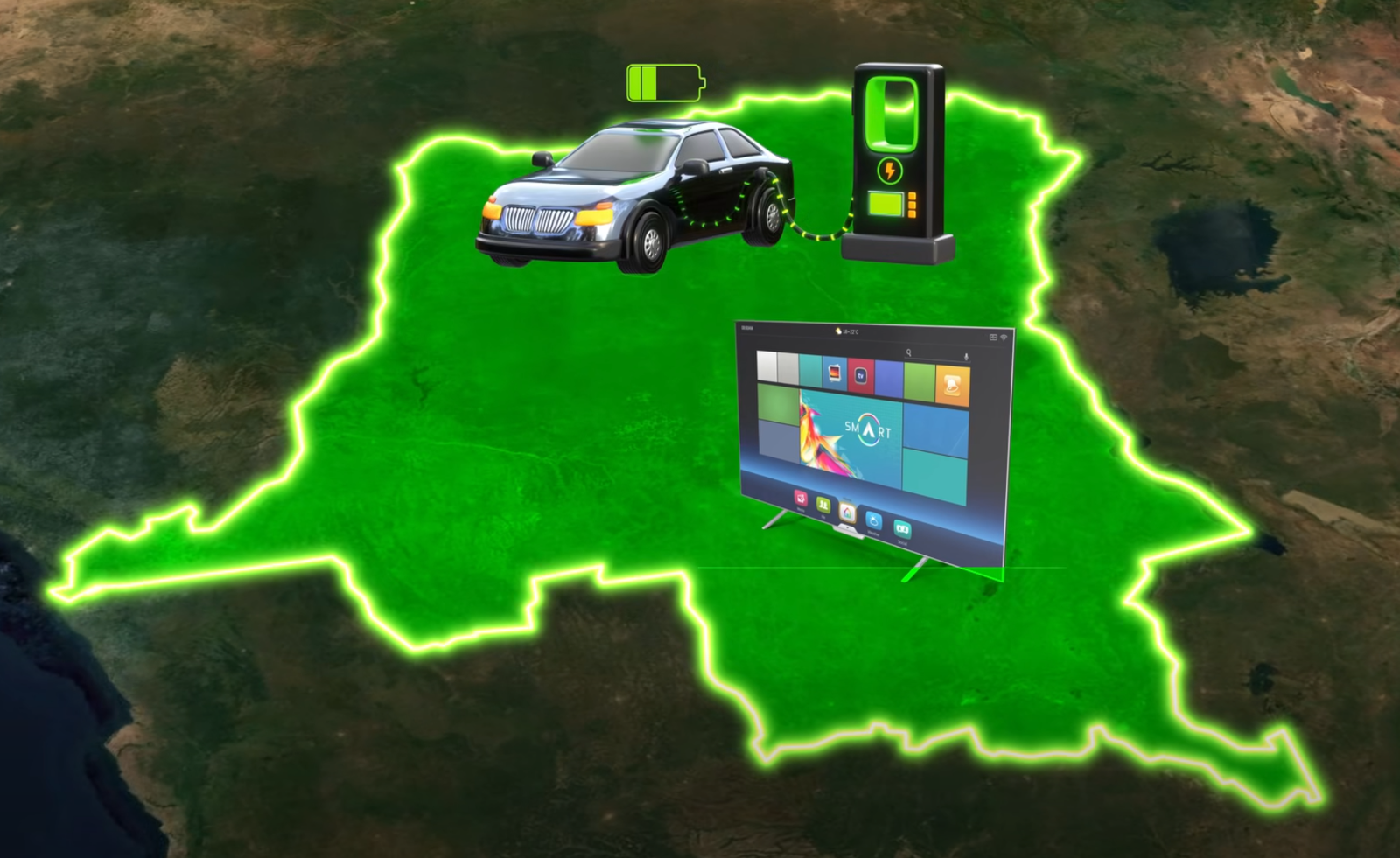


Part 1: The Glass City (Kinshasa)
Kofi held the world in his palm.
It was a sleek, black slab of glass and metal, a year-old flagship model he had bought with money saved from two years of coding gigs for Belgian startups. The startups paid him pennies, but in Kinshasa, those pennies made him a king among his peers.
He was twenty-one years old, a final-year computer science student at the University of Kinshasa, and he was deeply, profoundly cynical.
He sat at a plastic table at a noisy nganda near the university, the air thick with the smell of grilled goat and the humid funk of the Congo River. The relentless, pulsing beat of a Fally Ipupa track vibrated through the soles of his shoes. His friends, Antoine and Esdras, were arguing about football—TP Mazembe versus AS Vita Club. Kofi wasn’t listening. He was scrolling.
He scrolled past a TikTok of a girl dancing in Paris. He scrolled past a news headline about a new AI model. He scrolled past a post from a diaspora influencer in Brussels, posing with a new car, caption: “Dieu est grand. Le travail paie.” (God is great. Hard work pays off.)
“Le travail paie,” Kofi muttered under his breath, taking a sip of his warm Primus. “Easy to say when your ‘work’ is in a country that hasn’t been looted for a century.”
“What’s that, vieux?” Antoine asked, mid-gesticulation about a missed penalty.
“Nothing. Just tired of it all.” Kofi locked his phone and tossed it onto the table. The screen, his window to the world he wanted, went dark.
“Tired of what? The professor giving you trouble again?”
“Tired of this,” Kofi said, waving a hand at the street. A UN truck rumbled past, followed by a clapped-out taxi belching black smoke. “Tired of the ‘potential.’ My whole life, I’ve heard that word. ‘Congo has so much potential.’ ‘Our minerals will make us rich.’ ‘The Inga dam will power all of Africa.’ It’s all lokuta. All lies. My father’s generation believed it. Look at them now. We have all the cobalt in the world, and my university’s power cuts out three times a day. We have the Congo River, and my aunt’s neighborhood floods every time it rains. ‘Potential’ is just a polite word for ‘cursed.'”
Esdras nodded, his face serious for a moment. “It is a curse. The resource curse. We learned about it in econ.”
“I don’t need a textbook to tell me what I see,” Kofi snapped. “I’m not fighting this. I’m not ‘building the nation.’ I’m getting my degree, I’m building my portfolio, and I’m applying for a visa. Belgium. Canada. France. I don’t care. I’m gone. You should be, too.”
Antoine looked uncomfortable. “Leave? Kofi, this is our home.”
“Home?” Kofi laughed, a sharp, bitter sound. “Home is a place that doesn’t try to kill you. This… this is just a waiting room.”
His phone buzzed on the table. He glanced at the screen. It was his mother. He frowned. She never called him at this time unless…
He picked it up. “Allô, Maman?”
He didn’t say another word for a full minute. The color drained from his face. The pulsing music of the nganda seemed to fade, replaced by a dull roar in his ears. Antoine and Esdras stopped talking, watching him.
Kofi’s hand was shaking when he lowered the phone.
“Kofi, what is it?”
“It’s… it’s my cousin. Elikya. In Kolwezi.”
“What happened?”
Kofi looked at his friends, his eyes wide, seeing not them, but something far away and terrible. “He was working. In a creuseur pit. A tunnel… it collapsed. He’s… he’s alive, but Maman said… his legs. They don’t know if he will walk again.”
Elikya. “Hope.” Kofi hadn’t seen him in three years. A bright-eyed kid who was obsessed with football and always asked Kofi to show him games on his phone. He was supposed to be in school. He was fourteen years old.
“Maman is sending me,” Kofi said, his voice hollow. He was already standing, shoving his phone into his pocket. “I have to take the family money to the clinic. I… I have to go to Kolwezi.”
The journey was a descent. The short, expensive flight from Kinshasa’s N’djili airport to Lubumbashi was the last piece of modern convenience. The rest of the trip, the hours-long bus ride to Kolwezi, was a bone-jarring education in his country’s brokenness.
Kofi sat crammed against a window, the bus lurching through potholes the size of market stalls. He watched the landscape change. The lush, suffocating green of the Congo Basin gave way to a different kind of land. The earth here, in the heart of the Lualaba province, was not brown or black.
It was red. A deep, angry, exposed red.
As they neared Kolwezi, the scenery became alien. The horizon was dominated by mountains. Not natural mountains, but man-made terril—colossal piles of waste rock from industrial mines, looming over the city like sleeping, toxic giants. The air was different, too. It tasted of dust and sulfur.
This was the “Copperbelt.” The “Cobalt Capital of the World.” This was the engine of the “new green economy.”
It looked like a wound.
Kofi found the clinic on the outskirts of the city. It was a low, concrete building with a tin roof that rattled in the wind. The air inside was thick with the smell of antiseptic and sickness.
He found Elikya in a small, dark room with three other patients. His aunt, Elikya’s mother, was asleep on a mat on the floor, her face etched with exhaustion.
Kofi’s breath caught. The small, football-mad kid was gone. The boy on the bed was a thin, frail creature, his face pale with pain. A crude frame of metal bars and wires held his legs immobile under a thin sheet. His eyes fluttered open as Kofi approached.
“Kofi?” he whispered.
“Hey, le petit,” Kofi managed, forcing a smile. He put his hand on his cousin’s shoulder. “I’m here.”
“It hurts, Kofi.”
“I know. I brought the money. We’ll get you the best doctor.”
Elikya’s eyes drifted shut again. “I was just… I was trying to get money. For a phone. Like yours, Kofi. I wanted… a phone.”
Kofi recoiled as if struck. He looked at the high-end device in his hand. He felt a sudden, violent urge to hurl it against the wall.
He stepped outside the room, his heart hammering. He handed the envelope of cash to his aunt, who had woken up and was weeping silently. He couldn’t stay inside. He needed air.
He walked out of the clinic and into the red dusk. He was shaking with a rage so cold and total it terrified him. He had been cynical in Kinshasa. This was something else. This was despair.
A woman was sitting on a bench near the clinic’s entrance, watching him. She looked old, her face a beautiful map of wrinkles, her hair a crown of white. She was wrapped in a brightly colored pagne.
“He is your family,” she said. It wasn’t a question.
Kofi just nodded, unable to speak.
“You have the look of Kinshasa,” she said, her voice a low, smooth rumble. “You come here with your clean shoes and your clever phone, and you see this. And now you are angry. The anger of the clever city boy. It is a loud anger, but it burns fast, like petrol on a fire. It is gone by morning.”
“What do you know?” Kofi said, his voice rough.
The old woman smiled, a sad, knowing smile. “I am Mama Nsomi. Elikya is my grandson. I know everything.”
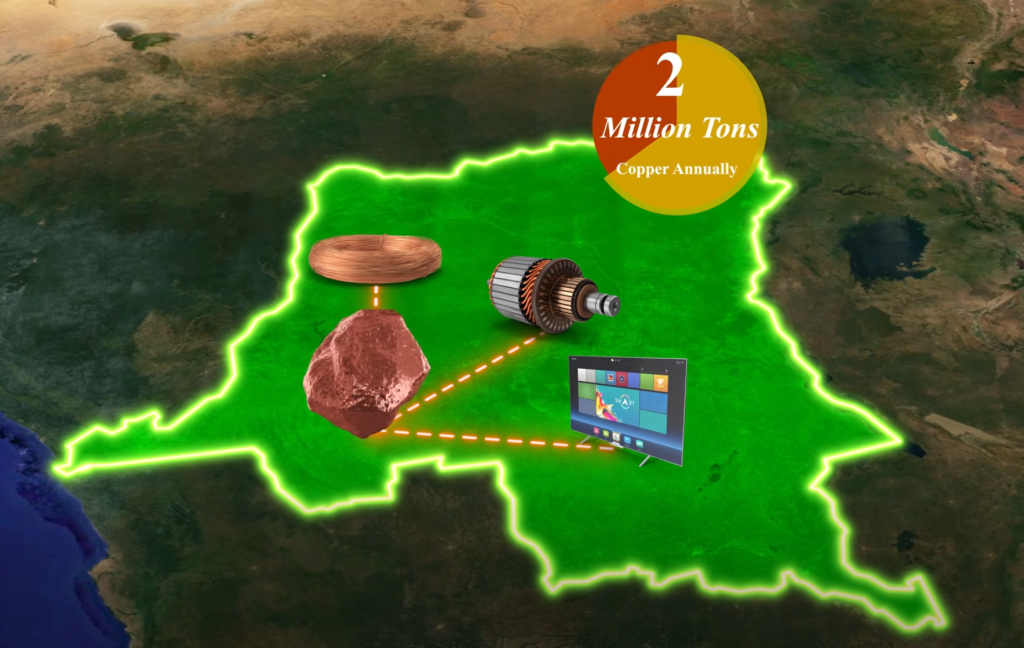
She patted the bench beside her. “Sit, mwana muke. Let me tell you a story. You look at that phone in your hand. You think it is magic. It is not. It is just metal. It is cobalt, from that red earth. It is coltan. It is copper. It is our land, in your hand. You are angry at the tunnel. You are angry at the poverty. You should be. But you are angry at the wrong thing.”
“I’m angry at a system that lets a fourteen-year-old boy get crippled for… for a phone!”
“Yes,” Mama Nsomi said, her voice hardening. “But that is not the system. That is just the symptom. The system… the sickness… is much older.”
Kofi looked at her, confused.
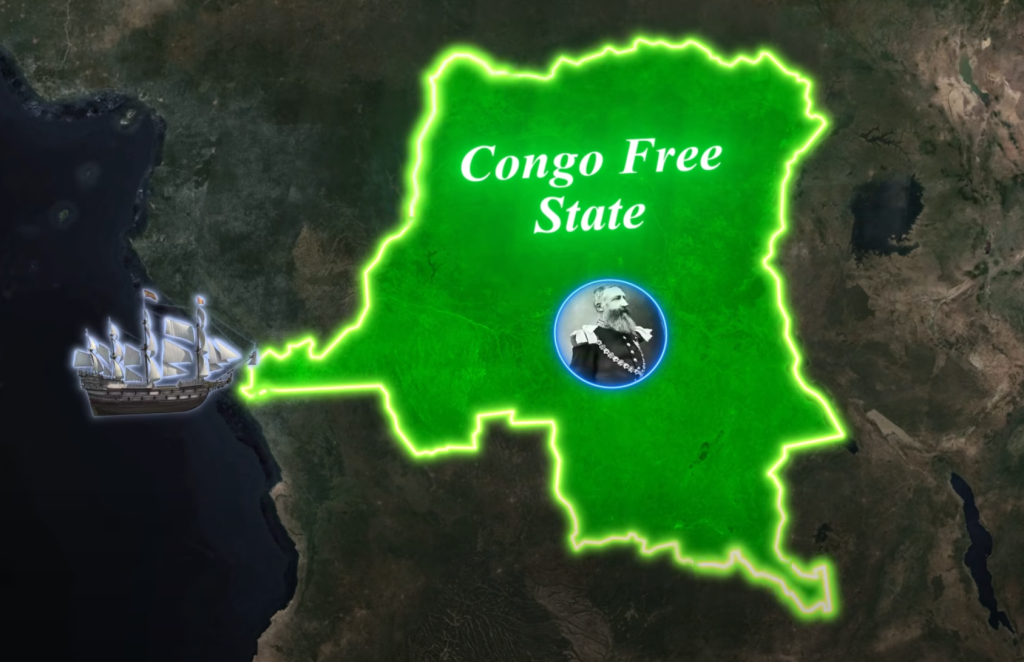
“My grandfather,” she said, holding up her hands, “never saw a phone. He never saw a car. He saw the forest. He lived when this land was not ‘Congo,’ but the ‘Ciso Free State.’ Not a country, but the private property of one man in Belgium. King Leopold.”
Kofi sighed. “I know the history, Mama. Leopold. The rubber. The atrocities.”
“You know the words,” she corrected him, her eyes sharp. “You do not know the smell. My grandfather’s village failed its rubber quota. The Force Publique came. They burned the huts. And they… they took his hands.” She held up her own wrists. “Here. They cut them off. As punishment. To prove a point. Millions died, Kofi. Millions. For rubber. To make tires for the first cars in Europe.”
She pointed a gnarled finger at the red hills in the distance. “Then the Belgians came. Not just one man, but a whole country. They found this. The copper. The diamonds. They built railways. Not for us. They built them to take the riches from the ground to the sea. They built ports. Not for us. To load the riches onto ships. They ruled us for fifty years. And what did we have to show for it? When we finally took our independence, in this entire, vast country… there were not thirty Congolese university graduates. Not thirty. They took everything and left us with nothing.”
Kofi felt a chill, despite the humid air. He had heard the history, but it had always felt distant. Abstract.
“Then,” Mama Nsomi continued, “we had a moment. A single, bright moment. We had Lumumba. Patrice Lumumba. He stood up, on Independence Day, and he told the Belgian king the truth. He said our suffering was over. He said Congo’s wealth would finally be for the Congolese people. He was a poet, and he was a fire.”
Her face darkened. “The world did not like that. The West, the corporations… they had feasted on our body for so long, they could not imagine us standing up. So they killed him. They cut him down. Your age, Kofi. Your generation… you do not even know his name.”
“I know his name,” Kofi said quietly.
“But do you know what he meant? After him… came Mobutu. He changed the country’s name to Zaire. He wore the abacost and shouted ‘Authenticité!’ He told us to be African. And all the while, he was the greatest thief of all. He sold our copper, our diamonds, to his friends in America and France. He became one of the richest men in the world. And his people… his people… starved. He ruled for thirty years, Kofi. An entire generation. My generation. Wasted.”
“And then the wars,” she whispered, her eyes distant, seeing ghosts Kofi could not. “After Mobutu fell, the world came again. Not just the West. Our neighbors. Rwanda. Uganda. Angola. Six countries. Dozens of militias. They called it the ‘African World War.’ But it was not a war of nations. It was a war for this.” She stamped her foot on the red dust. “A war for coltan, for your phones. A war for diamonds. For gold. Five million people died. Five million. The world was silent. Because the minerals kept flowing.”
She finally turned to look at him, her eyes boring into his.
“And now, today. The war is quiet, but the hunger is the same. The world has a new hunger. Not for rubber. Not for gold. It is a hunger for a clean, green future. A hunger for electric cars. For giant batteries. For solar panels. A hunger for… cobalt.”
She pointed again. “That is what Elikya was digging for. For your clean, green future. For your phones. For your laptops. For the electric cars in Shanghai and Berlin and California. They have changed the name of the master. It was Leopold. It was Belgium. It was Mobutu. Now, it is a Chinese corporation. It is a Swiss commodities trader. It is an American tech giant. But for us, Kofi, for the boy in that bed… the story has not changed.”
“My grandfather,” she said, her voice a devastating, quiet force, “lost his hands for rubber. My grandson lost his legs for cobalt. Tell me, clever boy from the city, what is the difference?”
Kofi had no answer. He looked down at his phone, the sleek, black miracle in his hand. He thought of the battery inside. He thought of the lithium, the copper, the nickel.
And the cobalt.
He felt its weight. The weight of Elikya’s legs. The weight of Mama Nsomi’s grandfather’s hands. The weight of Lumumba’s stolen dream. The weight of six million dead.
He had held the world in his palm. Now, for the first time, he felt its true cost. The cynicism he had carried in Kinshasa felt like a childish luxury, a pathetic shield. It shattered, leaving him raw and exposed.
“What… what can be done?” he whispered. The question was not for Mama Nsomi. It was for himself.
“The old way… the men with guns… that has not worked,” Mama Nsomi said, standing up stiffly. “They just become the new masters. Mobutu taught us that. The warlords taught us that.”
She looked at him. “Your generation is different. You have that.” She pointed at his phone. “You have the mwindo. The light. You can speak to the whole world in a second. My grandfather’s story died in the forest. Elikya’s story… you can tell it to the people who buy the batteries. The people who hold the phones.”
She began to walk back into the clinic. “You are angry. Good. But do not let it be the petrol fire. Let it be the fire in the earth. The one that burns slow. The one that melts metal. The one that forges.”
Kofi sat alone in the red dark, the clinic’s weak yellow light spilling onto the dust. He had come to Kolwezi with an envelope of cash and a return ticket. He knew, in that moment, that he would not be using that return ticket. Not yet.
His fight was not for a visa anymore. His fight was here. The waiting room had become the battleground.
Part 2: The Red Earth (Kolwezi)
For three days, Kofi did not leave the clinic’s orbit. He sat with Elikya, helping him drink water, wiping the sweat from his forehead. He listened to his aunt’s quiet grief and Mama Nsomi’s stories. In the evenings, he walked the perimeter of the clinic, the red dust clinging to his city shoes, his mind a turmoil.
He felt useless. His coding skills, his cleverness, it meant nothing here. He could build an e-commerce site. He could debug a JavaScript library. He could not heal his cousin’s spine.
On the fourth day, a young woman with a press-pass laminate and a formidable expression stormed into the clinic. She made a beeline for Elikya’s mother, firing questions in rapid-fire French and Swahili.
“My name is Amara,” she said, her voice crisp. “I’m a local journalist. I heard about the collapse at the KCC concession. How many were injured? Were there other children? Was the cooperative representative, Monsieur Bofill, present? Has the company offered compensation?”
Elikya’s mother just looked bewildered and scared. “Please… my son…”
“She’s harassing you,” Kofi said, stepping between them. “Leave her alone.”
Amara turned her sharp eyes on him. “And you are? The rich uncle from Kinshasa? I’m not harassing her. I’m trying to help. Did you know this collapse was the third one this month? The company, and their puppet Bofill, they will sweep this under the rug. They will say Elikya was ‘trespassing.’ They will pay nothing. Your family will be in debt to this clinic forever.”
Kofi’s anger flared. “And what will you do? Write a story for the local paper that Bofill owns? Post something on the internet that no one will read?”
Amara’s eyes narrowed. “I see. You’re one of those. The ‘New Congo.’ Too smart for your own country. You think you’re better than us because you have a new phone and speak Kinshasa French.”
“I…” Kofi faltered. She had described him perfectly. The him of five days ago.
“I am trying to build a case,” Amara said, her voice lower, intense. “I am documenting every safety violation. Every child laborer. Every non-payment. I am building a file. And yes, I post it on the internet. I post it on X. I post it on Instagram. I tag the acheteurs. The big ones. Glencore. Huayou Cobalt. I tag Apple. I tag Tesla. I tag Samsung.”
Kofi was stunned. “Does it… does it work?”
“Sometimes.” She shrugged, a flicker of weariness in her eyes. “Sometimes it creates enough noise that a foreign journalist picks it up. The company has to issue a statement. Maybe a family gets a small payout. It’s not a revolution. It’s… something. It’s better than sitting and scrolling.” She glared at him.
Kofi felt the sting of her words. He looked at this young woman, his own age, who was fighting, here, in the dust, with the only tools she had.
“My cousin,” Kofi said quietly, “he said he was digging to buy a phone. Like mine.”
Amara’s expression softened instantly. The hard, journalistic edge vanished, leaving behind a deep, familiar sadness. “Ah, vieux. That… that is the story of all of them. They dig for the dream they see on the screen. The dream we sell them.”
“Show me,” Kofi said.
“Show you what?”
“The mine. Where it happened. I want to see it.”
“It’s dangerous,” she said. “The militia, Bofill’s ‘security,’ they don’t like visitors. Especially not visitors with cameras. Or expensive phones.”
“I’m not a visitor,” Kofi said. “I’m Elikya’s family.”
Amara studied him for a long moment. “D’accord. Be at the rond-point by the market tomorrow. 5 AM. And don’t wear those shoes.”
The next morning, in a borrowed pair of boots, Kofi clung to the back of Amara’s motorcycle. They rode out of the city, past the giant, formal industrial mines—vast, open pits, cities unto themselves, run by foreign corporations. They rode past the terrils, the mountains of waste.
And then they arrived at the creuseur site.
Kofi had seen photos of artisanal mines. They had not prepared him for the reality. It was a vision from another century, a biblical nightmare. An entire hillside had been turned inside out. Thousands of men—and, in the sorting areas, women and children—were crawling over it. The ground was a pockmarked hellscape of hand-dug pits, tunnels, and trenches.
The air was a choking, red-grey cloud. The sound was a dull roar: the thud of picks, the scrape of shovels, the shouts of men, the rumble of overloaded trucks.
“This is it,” Amara shouted over the din. “This whole area is a concession, technically owned by a multinational. But they ‘lease’ it to a local ‘cooperative.’ That’s Bofill. He charges the creuseurs a fee to dig. Then he buys what they find at a price he sets. He sells it back to the multinational, who mix it with their ‘clean’ industrial cobalt. They call it ‘artisanal’ to make it sound nice. It is slavery.”
They walked, and Kofi felt like he was on another planet. Men, caked in red mud, emerged from narrow holes in the ground, dragging heavy sacks. They were young. Many were teenagers. None had safety gear. No helmets. No gloves. No boots. Just sandals and determination.
“Where is the tunnel?” Kofi asked.
Amara pointed. “Over there. They’ve already started digging around it.”
Kofi saw a section of the hillside that had caved in. A simple rope fence had been put up. Twenty meters away, men were already digging new tunnels.
“They just… keep going?” Kofi was horrified.
“They have to eat,” Amara said flatly. “Their families have to eat. Bofill told them if they don’t work, they lose their spot.”
Kofi walked to the edge of the collapsed tunnel. This was it. This was where Elikya’s life was shattered. He pulled out his phone. His hands were shaking, but not from fear. It was the cold, forging fire Mama Nsomi had spoken of. He began to film.
He filmed the collapsed tunnel. He filmed the men digging nearby. He filmed the children sorting rocks, their small hands stained blue-black with cobalt. He filmed the guards, armed with rifles, watching over them.
“Put that away!” Amara hissed, pulling him back. “Are you crazy?”
“The world needs to see this,” Kofi said, his voice thick.
“They won’t see it if we’re in Bofill’s jail. Or in a ditch.”
“You post things,” Kofi argued. “How is this different?”
“I’m careful. I take quick shots. I know who is watching. You are standing here like you’re filming a tourism video! You have to be smart, Kofi. Anger is not a plan.”
Her words hit him. Anger is not a plan.
“You’re right,” he said. He put the phone away. “You’re right. So what is the plan? You collect data. You build a file. What’s your system?”
Amara looked surprised by the question. “System? I have a notebook. I have a secure folder on my laptop. I have a network of contacts. Whistleblowers. Other creuseurs.”
“A notebook,” Kofi said. “Your laptop. What if Bofill’s men raid your office? What if they take your laptop? It’s all gone.”
“It’s the best I can do,” she said, defensively.
Kofi’s mind, for the first time in days, began to clear. The fog of rage and grief parted, and the familiar, sharp clarity of logic returned. He wasn’t a doctor. He wasn’t a soldier. He was a coder.
“No,” Kofi said, a new energy in his voice. “It’s not. We can do better.”
“What are you talking about?”
“You’re collecting data,” Kofi said, thinking fast. “But it’s vulnerable. It’s centralized. And it’s not connected. You need a platform. A secure, decentralized, anonymous way for people to report this. Not just you, but anyone. The creuseurs themselves.”
“They have simple phones, Kofi. Not smartphones like yours.”
“It doesn’t have to be a fancy app. It could be a simple web form, accessible by USSD, even by SMS. They report an accident. They report child labor. They report non-payment. The report gets tagged with the location, the cooperative, the date. It all goes into a database.”
“A database,” Amara said, catching on. “A database Bofill can’t find and erase.”
“Exactly. Encrypted. Backed up in multiple places. A database of truth. You don’t just have one story of one accident. You have a pattern. You have 50 accidents. You have 200 reports of child labor. All from Bofill’s concession. All cross-referenced. That… that is what you take to the New York Times. That is what you tag Tesla with.”
Amara was staring at him, her eyes wide. “You can build this?”
“I can’t heal my cousin,” Kofi said, the words catching in his throat. “I can’t give Mama Nsomi’s grandfather his hands. But yes. I can build this.”
“Kofi…”
“This is my fight, Amara. Mama Nsomi… she said my generation has the mwindo, the light. She was right. We just have to stop using it to look at ourselves. We have to turn it into a spotlight.”
He looked around at the red, scarred earth, at the thousands of men toiling for the world’s batteries.
“They call this a curse,” he said. “Let’s turn it into a weapon.”
Part 3: The Spark
They worked in secret, out of a small back room in a church mission that Amara trusted. Kofi’s shiny laptop, once his symbol of escape, became his forge.
He coded like he never had before. He poured his grief, his rage, and his new, fragile hope into the lines of Python and JavaScript. He was not building a “product.” He was building a case. He was building a shield. He was building a weapon.
He named it “LISANO.” The word meant “truth” or “testimony” in Lingala.
It was deceptively simple on the front end. A basic, low-bandwidth website. A secure portal for uploading photos. But the backend was complex. Every submission was encrypted instantly. The data was stripped of all identifying metadata, then backed up to three different secure servers outside the country, donated by a diaspora hacktivist group Amara knew.
He built a dashboard. A map of the Kolwezi region. When a report came in, a pin would drop. Red for an injury or death. Blue for non-payment. Yellow for child labor.
Clicking a pin would bring up the anonymous testimony.
“Tunnel 14, Musompo. Collapsed. Two men trapped. Bofill’s guards refused to let us dig.” “KCC concession. My son, 12 years old, paid half price for a full sack.” “Dumping of toxic water into the river. The fish are dead.”
While Kofi coded, Amara became his partner, his teacher, and his shield. She brought him food. She found him a place to stay. She introduced him, carefully, to her network.
This was the hardest part. Kofi, the city boy, had to earn the trust of the creuseurs.
They met at night, in secret. Amara would bring two or three miners to the church. At first, they were suspicious.
“Another intellectuel,” one man, his face old before his time, said, looking at Kofi’s laptop. “He will write a report. A white man from the UN will read it. And we will still be in the tunnels.”
“I am not writing a report for the UN,” Kofi said, his voice steady. “I am building a tool for us. What you tell me… it doesn’t go to me. It goes everywhere. It goes to a database that Bofill cannot touch, that the company cannot erase. So that when one of you is hurt, it is not a rumor. It is a fact. It is evidence.”
He showed them the dashboard. He showed them the map. “Look. Here is the report from the KCC collapse. Elikya’s collapse. Here is another one, from two weeks ago. And another. See the pattern? It’s all one cooperative. All one concession.”
The men stared. They were used to their stories vanishing. Their pain being nameless. Here, it was on a map. Permanent.
“How do we use it?” another asked.
“You don’t need a smartphone,” Kofi explained. He had set up a simple SMS gateway. “You text this number. You write what happened and where. The system does the rest.”
Slowly, agonizingly, the trust was built. The reports started to come in. A trickle, then a steady stream. Every new pin on the map was a small victory, another strand in the net they were weaving.
Kofi and Amara worked side-by-side, day and night. His cynicism was gone, replaced by a relentless, grinding focus. Her abrasive suspicion had transformed into a fierce, protective partnership. They argued about features, about security, about wording. They were a two-person army, fueled by coffee, adrenaline, and a shared purpose.
Meanwhile, Elikya was slowly, slowly recovering. The doctors, paid with Kofi’s family money, had operated. He would not be a footballer. He would walk, they said, but with a limp. Forever.
Kofi visited him every evening. He would sit by the bed and, instead of showing him football games, he would show him LISANO.
“Look, Elikya,” he’d say, pointing to the screen. “This is for you. This pin… this is your story. And this one, this is for another boy. And this one… this one…”
Elikya, his eyes clear and sharp despite the pain, would just nod. “Tell them, Kofi. Tell them what they did.”
“I will, petit,” Kofi promised. “I will.”
After six weeks, the map was covered in pins. A horrifying constellation of red, blue, and yellow. The pattern was undeniable. One cooperative—Monsieur Bofill’s—was a hotspot of death, injury, and exploitation. And that cooperative sold 100% of its ore to one multinational: Congolais Mineral Solutions (CMS), a subsidiary of a massive Swiss-based commodities firm.
“We have it,” Amara said, her voice trembling as she looked at the screen. “It’s undeniable.”
“Now,” Kofi said, “we don’t just tag them. We give them an ultimatum.”
He drafted an email. Not to a journalist. But directly to the corporate headquarters of CMS in Geneva.
To the Head of Compliance,
We are a collective of Congolese journalists and researchers.
We have compiled a database, LISANO, documenting 84 severe safety violations, 32 confirmed cases of child labor, and 12 deaths at concessions managed by your supplier, [Bofill’s Cooperative], in the last 12 months. This includes the tunnel collapse on [Date] that crippled a 14-year-old boy.
We have video, photographic, and testimonial evidence for every single claim, all verifiable and geotagged.
This data proves a systematic pattern of gross negligence and human rights abuses in your direct supply chain. You are in violation of your own corporate social responsibility policy and international OECD guidelines.
We are not, at this time, releasing this data to the press. We are offering you a chance to rectify this.
Our demands are simple: 1. Full and immediate medical compensation for all 84 injured parties and the families of the 12 deceased, including Elikya [Last Name]. 2. The immediate termination of your contract with [Bofill’s Cooperative]. 3. Funding for an independent, third-party safety audit of all your artisanal suppliers.
You have 72 hours to respond and agree to a meeting. If you do not, or if you attempt to intimidate our sources, the entire database—LISANO—will be sent to The Guardian, Le Monde, the New York Times, and every major EV and electronics manufacturer that you supply.
The world will see what is in their batteries.
“Are you insane?” Amara breathed, reading it over his shoulder. “This is blackmail! They will send the police. They will send Bofill’s men. They will kill us, Kofi!”
“It’s not blackmail,” Kofi said, his hand steady on the mouse. “It’s justice. They are the ones who are criminals. We have the proof. And they know, better than anyone, that this proof is real. They are terrified of one thing, Amara: their ‘brand.’ Their stock price. This… this threatens the stock price.”
“Kofi, this is too much. We should just leak it.”
“No. Leaking it gets us a story. It might get Bofill ‘suspended.’ But it doesn’t get Elikya’s medical bills paid. It doesn’t get those families compensated. This way, we demand it. We force their hand. We show them we are not just victims. We are an actor. We have power.”
He looked at her. “Mama Nsomi said Lumumba’s fire was killed because the world was afraid. Good. Let them be afraid of us. Afraid of the truth.”
Amara looked at him, her fear battling with her resolve. Finally, she nodded. “Okay. Boyei. Let’s do it. For Elikya. For all of them.”
Kofi took a deep breath. He attached a single, damning photo: a child, no older than ten, crawling from a tunnel with a sack, Bofill’s security guard visible in the background.
He hit “Send.”
The 72-hour clock started.
Part 4: The Fire
The first 24 hours were silent. Kofi and Amara barely slept. They moved from the church to a different safe house, a small room above a noisy bar. Every time a motorcycle backfired, they both jumped. Kofi’s phone, now their lifeline, remained quiet.
“They’re ignoring us,” Amara said, pacing the small room. “They’re calling Bofill. They’re preparing to raid the church. We should run.”
“No,” Kofi said, his eyes fixed on his laptop. “They’re not ignoring us. They’re panicking. A corporation this big? The email has to go from Compliance to Legal, from Legal to the CEO, from the CEO to the Board. They are holding emergency meetings in Geneva. They are trying to find out who we are. They are scared. We have to be patient.”
On the 48th hour, the email came.
It was not from the Head of Compliance. It was from a “Vice President, Global Supply Chain Ethics.” It was short and cold.
“We are in receipt of your correspondence. The allegations you make are of the utmost seriousness. We are dispatching a team from our Lubumbashi office to meet with you to discuss your findings. Please propose a time and public, secure location.”
Kofi and Amara stared at the screen.
“They blinked,” Kofi whispered, a slow smile spreading across his face. “They blinked.”
“A ‘public, secure location,'” Amara said. “They want to see who we are. It’s a trap.”
“It’s a negotiation,” Kofi said. “And we set the terms.”
He replied:
“The meeting will not be with us. It will be with our legal representative. You will be contacted by her office to arrange a meeting at the Regional Human Rights Bureau in Lubumbashi. Be advised that if any harm comes to our representative, or to any of the families in Kolwezi, the LISANO database will be released by an automated dead-man’s switch.
We look forward to a productive resolution.”
“Our ‘legal representative’?” Amara asked.
“I called a number,” Kofi said, grinning. “A lawyer in Lubumbashi. A famous one. The one who defends all the activists. I sent her the LISANO link. She… she was very enthusiastic. She’s taking the case pro bono.”
The meeting happened two days later. Kofi and Amara waited in their room, 100 kilometers away, getting text updates from the lawyer.
“They are here. Three of them. They look nervous.” (10:00 AM) “They deny everything. Say the data is ‘unverifiable.’ Standard.” (10:30 AM) “I showed them three video testimonies. The ones where the guards’ faces are visible. They are no longer denying.” (11:15 AM) “They are talking about ‘humanitarian aid.’ Not compensation. I told them to try again.” (1:00 PM) “They are making an offer. It is… significant.” (3:00 PM)
That evening, the lawyer called.
“It is done,” she said, her voice heavy with triumph. “They have agreed. Full compensation for all 96 families, as documented. The amounts are… life-changing. And they are terminating Bofill’s contract. Effective immediately.”
Kofi sank into his chair, the tension of two months draining out of him so fast he felt dizzy. He looked at Amara. Her eyes were shining with tears. She didn’t wipe them away. She just laughed.
“We won,” she whispered. “Kofi… we actually won.”
It was not a revolution. The multinational was not gone. The creuseur system was not abolished. But it was something. It was 96 families whose lives were not destroyed. It was one corrupt monster pulled from power. It was a crack in the wall.
Two weeks later, Kofi was back at the clinic. This time, he wasn’t there in grief. He was there to sign Elikya out. The compensation money had arrived, wired to a trust managed by the lawyer. Elikya’s medical bills were paid. His future, and the futures of the other families, were secure.
Kofi pushed his cousin’s wheelchair out into the bright red sunlight. Mama Nsomi was waiting for them.
She looked at Kofi, her old eyes seeing everything. She didn’t say “thank you.” She didn’t say “well done.” She just put her hand on his cheek.
“The fire forges,” she said, nodding once. “Patrice would be proud of you. Now, this is not the end, Kofi. This is the beginning. They will be back. Bofill is just one man. The hunger is still there. The system is still there.”
“I know, Mama,” Kofi said. “And we’ll be here.”
He was not going back to Kinshasa to apply for visas. Amara was not just a local journalist anymore. The LISANO project had received a grant from an international press freedom organization. They were hiring two more coders. They were expanding to Goma, to Bukavu, to track gold, to track coltan.
Kofi’s “waiting room” had become his life’s work.
His flight was booked for the next day. He had to go to Kinshasa, but not to flee. He had to go back to his university. He had to show his friends, Antoine and Esdras. He had to show his professors. He had to recruit.
He stood at the small Kolwezi airport, waiting to board. He pulled out his phone. The same sleek, black slab of glass. He looked at its dark, reflective surface.
He thought of Elikya’s legs. He thought of Mama Nsomi’s grandfather’s hands. He thought of the red earth, the creuseurs in the pits, the children sorting rocks.
For his entire life, this country’s story had been written for them, by outsiders. By Leopold. By Belgium. By Mobutu. By the World Bank. By the corporations. A story of looting, of greed, of blood.
Kofi and Amara had taken the pen. They had written one small, new chapter.
“The world has taken a lot from this land,” the voice of a podcaster he’d listened to once echoed in his head. “What if the world gives it back just once? Congo does not need the mercy of the world. It needs justice.”
Kofi smiled. Justice. It was a big word. Too big, maybe.
He put his phone back in his pocket. He didn’t need mercy. He wasn’t waiting for justice. He was building it. One line of code at a time.
The plane began its ascent, and Kofi looked down at the vast, green and red land spreading out below him. It was not a curse. It was not a waiting room.
It was home. And the fight had just begun.