
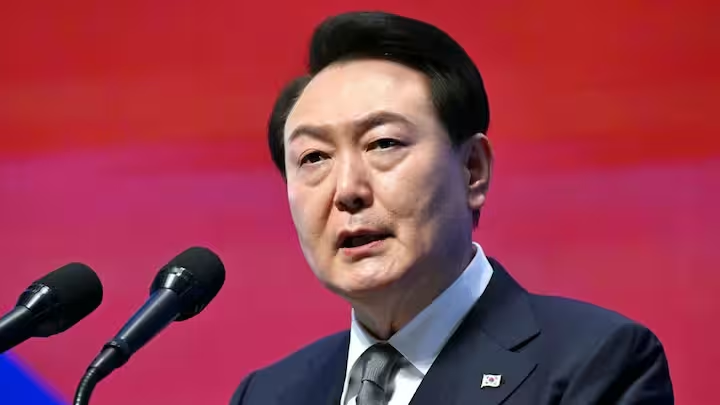


December 3, 2024 — South Korean President Yoon Suk Yeol has declared emergency martial law, citing escalating national security threats and growing political unrest. The sudden announcement has sent shockwaves across the nation, evoking memories of South Korea’s turbulent political history and sparking protests in Seoul and other major cities.
Martial Law: A Rare and Drastic Measure
The declaration of martial law grants the military significant authority to maintain order, including curfews, restrictions on public gatherings, and control over media. It is a rare move in modern South Korea, a nation that has transitioned from military rule to a robust democracy since the 1980s. The decision has reignited debates over the balance of power and civil liberties.
President Yoon justified the measure as necessary to address “unprecedented challenges” to national security, including heightened tensions with North Korea and internal instability. Critics, however, accuse the government of using martial law to suppress dissent amid growing dissatisfaction with economic conditions and political leadership.
Market Impact and Public Reaction
The announcement triggered immediate turmoil in financial markets, with the Korean won weakening sharply against the U.S. dollar. South Korean stocks traded on U.S. exchanges experienced significant declines, reflecting investor concerns over political and economic uncertainty.
In Seoul, protesters gathered in Gwanghwamun Square, calling for the immediate lifting of martial law and accusing the administration of undermining democracy. Opposition leaders have vowed to challenge the move through legal channels and international diplomacy.
Historical Context
South Korea has a fraught history with martial law. The last major imposition occurred in 1980, during the military dictatorship, when pro-democracy protests in Gwangju were violently suppressed. While today’s South Korea is vastly different, the invocation of martial law has revived painful memories for many citizens.
Global Implications
The declaration comes at a time of heightened geopolitical tension in the region, with North Korea resuming missile tests and the U.S. reaffirming its commitment to defending its ally. International observers have expressed concern, with human rights organizations urging President Yoon to prioritize dialogue over military measures.
What Is Martial Law?
Martial law refers to the temporary imposition of direct military control over civilian functions in response to emergencies, such as war or significant unrest. It often suspends ordinary law and civil liberties, granting the military authority to govern. While intended as a last-resort measure, it is controversial due to its potential for abuse.
South Korea’s return to martial law has ignited intense debate domestically and abroad. As the situation develops, the global community watches closely, with hopes that democracy and stability will ultimately prevail in one of Asia’s leading economies.