
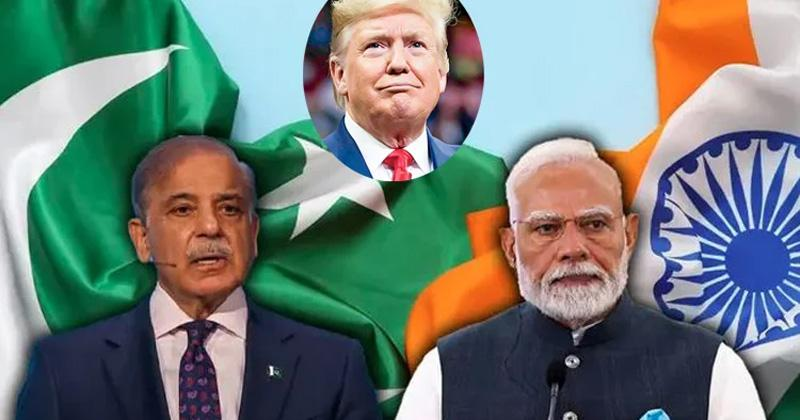


As the dust settles over the India-Pakistan border following the dramatic escalation of May 2025, the world is left grappling with a seismic shift in South Asian geopolitics. The narrative circulating in global media—and amplified on platforms like X—paints a vivid picture: India, long the regional hegemon, was brought to its knees by Pakistan’s deployment of hypersonic missiles, forcing New Delhi to “beg” the United States for a ceasefire. As chief editor of the Iowa Independent, I believe this framing, while compelling, oversimplifies a complex crisis. The reality is far more nuanced, revealing not only the vulnerabilities of India’s military doctrine but also the dawn of a new era of warfare where speed, precision, and asymmetry redefine power. This is not just a story of a fleeting conflict; it’s a wake-up call for global powers, including the United States, to rethink deterrence in an age of unstoppable weapons.
The Spark and the Spiral
The crisis began with a horrific terrorist attack on April 22, 2025, in Pahalgam, Indian-administered Kashmir, claiming 26 lives, mostly Hindu tourists. India swiftly pointed the finger at Pakistan, accusing it of harboring the perpetrators—allegedly linked to Jaish-e-Mohammed and Lashkar-e-Taiba. Pakistan’s denials did little to quell India’s resolve, and on May 7, New Delhi launched “Operation Sindoor,” striking nine targets across Pakistan and Pakistan-administered Kashmir. The operation, billed as a precision strike on terrorist infrastructure, was a bold assertion of India’s “surgical strike” doctrine, a hallmark of its post-2016 military strategy.
Pakistan’s response was swift and ferocious. By May 10, its “Operation Bunyan al-Marsus” targeted Indian military assets, including airbases, missile depots, and, most controversially, an S-400 air defense system in Adampur. Pakistani state media and military sources claimed a technological triumph: hypersonic missiles, possibly the Fateh-1, had obliterated India’s defenses in minutes, leaving New Delhi blindsided. Social media erupted with posts celebrating Pakistan’s newfound might, while others mocked India’s supposed desperation as it sought U.S. mediation for a ceasefire announced that same day.
But was this truly a case of India “begging” for peace, as some narratives suggest? Or does the ceasefire reflect a pragmatic recognition—by both nations—of the catastrophic risks of escalation? In my view, the truth lies in a sobering reality: the battlefield has changed, and neither India nor Pakistan can afford to ignore the implications.
The Hypersonic Hype: Game-Changer or Propaganda?
At the heart of this crisis is the claim that Pakistan deployed hypersonic missiles—weapons that travel faster than Mach 5 (over 6,000 km/h), fly low, and maneuver unpredictably, rendering even advanced systems like India’s S-400 impotent. Pakistani sources assert that these missiles, fired from JF-17 Thunder jets, neutralized critical Indian assets: the S-400 in Adampur, BrahMos missile storage sites in Beas and Nagrota, airbases at Pathankot, Halwara, and beyond, and radar communication hubs. The narrative is seductive: a smaller military, long overshadowed by India’s numerical superiority, leveraged cutting-edge technology to achieve strategic parity in under 10 minutes.
As an editor, I’m skeptical of such tidy narratives. Hypersonic missiles are indeed a game-changer—global powers like China, Russia, and the United States have invested billions in them for good reason. Their speed and maneuverability challenge traditional missile defenses, which rely on predictable trajectories. India’s S-400, acquired from Russia in 2021, is formidable, capable of intercepting targets at 250 km, but it’s not invincible against hypersonics. Yet the evidence for Pakistan’s hypersonic prowess is thin. The Fateh-1, cited in Pakistani claims, is a short-range missile (120 km), hardly comparable to China’s DF-17 or Russia’s Kinzhal. Posts on X from October 2024 speculated that China might supply Pakistan with hypersonic technology, but no credible reports confirm this transfer by May 2025.
India, for its part, has dismissed Pakistan’s claims as “fake.” Wing Commander Jaideep Singh of the Indian Air Force refuted the destruction of the S-400, promising a fact-check. Indian media reported minor damage to airbases like Sirsa and Suratgarh, with successful interceptions of Pakistani drones and missiles. Timestamped images released by New Delhi showed operational airfields, countering Pakistan’s narrative of devastation. The absence of independent verification—from satellite imagery or international observers—suggests Pakistan’s claims may be inflated, a propaganda coup to rally domestic support and project strength.
That said, I believe Pakistan achieved something. The reported civilian casualties in Jammu (five, per Indian accounts) and damage to military equipment indicate a successful, if limited, strike. Drones and precision-guided munitions, increasingly central to both nations’ arsenals, likely played a role. But the idea that Pakistan’s hypersonic missiles “vaporized” India’s military doctrine—built on Cold Start, air superiority, and a nuclear triad—is an overreach. India’s BrahMos supersonic missiles, Pralay tactical systems, and nuclear submarines remain potent deterrents. If Pakistan did deploy hypersonics, it exposed a gap in India’s defenses, but it didn’t rewrite the regional power balance overnight.
Why the Ceasefire? A Strategic Calculus
The ceasefire, announced on May 10, 2025, under U.S. auspices, is where the “begging” narrative gains traction. Posts on X claim India, reeling from Pakistan’s strikes, ran to Washington for salvation. Pakistani media frame the ceasefire as India’s capitulation, a humiliating retreat from its hawkish rhetoric. As an American editor, I see this differently: the ceasefire was a mutual necessity, driven by global diplomacy and the specter of nuclear escalation, not a one-sided surrender.
Consider the stakes. Both India and Pakistan are nuclear-armed, with arsenals estimated at 160-170 warheads each. Pakistan’s lack of a no-first-use policy and India’s nuclear triad (land, air, and sea delivery) make any conflict a potential apocalypse. Pakistani military sources briefly mentioned a National Command Authority meeting—implying nuclear readiness—before retracting the claim. The U.S., under President Donald Trump and Secretary of State Marco Rubio, acted swiftly, engaging Prime Minister Narendra Modi and Prime Minister Shehbaz Sharif to halt hostilities. The G7, UN, and allies like Saudi Arabia and Qatar echoed the call for de-escalation, fearing a regional disaster with global economic ripple effects.
India’s motivations for agreeing to the ceasefire were pragmatic, not desperate. New Delhi’s economy, projected to surpass $4 trillion by 2025, could weather a short conflict, but prolonged war risked investor confidence and supply chain disruptions. Domestic pressure was mounting—border communities fled, and civilians stockpiled supplies. Militarily, India retained significant capacity, intercepting many Pakistani projectiles and conducting its own strikes, including on Pakistan’s Kahuta nuclear facility (a claim Pakistan denied). But escalation carried unpredictable risks, especially if Pakistan’s strikes exposed vulnerabilities in India’s air defenses.
Pakistan, meanwhile, faced even greater constraints. Its $350 billion economy, reliant on IMF loans, teetered on the brink. Sustained conflict would have crippled its finances, especially with Western creditors watching closely. The ceasefire allowed Pakistan to claim a moral victory—hypersonic strikes as a “comprehensive response” to India’s “jingoism”—while avoiding a war it couldn’t afford.
The U.S. role was pivotal, but not because India “begged.” Washington’s mediation reflected its strategic interest in stabilizing South Asia, a region critical to countering China and securing trade routes. Trump’s announcement of a “full and immediate ceasefire” was a diplomatic win, reinforcing America’s influence. Indian Foreign Secretary Vikram Misri’s accusation of Pakistani violations suggests New Delhi sought to uphold the ceasefire while responding to provocations, not grovel for peace.
A New Era of Warfare
The May 2025 clash is a harbinger of warfare’s future, and as an Iowan observing from afar, I’m struck by its implications for global security. Hypersonic missiles, drones, and cyberattacks—used by both sides—signal a shift from slow, conventional battles to rapid, asymmetric conflicts. India’s Cold Start doctrine, designed for swift armored thrusts into Pakistan, assumes air superiority and robust defenses. If Pakistan’s strikes, hypersonic or not, penetrated those defenses, they exposed a flaw in India’s planning. New Delhi must now invest in counter-hypersonic technologies, enhance radar coverage, and rethink its reliance on static assets like the S-400.
Pakistan, too, faces challenges. Its alleged hypersonic edge, if real, is a double-edged sword. Fielding such weapons invites scrutiny from global powers and risks an arms race with India, which has deeper pockets. Pakistan’s economy cannot sustain prolonged military modernization, especially under IMF austerity. The ceasefire bought time, but Islamabad must balance bravado with fiscal reality.
For the United States, this conflict is a wake-up call. Hypersonics are no longer the domain of superpowers; smaller nations like Pakistan may acquire them, disrupting regional balances. The Pentagon’s own hypersonic programs, still in development, must accelerate to maintain deterrence. Moreover, America’s mediation role underscores its diplomatic leverage, but it must tread carefully to avoid alienating India, a key partner in the Indo-Pacific strategy against China.
The Misinformation Minefield
As chief editor, I’m acutely aware of the role narratives play in shaping perceptions. This conflict was a masterclass in misinformation. Pakistan’s claims of hypersonic triumphs were amplified by state media and X users, while India countered with denials and curated imagery. Fabricated images of downed Indian jets circulated online, muddying the waters. Both nations leveraged propaganda to rally domestic support, but the truth suffered. Independent verification—through satellite data or international monitors—is critical to cutting through the fog, yet it’s sorely lacking here.
This dynamic mirrors broader challenges in modern conflicts, where social media can turn tactical skirmishes into global spectacles. As journalists, we must approach such narratives with skepticism, cross-referencing claims against primary sources and acknowledging uncertainty. The “India begged” storyline, while emotionally charged, oversimplifies a crisis driven by mutual restraint and external pressure.
The India-Pakistan crisis of May 2025 is not a tale of one nation’s triumph or another’s humiliation. It’s a snapshot of a world where technology levels the playing field, where nuclear-armed neighbors teeter on the brink, and where global powers scramble to avert disaster. India didn’t “beg” for a ceasefire; it made a calculated choice to de-escalate, preserving its strength for another day. Pakistan didn’t become a “military superpower”; it landed a punch, but its long-term challenges remain.
As an Iowan, I see parallels to our own debates about security and preparedness. Just as India must adapt to new threats, America must invest in next-generation defenses and diplomacy to navigate a multipolar world. The ceasefire holds—for now—but the underlying tensions, from Kashmir to technological rivalries, simmer on. This is not the end of the story, but a stark reminder that in the era of hypersonics and instant warfare, no nation can afford complacency.
For further analysis, the Iowa Independent will continue tracking developments in South Asia, from military modernization to diplomatic fallout. Readers can explore primary sources at grok.com or follow real-time discussions on X, keeping in mind the need to filter noise from signal. The future of warfare is here, and it demands our attention.