
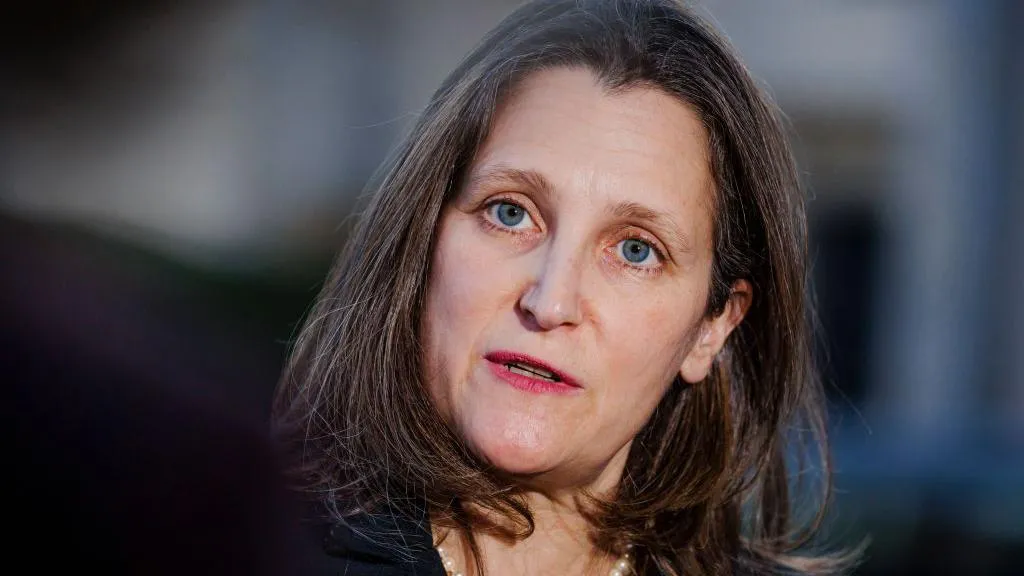


Canada’s Finance Minister unexpectedly resigned on December 16, 2024, citing irreconcilable differences with Prime Minister Justin Trudeau over handling trade tensions with the United States. The dispute centered on tariffs imposed by former U.S. President Donald Trump that continue to strain Canada-U.S. relations under President Biden’s administration.
The resignation marks a significant political shake-up as the government faces mounting pressure to negotiate a resolution to the lingering tariffs on key Canadian exports, including aluminum and lumber. Sources close to the matter revealed that the finance minister had advocated for a more aggressive approach to counter U.S. trade policies, clashing with Trudeau’s more diplomatic strategy.
“The current strategy is no longer sustainable,” the finance minister reportedly said in a closed-door meeting before submitting the resignation. “Canada needs to stand firm and prioritize our economic sovereignty.”
The resignation comes at a critical time for Canada’s economy, as the tariffs continue to impact key industries. Canadian businesses have reported losses in the billions, with some companies forced to cut jobs or shift operations to other markets. Trudeau’s government has faced criticism for failing to secure a timely resolution despite years of diplomatic efforts.
Trudeau, addressing the nation shortly after the announcement, expressed regret over the finance minister’s departure but reaffirmed his commitment to resolving the tariff issue. “We are working tirelessly to protect Canadian jobs and ensure fair trade practices,” he stated. “While we may have differences in strategy, our goal remains the same: to secure the best possible outcome for Canadians.”
Opposition leaders were quick to capitalize on the resignation, accusing the Trudeau government of ineffective leadership on the trade front. Conservative leader Pierre Poilievre called the situation “a failure of diplomacy and vision,” urging the government to adopt a more robust stance in trade negotiations.
Meanwhile, political analysts suggest the resignation could signal deeper divisions within Trudeau’s cabinet, particularly as the Liberal Party gears up for potential elections in 2025. “This is more than just a policy disagreement—it’s a sign of growing unrest within the party,” said political analyst Stephanie Langford. “The government needs to demonstrate unity if they hope to regain public trust.”
The Trump-era tariffs, initially imposed in 2018, have remained a contentious issue despite efforts by the Biden administration to ease trade tensions. Critics argue that Canada has been disproportionately affected compared to other U.S. trade partners, creating a persistent economic strain.
As the Trudeau government searches for a new finance minister, the stakes remain high. Whoever steps into the role will inherit the challenging task of navigating complex trade negotiations while addressing domestic economic concerns.
For now, the resignation underscores the ongoing fallout from Trump’s protectionist trade policies and highlights the challenges Canada faces in balancing diplomacy and economic resilience.