
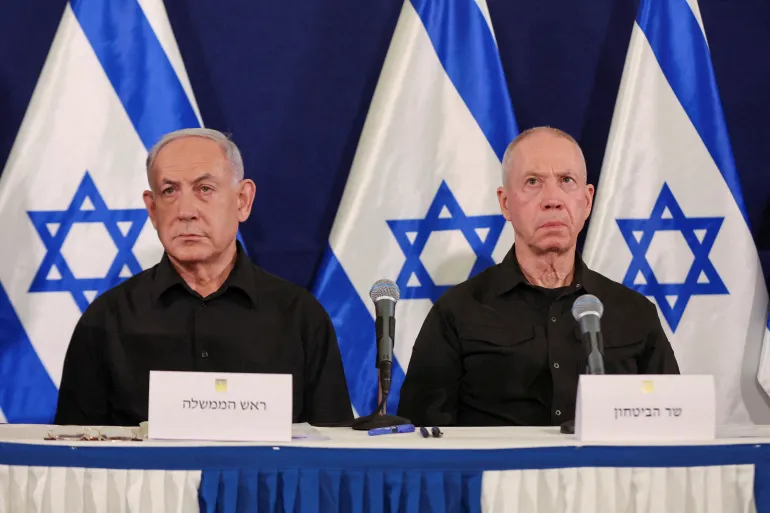


In a significant cabinet reshuffle, Israeli Prime Minister Benjamin Netanyahu has dismissed Defense Minister Yoav Gallant and appointed Israel Katz as his successor. This sudden change in leadership comes amid ongoing security challenges and public dissent over the government’s handling of national defense policies. Gallant’s removal highlights deepening divisions within Netanyahu’s administration as it faces intense scrutiny both domestically and internationally.
Yoav Gallant, a former general and member of the Likud party, had taken a strong stance on defense issues and was a key figure in Netanyahu’s cabinet. Gallant’s dismissal has sparked surprise and criticism from those who viewed him as an experienced leader during a critical period for Israel’s security. Known for his straightforward approach, Gallant had reportedly clashed with Netanyahu on several strategic issues, including the government’s judicial reforms and military policy. His vocal opposition to some of the government’s initiatives added tension within the cabinet, culminating in his removal from the Defense Ministry.
Israel Katz, a senior member of the Likud party and former Foreign Minister, steps into the role with extensive political experience, though he is less known for his military background. Katz has served in a variety of high-level positions, including as Minister of Transportation and Minister of Intelligence, making him a seasoned figure within Netanyahu’s inner circle. His appointment as Defense Minister is seen by analysts as a move to consolidate Netanyahu’s influence over defense policy while maintaining loyalty within his cabinet.
The leadership change occurs against a backdrop of heightened tensions in Israel, where concerns over security and defense have reached a peak. Israeli citizens have protested judicial reforms spearheaded by Netanyahu’s government, which many argue could undermine the independence of the judiciary. Gallant was one of the few senior Likud members who publicly called for a halt to the reforms, citing national security concerns and the potential for division within the military. His dismissal is therefore seen as part of a broader effort by Netanyahu to quell dissent within his ranks.
In his first statement as the new Defense Minister, Israel Katz emphasized his commitment to strengthening Israel’s security framework and supporting the armed forces. “Israel’s defense and the safety of its citizens remain my utmost priority. We will work with determination to ensure stability and protect our nation from all threats,” Katz said.
Political observers suggest that Katz’s appointment signals a potential shift in Israel’s defense strategy, with Netanyahu likely aiming for a more aligned cabinet to push forward his policy agenda. However, the reshuffle has also raised concerns about stability within the Israeli government, as Gallant’s departure may trigger further divisions within Likud and opposition from military officials who supported his stance on judicial reforms.
Critics argue that removing Gallant could compromise Israel’s defense efforts during a time of regional instability, noting that his experience and straightforward approach were assets in the Defense Ministry. Some opposition leaders have condemned the decision as a “political maneuver,” asserting that national security should remain above internal disputes.
Internationally, Gallant’s removal is likely to draw attention, particularly from allies who rely on Israel’s defense policy for regional stability. The United States and other allies closely monitor Israel’s internal politics, especially decisions that impact its military leadership. The U.S. State Department has previously expressed concerns over Israel’s proposed judicial reforms and may view Gallant’s removal as a sign of escalating tensions within the government.
Moving forward, Israel Katz will face the challenge of uniting the Defense Ministry and addressing both security threats and internal discord. His ability to navigate these pressures will be crucial as Israel’s defense policy continues to evolve under Netanyahu’s leadership.