
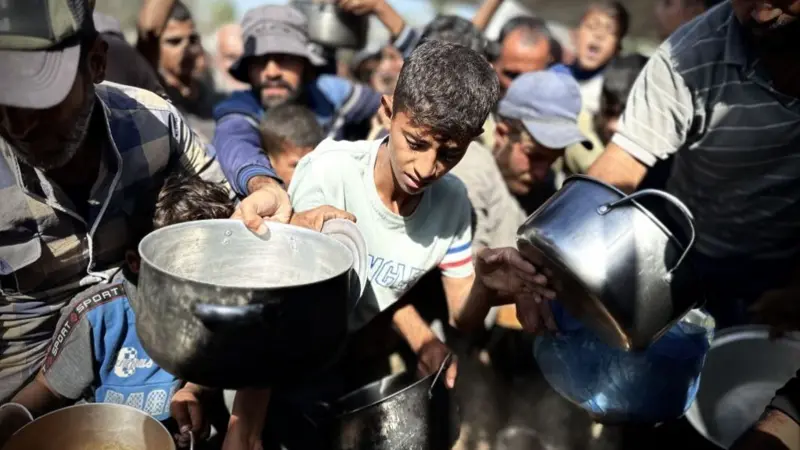


The United States is urging Israel to reconsider its recent ban on the United Nations Relief and Works Agency for Palestine Refugees (UNRWA) in Gaza, citing concerns over the impact on humanitarian aid distribution. This decision, which limits UNRWA’s operations in the region, has left many Palestinians worried about access to essential resources like food and education.
The restrictions have sparked widespread anxiety in Gaza, where UNRWA serves as a critical provider of food, healthcare, and education for Palestinian refugees. Many residents have expressed fears over how they will cope without the agency’s support. Om Yousef, a mother from Gaza, shared her concerns about the ban’s effect on her family’s well-being. “The decision to stop the UNRWA from working in Gaza is wrong because we are treated through them, and our children are educated in their schools. Education is the most important thing. I hope that this decision is not to be implemented because it is wrong,” she said.
UNRWA’s schools provide education for thousands of children in Gaza, and the organization also distributes essential supplies, including flour, to local communities. With this ban in place, many families fear they will lose access to vital food aid. One Gazan resident described the grim reality, asking, “How will we survive without flour?” as the agency’s role in delivering food and other essentials becomes increasingly uncertain.
The US government has raised concerns with Israel about the potential humanitarian consequences of this ban. While Israel has stated that the restrictions are meant to address security concerns, American officials are advocating for a more balanced approach that would still allow for critical aid distribution. The US position highlights the need to ensure that essential services are maintained for Palestinian civilians amidst ongoing tensions.
UNRWA, established in 1949, has long provided support to Palestinian refugees across the region. The agency’s role in Gaza has been particularly significant, as it offers not only basic necessities but also education and healthcare services that have become foundational to many families’ daily lives. The current restrictions threaten to disrupt these services, leaving thousands of Gazans in a vulnerable situation.
The impact of this ban extends beyond immediate food aid. Without UNRWA’s presence, families in Gaza face the risk of losing access to consistent medical care and educational opportunities, essential pillars of stability in the area. For parents like Om Yousef, the agency represents more than just assistance; it is a lifeline for their children’s future.
As the situation continues to unfold, international calls for Israel to revisit the ban are growing, with advocates highlighting the pressing humanitarian needs of Palestinian civilians. In the face of escalating hardships, Gazan residents remain hopeful that these restrictions will be lifted, allowing UNRWA to resume its critical support.