
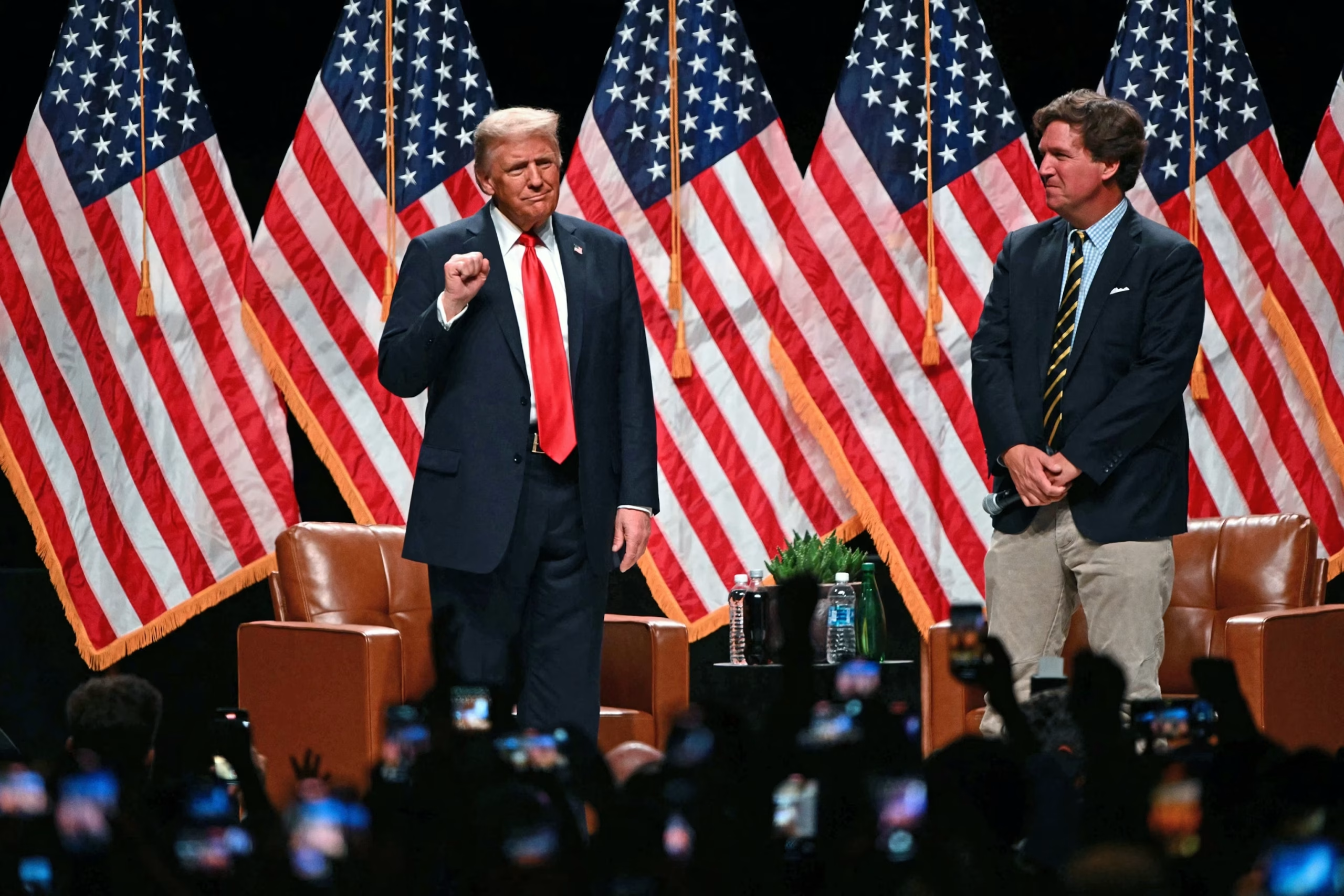


In a fiery turn of events on the campaign trail, former President Donald Trump has sparked intense criticism after making disturbing comments about former Congresswoman Liz Cheney. At an event on Thursday night, Trump referred to Cheney as a “war hawk” and suggested she would reconsider her stance if “guns were trained on her face.” The remark has led to swift condemnation from various political and media figures, and now the Arizona attorney general’s office is reportedly reviewing the incident, raising questions about the limits of free speech in political discourse.
Violent Rhetoric Under Scrutiny
Trump’s remark about Cheney is part of a larger pattern of inflammatory language in his speeches, which often include vivid descriptions of violence. Critics argue that such rhetoric is irresponsible and escalates tension in an already polarized political environment. Cheney, who has been one of Trump’s most vocal critics within the GOP, has previously stated that Trump’s language poses a “clear and present danger” to democracy.
Analysts have noted that Trump’s language resonates strongly with his base but risks alienating moderate voters. Joe Scarborough of Morning Joe and Stephanie Ruhle of MSNBC have publicly criticized Trump’s statements, expressing concern about the normalization of violent imagery in politics. Conservative outlets like Daily Wire Plus have offered varying perspectives, with some arguing that Trump’s rhetoric taps into voter frustrations with establishment figures like Cheney, while others call for a more restrained approach.
Polls Reflect Voter Uncertainty
As Trump leads in early GOP polls against Democratic opponents like Vice President Kamala Harris, his use of inflammatory language is a double-edged sword. While it may energize his core supporters, polls show a growing number of Americans are concerned about the potential for political violence. Recent surveys suggest that undecided voters may be swayed by such rhetoric, adding complexity to Trump’s path to the 2024 general election.
Cheney’s Response and Public Reaction
While Cheney has not issued a direct response to Trump’s recent comment, she previously warned about the dangers of unchecked political rhetoric. After losing her Wyoming seat to a Trump-endorsed challenger in 2022, she has remained active in warning against populist movements within the GOP. Her position has earned her respect across party lines, although it has led to her estrangement from many Republican voters.
Public response to Trump’s comment has been mixed. Some supporters dismiss it as exaggerated campaign rhetoric, while others, including moderate Republicans, view it as a troubling sign of how deeply polarized American politics has become.
As Trump faces mounting scrutiny for his rhetoric and the Arizona attorney general’s review of his statements, political analysts are keeping a close eye on how this will affect his campaign and voter perceptions leading into 2024.