
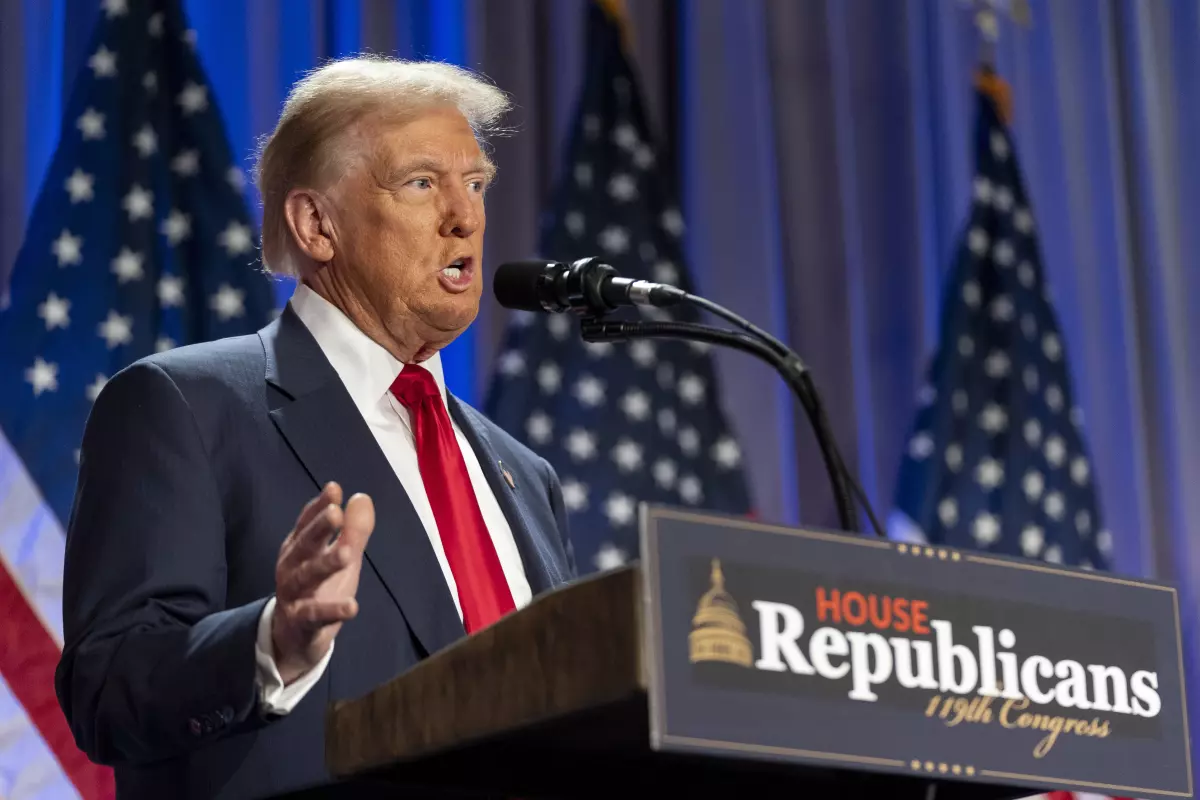


In a bold declaration ahead of his inauguration, president-elect Donald Trump has announced plans to impose sweeping tariffs on key trade partners, including Mexico, Canada, and China. This controversial move, which Trump vows to execute on his first day in office, is set to significantly alter the global trade landscape and could have major implications for North American and global economies.
The proposed tariffs include a 25% levy on goods from Mexico and Canada and a 10% tariff on Chinese imports. Trump’s announcement has raised alarms among business leaders, economists, and politicians, all of whom are concerned about the potential for retaliation and disruption of established trade relationships.
Trump’s Rationale: Drugs and Migrants
Trump’s decision to levy these tariffs comes with a pointed message: they will remain in place until Canada, Mexico, and China take decisive action to stop the flow of illegal drugs and migrants into the United States. The president-elect has consistently argued that trade imbalances and illegal immigration have been detrimental to American workers and national security, and these tariffs are a direct response to those concerns.
“We will use tariffs as a tool to get these countries to act. If they want to continue trading with us, they will need to address the critical issues that harm our country,” Trump stated in a press conference.
Economic Impact and Business Concerns
The proposed tariffs would target a broad range of industries, with particular emphasis on goods like electronics, automotive parts, and agricultural products. Canadian and Mexican businesses that rely heavily on trade with the U.S. are bracing for the economic fallout, which could lead to higher prices for consumers and disruptions in supply chains. Similarly, Chinese manufacturers may face increased costs as tariffs rise, leading to higher prices on everyday goods like electronics and clothing.
Some economists are worried that these tariffs could trigger a trade war, with affected countries retaliating by imposing their own tariffs on U.S. exports. This could negatively impact American manufacturers, farmers, and consumers who rely on global supply chains for goods and services.
A Shift in U.S. Trade Policy
Trump’s approach to tariffs marks a sharp departure from the free-trade policies of past administrations. He has long criticized trade deals such as NAFTA, which he claims were unfair to American workers. By imposing tariffs on Mexico, Canada, and China, Trump aims to reshape the U.S.’s trade relations to benefit American industries and reduce the trade deficit.
However, critics of the plan argue that tariffs could hurt U.S. consumers by raising the cost of goods and diminishing trade volume. Economic experts warn that the tariffs could backfire, leading to job losses in industries reliant on imports and damaging relations with long-standing trade partners.
What to Expect in 2025
With these tariffs poised to take effect in 2025, businesses and lawmakers alike will be closely watching the first few months of the Trump administration to see how these policies will unfold. Trump has indicated that he is prepared to stand firm on these tariffs, which he views as a necessary step in tackling what he perceives as unfair trade practices that harm U.S. interests.
As the world waits to see how the new president’s tariff policies will affect global trade, the business community is bracing for a period of uncertainty and potential disruption. Whether these tariffs will achieve their intended goals or lead to a broader economic downturn remains to be seen.