
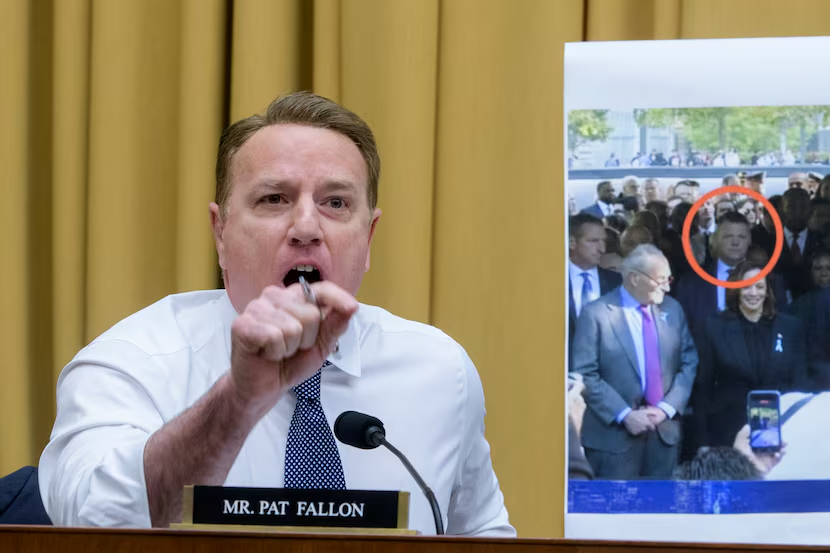


A heated exchange erupted during a congressional hearing on the Secret Service’s response to assassination threats against President-elect Donald Trump. Rep. Pat Fallon (R-Texas) and acting Secret Service Director Ronald Rowe clashed in a dramatic confrontation that showcased frustrations over the agency’s leadership and operational decisions.
The shouting match began when Fallon accused Rowe of prioritizing personal visibility over agency protocol during the annual 9/11 memorial in New York City. Fallon presented a photograph showing Rowe standing prominently behind President Joe Biden at the event, a position typically occupied by the special agent in charge of the presidential detail.
“You deliberately placed yourself in that position for publicity,” Fallon charged. “This wasn’t about honoring 9/11 victims—it was about ensuring you were seen on camera.”
Director Rowe Defends His Actions
Rowe immediately refuted Fallon’s claims, defending his presence at the memorial as part of his leadership responsibilities. He insisted that his positioning had no bearing on the security detail’s effectiveness.
“This baseless accusation undermines the professionalism of the Secret Service,” Rowe responded. “My focus remains on ensuring the safety of those we are sworn to protect, not on media appearances.”
The Larger Issue: Agency Preparedness
The heated moment came amid a broader discussion on the Secret Service’s readiness to counter threats against President-elect Trump. Members of Congress grilled Rowe on the agency’s strategies following several high-profile security incidents in recent months.
Fallon, who has been vocal about his concerns regarding the agency’s performance, argued that the photograph exemplified a lack of focus on the agency’s mission. “Leadership starts at the top,” he stated. “What kind of example does this set for the men and women risking their lives daily?”
Other lawmakers urged the task force to remain focused on addressing systemic issues within the Secret Service, emphasizing the need for improved training, resource allocation, and coordination with other federal agencies.
Political and Public Reactions
The public confrontation between Fallon and Rowe has drawn mixed reactions. Critics of Rowe argue that the photograph raises valid questions about the agency’s leadership priorities. Meanwhile, Rowe’s supporters contend that Fallon’s accusation distracts from the serious work of ensuring presidential security.
The incident highlights the tense political environment surrounding the Secret Service as it navigates an increasingly complex threat landscape.
As the hearing concluded, committee members called for follow-up discussions to address the concerns raised. Despite the shouting match, lawmakers from both parties stressed the importance of maintaining trust in the Secret Service during this transitional period.
The Secret Service has yet to release an official statement regarding the allegations, but officials close to the agency indicate that Rowe remains committed to leading with integrity amidst the scrutiny.