
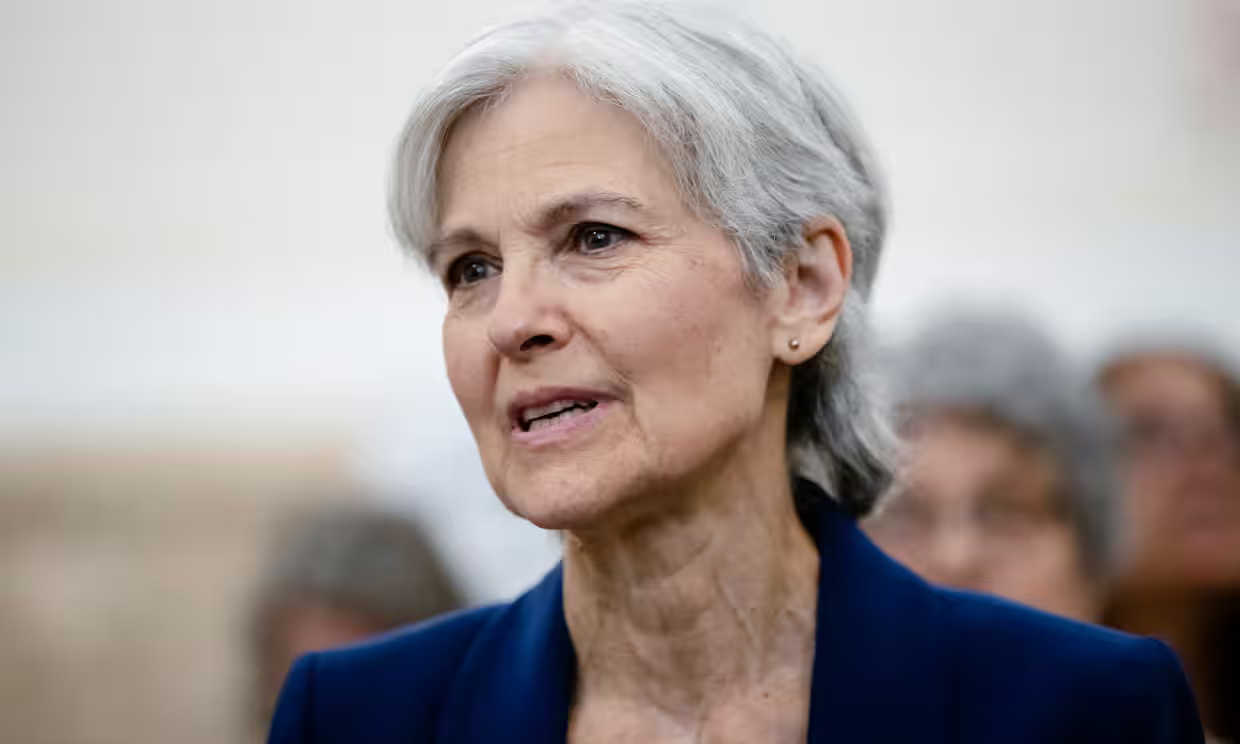


November 4, 2024 — With Election Day just a day away, the influence of third-party candidates, particularly Jill Stein and Cornel West, is stirring debate on whether they could play a decisive role in shaping the outcome of the 2024 presidential race. Both major party candidates—Kamala Harris for the Democrats and Donald Trump for the Republicans—are facing the possibility that third-party voters could siphon enough support to impact their standings in tight battleground states.
Jill Stein’s Progressive Pull: Potential Impact on Harris Campaign
Jill Stein, the Green Party’s 2024 candidate, is positioning herself as a voice for disillusioned progressive voters who feel that the Democratic Party has failed to adequately address issues such as climate change, wealth inequality, and universal healthcare. Stein’s focus on these issues resonates particularly with younger voters, many of whom might otherwise lean Democratic. Her presence on the ballot could pull critical votes from Harris in states where the margins are razor-thin, potentially tipping the scales in Trump’s favor.
Cornel West and the Progressive Factor
Like Stein, Cornel West is also vying for the progressive vote, running under the People’s Party. As an academic and social justice advocate, West’s campaign appeals to voters who are frustrated with the current two-party system and seek a more radical shift in U.S. politics. West’s influence, however, could split the third-party progressive vote, leaving an open question as to whether his campaign could benefit the Democratic or Republican ticket overall.
Third-Party Dynamics: Robert F. Kennedy Jr.’s Impact on Trump
Meanwhile, independent candidate Robert F. Kennedy Jr. is attracting votes from a range of constituencies, including some traditional conservatives. Kennedy’s positions on vaccine skepticism and government overreach have drawn support from libertarian-minded Republicans and independents, leading some analysts to predict that his candidacy could cut into Trump’s base in key states.
Could Third-Party Candidates Be 2024 “Spoilers”?
The potential spoiler effect of third-party candidates is a recurring concern in American presidential elections, and 2024 is no exception. Analysts note that even a small percentage shift could swing the electoral outcome in pivotal states like Wisconsin, Pennsylvania, and Arizona. Stein and West’s campaigns could notably undermine Harris’s support in these regions, while Kennedy’s influence might weaken Trump’s hold in traditionally red or swing states.
Voter Sentiment on Third-Party Options
For many voters, dissatisfaction with the two-party system is a driving force behind support for Stein, West, and Kennedy. “The two-party system just doesn’t represent the full spectrum of American voices,” one Stein supporter in Pennsylvania remarked. This sentiment reflects the broader trend of growing interest in third-party and independent candidates, despite fears they could inadvertently help elect a less preferred major candidate.
As Election Day looms, the roles of Jill Stein, Cornel West, and Robert F. Kennedy Jr. are adding a layer of unpredictability, leaving both Harris and Trump campaigns watching closely to see if these third-party candidates become decisive factors in a closely contested election.