
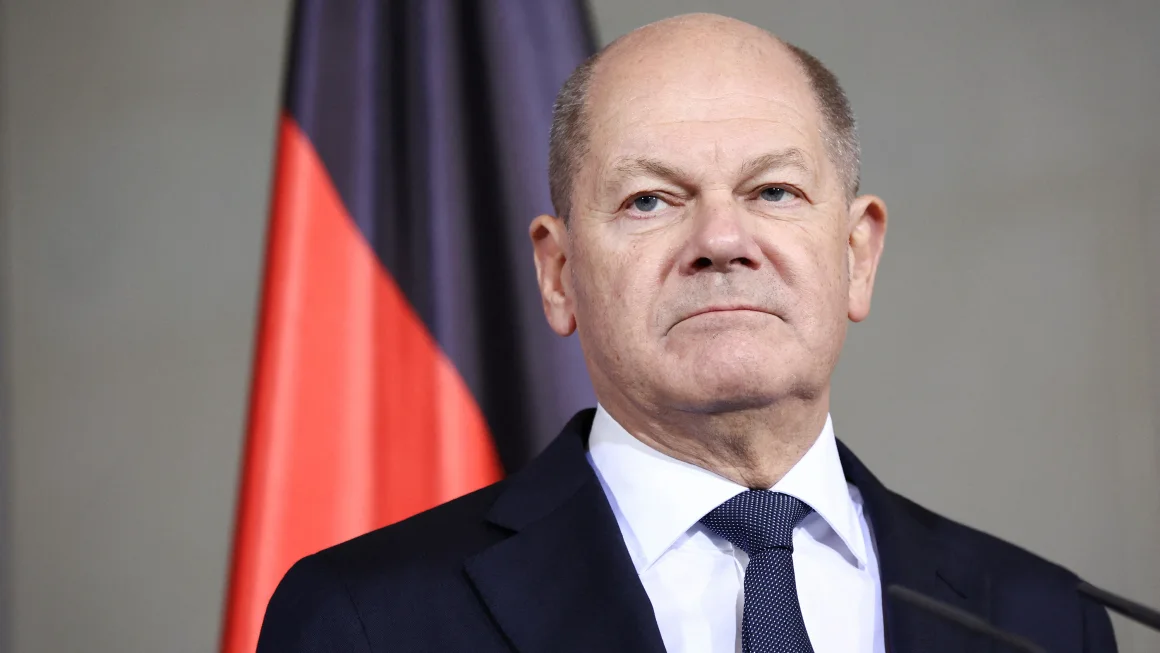


Berlin, Germany – German Chancellor Olaf Scholz has suffered a significant political defeat after losing a confidence vote in the Bundestag, leading to the collapse of the three-party coalition government. This unprecedented development has triggered early elections, set to take place in February 2025, marking the first snap elections in Germany in over two decades.
Collapse of the Coalition
The downfall of Scholz’s government comes amid growing discontent with the ruling coalition between Scholz’s Social Democratic Party (SPD), the Greens, and the Free Democratic Party (FDP). The coalition, formed in 2021, has faced mounting criticism over economic stagnation, immigration challenges, and disputes on climate policies. Tensions within the coalition reached a breaking point, culminating in the confidence vote that Scholz failed to survive.
Political analysts point to Germany’s faltering economy, rising energy costs, and dissatisfaction with Scholz’s leadership as key factors contributing to the collapse. The coalition’s inability to agree on a clear path forward on critical issues, including budget deficits and defense spending, further exacerbated its instability.
Olaf Scholz’s Reaction
In a press conference following the vote, Olaf Scholz acknowledged the result but defended his government’s efforts during its tenure. “We worked tirelessly to navigate unprecedented challenges, but it’s clear the Bundestag has lost faith in this coalition. We will respect the democratic process and let the German people decide the next path forward.”
Scholz, whose popularity has waned, now faces an uncertain political future as Germany prepares for snap elections.
What’s Next for Germany?
The collapse of the government has sent shockwaves through Germany and the European Union, as the country’s political stability is often seen as a cornerstone of European leadership. Snap elections will take place in February 2025, giving German voters an opportunity to reshape the political landscape.
Key opposition parties, including the Christian Democratic Union (CDU) and the far-right Alternative for Germany (AfD), are expected to gain ground in the upcoming elections. Recent polls suggest growing support for more conservative and right-leaning parties as frustrations mount over economic challenges and immigration policies.
Impact on Europe
The collapse of Germany’s government raises concerns about the stability of the European Union. As the largest economy in Europe, Germany plays a crucial role in the EU’s policymaking and economic strategy. The uncertainty surrounding its leadership could stall critical decisions on defense, energy, and trade.
Conclusion
Germany’s political turmoil marks a pivotal moment for both the country and Europe. With Chancellor Olaf Scholz ousted and his coalition dissolved, the February snap elections will determine the nation’s next chapter. For now, Germany faces a period of uncertainty, with its future leadership and policies hanging in the balance.