
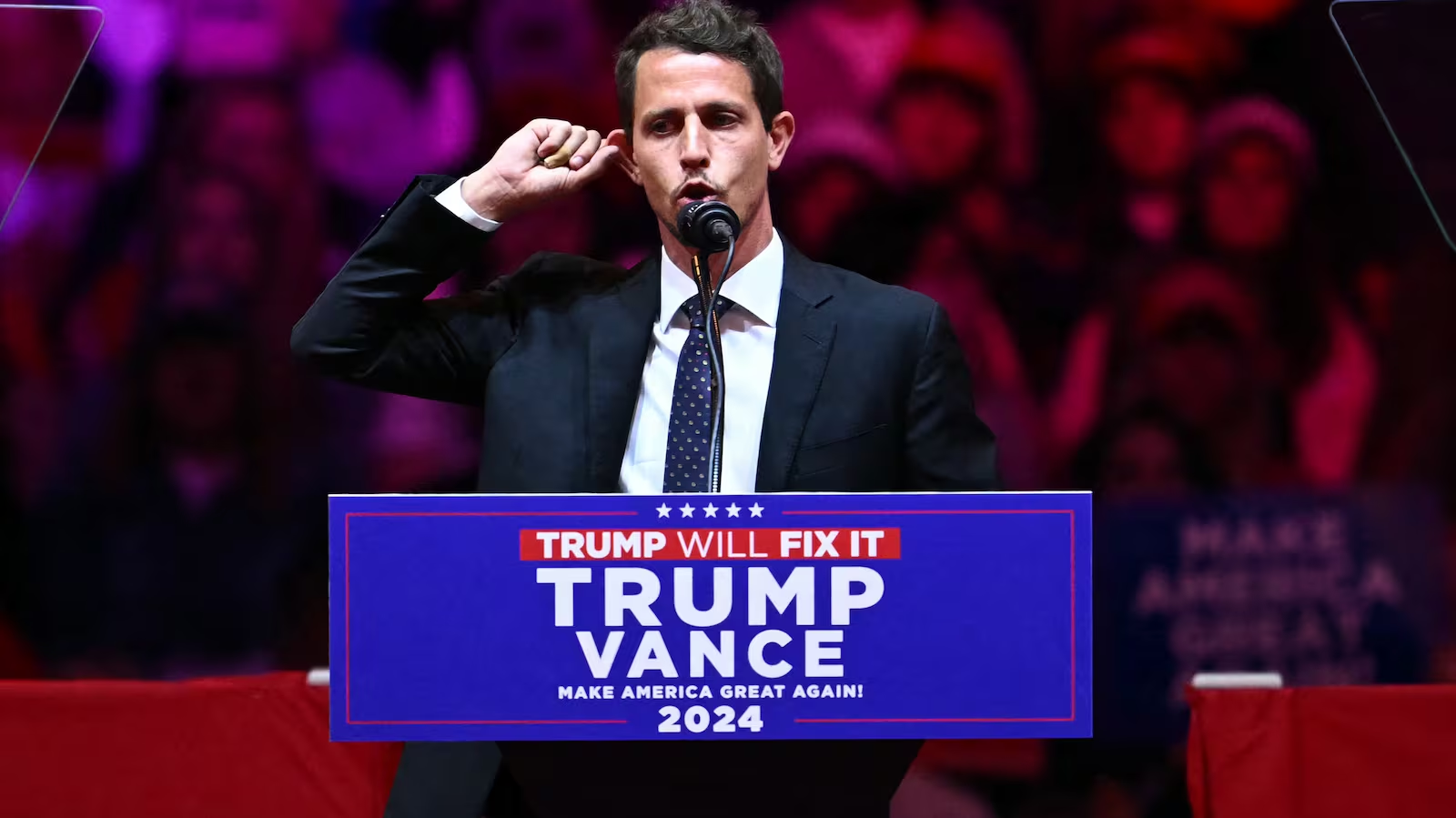


The opening act at former President Donald Trump’s recent rally in New York City has drawn widespread condemnation following comedian Tony Hinchcliffe’s performance, which included racist and derogatory remarks about Latino and Black individuals. The event, held at Madison Square Garden, was meant to showcase Trump’s ongoing political influence, but it quickly became overshadowed by the comedian’s controversial set.
During his routine, Hinchcliffe, known for his provocative style, made a series of inflammatory jokes that targeted racial minorities. Eyewitness accounts and video clips from the event reveal that the audience’s reactions ranged from laughter to shock, with many expressing discomfort at the comedian’s remarks. Critics have since taken to social media to express their outrage, condemning both Hinchcliffe and the decision to include him in the rally lineup.
Hinchcliffe’s comments reflect a broader issue within the realm of comedy and public discourse, where the line between humor and hate speech can often become blurred. While some may argue that comedy serves as a platform for free expression, many believe that perpetuating harmful stereotypes and promoting divisive narratives only fuels societal tensions.
Activists and community leaders have called for accountability, demanding that individuals and organizations who endorse such performances reconsider their stance on promoting divisive rhetoric. “It’s disappointing to see such language being normalized in a public setting,” said local civil rights advocate Maria Gonzalez. “We should be working toward unity, not allowing hate speech to become entertainment.”
Trump’s rallies have historically been contentious, often attracting both fervent supporters and vocal protesters. The inclusion of Hinchcliffe, particularly given the tone of his set, raises questions about the broader implications of Trump’s political platform and the messages being disseminated at these events. Critics argue that the comedian’s remarks resonate with a troubling undercurrent of racism and xenophobia that has permeated parts of American political discourse.
In response to the backlash, Hinchcliffe has defended his routine as satire, insisting that his intention was not to offend but to entertain. However, many find this justification insufficient, arguing that comedians have a responsibility to be aware of the impact their words can have, particularly when addressing sensitive topics like race.
Following the rally, several organizations focused on racial equality released statements condemning the performance. They emphasized the importance of fostering a culture of respect and inclusivity, urging the public to challenge offensive humor rather than accept it passively. “Laughter should never come at the expense of marginalized communities,” said spokesperson Jamal Edwards from the Coalition for Racial Justice.
As the fallout from Hinchcliffe’s set continues, it serves as a stark reminder of the ongoing challenges in addressing racism and promoting understanding in contemporary society. In a time when divisions seem to be deepening, the need for thoughtful dialogue and mutual respect has never been more crucial.
Trump’s NYC rally and Hinchcliffe’s performance have reignited discussions about the role of comedy in society, particularly within the context of political events. While humor can serve as a powerful tool for critique and reflection, it can also perpetuate harmful stereotypes and incite division. As the nation navigates complex social dynamics, the events at Madison Square Garden underscore the importance of holding public figures accountable for their words and actions.
In conclusion, the controversy surrounding Tony Hinchcliffe’s set at Trump’s rally is a reflection of larger societal issues regarding race and representation. As conversations about inclusivity and accountability continue, it remains essential for all individuals—be they comedians, politicians, or audience members—to engage thoughtfully with the narratives they promote and the impacts they may have on marginalized communities.