
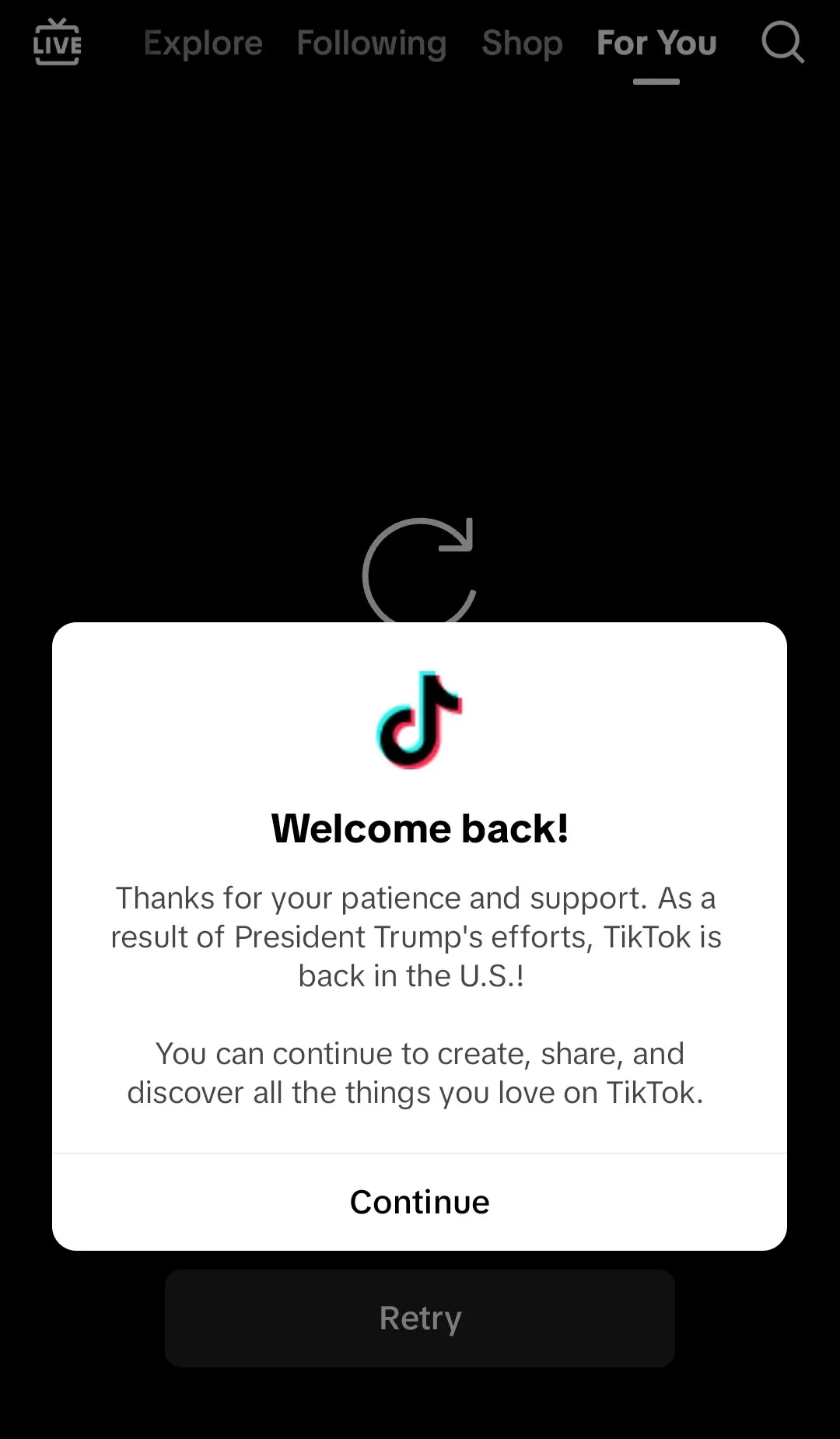


TikTok users across the United States rejoiced as the platform resumed services on Sunday, just hours after going dark due to a federal ban. The sudden turnaround came after President-elect Donald Trump announced plans to pause the ban through an executive order on his first day in office, providing the platform’s parent company additional time to find a compliant buyer.
The announcement followed a period of uncertainty for millions of TikTok users, who woke up to discover that the app was no longer accessible. The outage marked the culmination of ongoing tensions between the U.S. government and ByteDance, TikTok’s China-based parent company, over data security and national security concerns.
Trump Steps In
In a statement shared on his Truth Social platform, Trump revealed his intentions to intervene, saying the executive order would temporarily halt the ban. This move aims to facilitate ongoing negotiations for ByteDance to secure an approved buyer or implement measures to address U.S. security concerns.
“I am committed to ensuring the freedoms of Americans while safeguarding our national security,” Trump stated. “This executive action will provide TikTok with the opportunity to comply with our regulations and continue serving its millions of users.”
TikTok’s Message of Gratitude
By Sunday afternoon, TikTok had restored its services, much to the relief of its user base. The platform greeted users with a message acknowledging the president-elect’s efforts:
“As a result of President Trump’s efforts, TikTok is back in the U.S.! Thank you for your patience and support.”
The brief outage underscored the app’s popularity and its deep integration into American culture, particularly among younger audiences. Analysts estimate that TikTok has over 150 million active users in the United States alone, highlighting its significant impact on social media trends and entertainment.
What’s Next for TikTok?
The executive order, while a temporary solution, leaves ByteDance with a challenging path forward. The company must now work within a limited timeframe to satisfy U.S. government demands, which could include selling the app to a U.S.-based entity or implementing robust data security measures to alleviate national security concerns.
Major U.S. companies, including Oracle and Walmart, have previously been linked to potential acquisition deals, though no definitive agreements have been reached. Meanwhile, TikTok has consistently denied allegations of data misuse or ties to the Chinese government, maintaining its commitment to user privacy and transparency.
Broader Implications
The ban and its temporary pause underscore the growing scrutiny of Chinese technology companies in the United States. Beyond TikTok, apps like WeChat and others have faced similar challenges as geopolitical tensions shape regulatory decisions. Experts suggest that this intervention by Trump sets a precedent for future policy decisions regarding foreign tech companies operating in the U.S.
For now, TikTok users can continue creating and sharing content while awaiting the outcome of ongoing negotiations. However, the platform’s future in the U.S. remains uncertain, hinging on its ability to address security concerns and comply with federal regulations.