



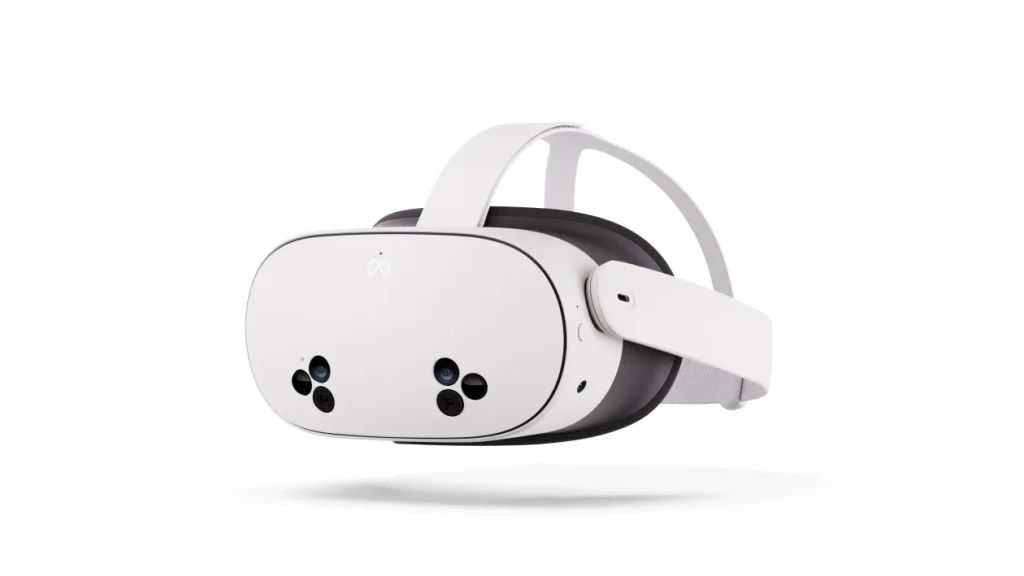
Meta has introduced the latest version of its virtual reality (VR) headset, the Quest 3S, with a lower price point of $299. As part of its continued push into the VR space, the Quest 3S offers a balance between affordability and performance, making it accessible to a wider audience. This new headset brings improvements in design, performance, and user experience compared to previous models, targeting both casual users and VR enthusiasts.
Key Features and Upgrades
The Quest 3S boasts several technical enhancements over its predecessor, the Quest 2, while maintaining a sleek and lightweight design. Key features include:
- Improved Display: The Quest 3S features a higher resolution display, ensuring sharper visuals and more immersive gameplay. The increased pixel density reduces the “screen door effect,” providing clearer imagery.
- Better Performance: Powered by an updated processor, the Quest 3S offers faster load times and smoother overall performance. The enhanced graphics processing unit (GPU) enables the headset to handle more demanding applications with ease.
- Comfort and Design: Meta has worked on making the Quest 3S more comfortable for extended use. It features a more ergonomic design, with lighter materials and better weight distribution, making long gaming or immersive experiences more comfortable.
- Improved Controllers: The updated controllers come with haptic feedback and better tracking, giving users a more natural and intuitive feel during gameplay or VR experiences.
- Standalone Functionality: Like the Quest 2, the Quest 3S continues to support standalone functionality, meaning users can enjoy VR experiences without needing a high-end PC or additional hardware. This makes it convenient for users who want a hassle-free VR experience.
Competition and Market Impact
Meta’s decision to price the Quest 3S at $299 places it in a competitive position within the VR market. The lower price tag could attract more consumers who were previously hesitant to invest in VR due to cost barriers. Meta is betting on expanding its user base by offering a more budget-friendly option without compromising too much on the quality or features that users expect from a VR headset.
This move comes as Meta continues to expand its vision for the “metaverse” — a virtual world where users can interact, work, and play. The affordable Quest 3S could be a significant step in increasing accessibility to the metaverse, allowing more users to experience virtual worlds.
Meta’s Quest 3S VR headset, priced at $299, is an appealing choice for those looking to explore virtual reality without breaking the bank. With its improved display, better performance, and focus on comfort, the Quest 3S offers an upgraded experience while remaining accessible. As VR continues to gain popularity, the Quest 3S could play a key role in bringing more users into the fold and contributing to the expansion of Meta’s metaverse ambitions.
Meta highlighted improved “passthrough,” the term used to described when a VR headset uses cameras and sensors on the outside of the device to display live real-time video inside the headset. That function is intended to make users feel like they are looking through a display and allows them to interact with the real world while keeping the headset on. For the Quest 3S, Meta added a dedicated button to turn on passthrough.
The company has emphasized the ability of the Quest 3S to multitask and run apps, positioning it as a computing device, instead of a game console.
“All the things you can do with a general purpose computer, Quest is the full package,” Zuckerberg said.
In demos provided Tuesday, Meta showcased the device running as many as four apps at one time on floating screens inside the headset, including a YouTube video, a browser, Amazon Music and Meta’s app store. Meta says the headset can handle six windows. But the demo experience was not smooth. The Amazon Music app crashed, window controls would disappear and Meta’s controllers would fall asleep after a few minutes if the user wasn’t pressing buttons.
Besides the Quest 3S, Meta also announced a price cut for last’s year Quest 3, bringing the price of the 512GB version down from $650 to $500. The Quest 3 has more advanced lenses and a superior screen with a higher resolution than the Quest 3S.
Additionally, Meta said it will discontinue the Quest Pro, its $999 headset launched in 2022 that never gained much momentum.