
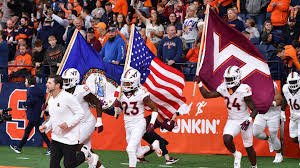


Virginia Tech’s hopes of clinching a key ACC victory were dashed as Syracuse powered through to hand the Hokies a disappointing loss. The game highlighted some persistent issues for Virginia Tech while also shedding light on areas where they showed promise but failed to fully capitalize. Here are five major takeaways from the Hokies’ defeat.
1. Offensive Struggles Continue to Plague the Hokies
Virginia Tech’s offense once again struggled to find momentum, facing a solid Syracuse defense that limited their scoring opportunities. Despite flashes of potential, the Hokies couldn’t string together sustained drives or find a reliable rhythm. Quarterback Kyron Drones faced consistent pressure and lacked the time needed to execute key plays, contributing to the Hokies’ inability to put points on the board.
The Hokies’ offensive line was inconsistent, and breakdowns in protection led to hurried throws and limited passing yardage. This issue has been a recurring theme this season and underscores a need for improved cohesion and execution on offense if Virginia Tech hopes to remain competitive in the ACC.
2. Defensive Fatigue and Vulnerability to Big Plays
Virginia Tech’s defense started strong, holding Syracuse in check for much of the first half. However, as the game wore on, defensive fatigue became evident. The Hokies were on the field for extended stretches due to the offense’s inability to keep drives alive, which eventually allowed Syracuse to capitalize on worn-down defenders.
Syracuse managed several explosive plays that widened their lead in the second half, exposing some vulnerabilities in Virginia Tech’s secondary. The Hokies’ defense fought hard but ultimately faltered under the relentless pressure, highlighting the need for the offense to sustain drives to give the defense a chance to rest and regroup.
3. Inconsistent Special Teams Performance
Special teams were another area of concern for the Hokies, as both punting and kick returns failed to provide a field position advantage. Several missed tackles on Syracuse’s returns set up favorable field positions for their offense, putting additional strain on Virginia Tech’s defense. Additionally, missed field goal opportunities and shorter-than-ideal punts limited the Hokies’ ability to close the scoring gap.
The Hokies’ inconsistent special teams play has been a challenge throughout the season, and this game further highlighted the need for improvement. A few solid special teams plays could have shifted the momentum, but missed opportunities kept the team on the back foot.
4. Inability to Adjust to Syracuse’s Defensive Schemes
Syracuse employed a variety of defensive schemes that kept Virginia Tech off balance, particularly in the second half. The Orange’s aggressive blitz packages and disguised coverages made it difficult for the Hokies to establish a passing game. Despite some halftime adjustments, Virginia Tech was unable to counter effectively, as Syracuse’s defense continued to dominate the trenches.
Head coach Brent Pry and the Hokies’ coaching staff will need to revisit their offensive game planning to better respond to defensive shifts and ensure a more adaptive approach in future games.
5. Bright Spots Among Young Talent
Despite the loss, there were promising performances from Virginia Tech’s younger players, suggesting a potential for future growth. Freshman wide receiver Da’Quan Felton showed flashes of his playmaking ability, creating opportunities when given the chance. Similarly, linebacker Alan Tisdale made key tackles and displayed leadership on the defensive side of the ball.
These bright spots may signal a promising future for the Hokies, but turning these individual efforts into team success will require experience, consistency, and cohesion. Building on the promise of these younger players could provide Virginia Tech with a foundation for upcoming seasons.
The loss to Syracuse underscores Virginia Tech’s ongoing struggles but also reveals areas where growth is possible. Moving forward, the Hokies will need to focus on building offensive consistency, shoring up special teams, and finding ways to adapt mid-game. With a challenging schedule ahead, each game will be crucial in refining their approach and making strides for future success.