
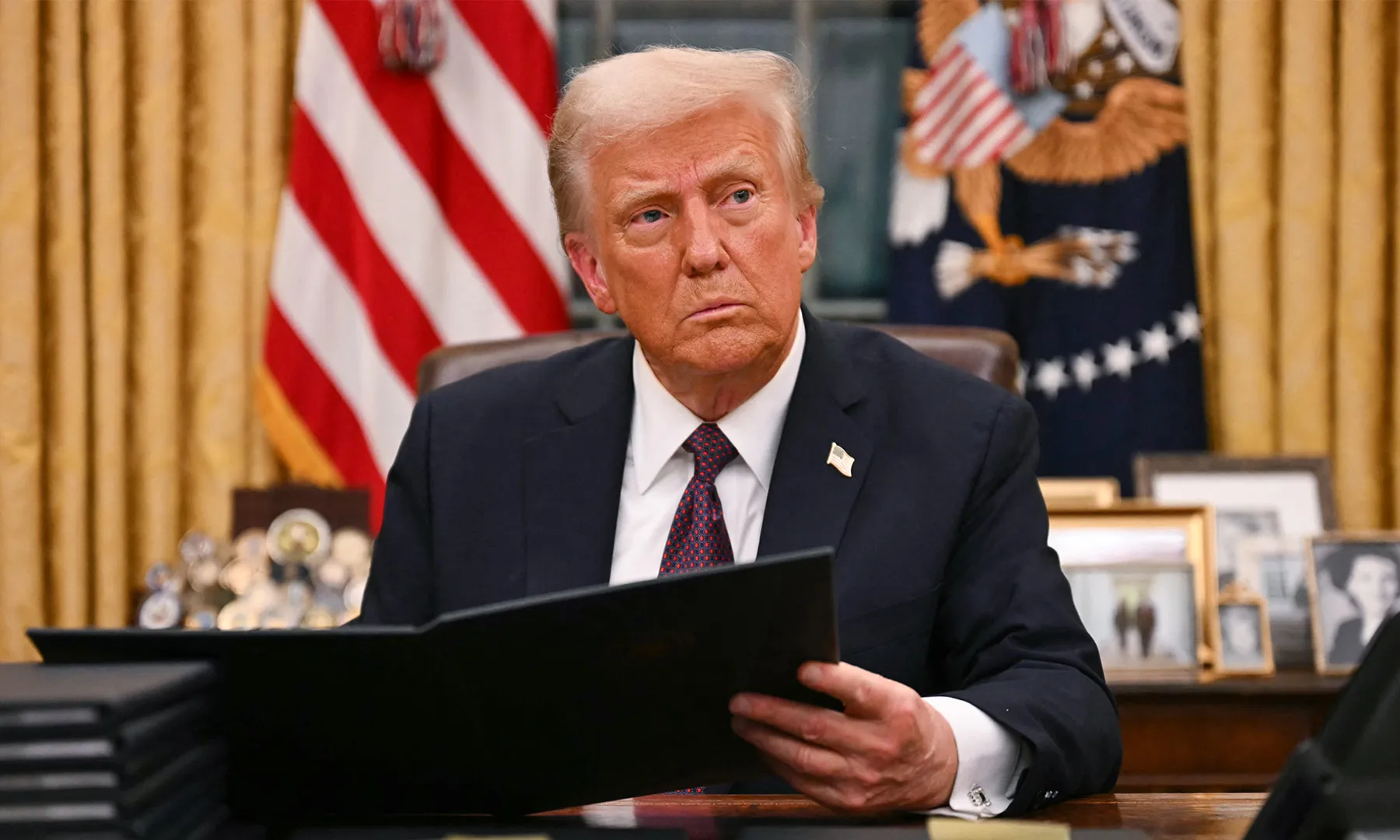


As Donald Trump embarks on his second term, the fear of democratic erosion in the United States has surged. While some speculations, like Trump canceling the 2028 election or running for a third term, are legally and practically implausible, political experts warn that he could still undermine democratic norms through subtler methods.
Executive Power and Initial Actions
Within hours of his return to the White House, Trump issued a series of executive orders that raised alarms. These included controversial decisions like ending birthright citizenship—a constitutional guarantee—and pardoning individuals involved in the January 6, 2021, Capitol riot. Such actions highlight his willingness to challenge legal and institutional constraints.
These early moves underscore concerns about the weakening of democracy under Trump’s leadership. According to a poll by Marist College, 73% of Americans believe there is a serious threat to democracy, while an Ipsos/PRRI survey revealed that 49% fear Trump could exploit his presidency to become a dictator.
Legal Barriers to Authoritarianism
Despite these fears, certain safeguards remain firmly in place. The 22nd Amendment prohibits any individual from serving more than two terms as president, a rule reinforced by stringent legislative hurdles for constitutional amendments. Moreover, elections in the U.S. are decentralized, with each state responsible for its own presidential voting process.
As election law expert Joshua Douglas notes, “The president has no authority over the way in which we run our elections.” Even if extraordinary circumstances arose, Congress would face significant opposition to altering election timelines or processes in Trump’s favor.
Subtle Erosion of Democracy
The greater concern lies in “competitive authoritarianism”, where democratic institutions exist but are systematically weakened. Examples from countries like Hungary and Turkey show how leaders can manipulate electoral systems, the judiciary, and the media while maintaining the appearance of democracy.
Trump’s first term provided a blueprint for this gradual erosion. His dismissal of FBI Director James Comey, attempts to discredit the 2020 election results, and endorsement of loyalists in Republican primaries demonstrated his inclination to prioritize personal power over democratic principles.
In his second term, experts fear Trump may further attack institutions that hold him accountable. Susan Stokes, a political scientist from the University of Chicago, highlights potential threats such as increased lawsuits against critical media outlets, purges of federal civil servants, and retaliatory actions against dissenting politicians.
Legislative and Judicial Challenges
A significant concern is Trump’s ability to influence legislation and judicial appointments. Laws like the proposed SAVE Act, which would impose strict voter ID requirements, could suppress voter turnout. Republican-controlled states might also enact new voting restrictions under the guise of addressing voter fraud—despite limited evidence supporting such claims.
With a judiciary now populated by Trump-appointed judges, the checks on his authority may weaken further. Meanwhile, a legislative branch increasingly dominated by pro-Trump Republicans could fail to provide the necessary balance of power.
Lessons from History
While democratic backsliding is a valid concern, history suggests that fully transitioning to autocracy is rare in established democracies. Research by Melis Laebens and other scholars reveals that most democratically elected leaders who attempt to consolidate power ultimately fail, especially in wealthy nations with robust institutional frameworks.
However, the erosion of democratic norms can still have profound consequences. Free and fair elections, peaceful transitions of power, and protections for free speech are core tenets of American democracy. Any actions undermining these values risk pushing the U.S. toward a precarious middle ground between democracy and autocracy.
Conclusion
While Trump cannot cancel the 2028 election or serve a third term, his leadership could still weaken the democratic fabric of the U.S. by undermining accountability mechanisms and tilting electoral dynamics. Americans must remain vigilant to ensure that democratic principles endure, even as political polarization and authoritarian tendencies threaten their foundations.