
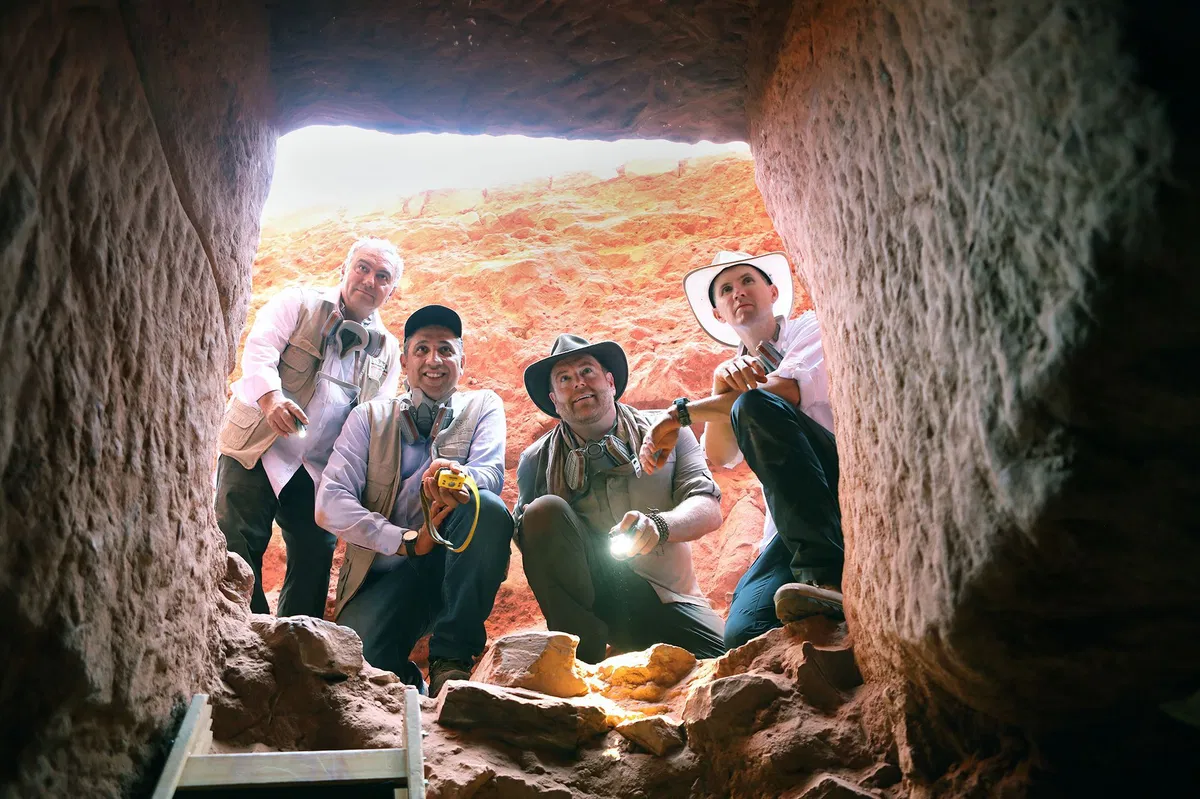


Archaeologists in Petra, Jordan have made a remarkable discovery beneath one of the city’s most iconic landmarks, famously featured in Indiana Jones and the Last Crusade. A hidden tomb, buried for centuries, was found containing a collection of artifacts and 12 human remains estimated to be 2,000 years old, offering new insights into Petra’s ancient civilization.
Significant Discovery
Unlike previous tombs uncovered in Petra, many of which were found empty, this newly discovered burial site held an array of well-preserved artifacts, including pottery, jewelry, and personal items. The presence of multiple human remains suggests that this could be one of the largest collections of such remains ever found in the city. Researchers believe the skeletons belonged to high-ranking individuals, given the elaborate nature of the tomb.
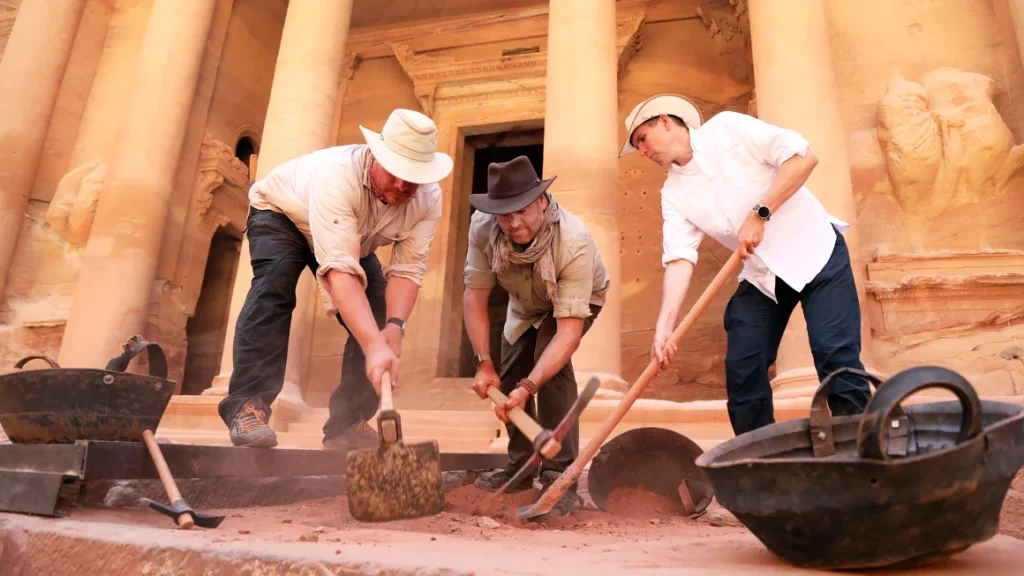
Discovery’s Expedition Unknown
Cultural Importance
Petra, a UNESCO World Heritage Site, is known for its impressive rock-cut architecture and historical significance. The site is one of Jordan’s most visited tourist attractions and has been immortalized in pop culture, notably in the Indiana Jones film series. This latest discovery adds another layer of intrigue to the ancient city, providing archaeologists with valuable clues about its past.
Potential Historical Impact
The discovery of this tomb could reshape understanding of Petra’s burial practices and social hierarchies during its peak 2,000 years ago. Archaeologists are eager to study the artifacts and remains, as they may reveal details about the health, diet, and customs of those who lived in this thriving trade hub.
Research Ongoing
Researchers are carefully excavating the site to uncover more details about the individuals buried there and the tomb’s significance. The find has drawn international attention, as Petra continues to yield new discoveries that shed light on the advanced society that once inhabited the area.