
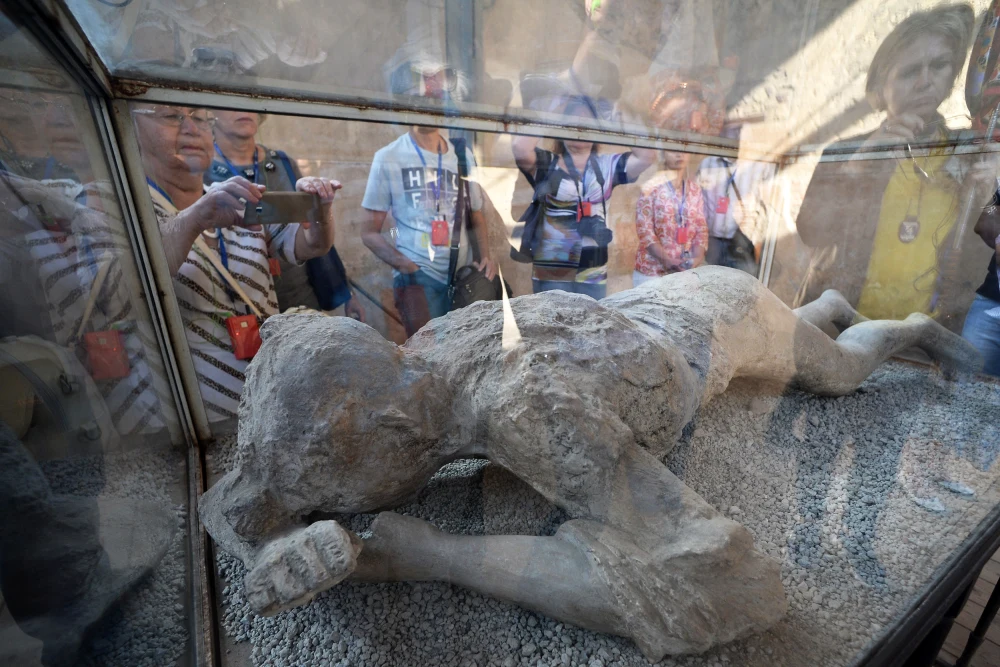


A groundbreaking DNA analysis has revealed surprising insights into the lives of those who perished in the ancient city of Pompeii during the catastrophic eruption of Mount Vesuvius in 79 A.D. The study, conducted on the remains of two individuals discovered in a house in Pompeii, contradicts long-standing assumptions about the victims buried under the volcanic ash, offering a more nuanced understanding of their relationships and social dynamics.
New Findings from Ancient DNA
Researchers extracted and analyzed DNA from two individuals—initially believed to be a man and a woman—who were found together in a room, suggesting they may have had a close familial or romantic connection. However, the genetic evidence revealed they were both male, potentially altering interpretations about their relationship. This finding calls into question assumptions about family structures, kinship, and gender roles among the people who lived in Pompeii nearly 2,000 years ago.
Dr. Antonio Forte, one of the authors of the study, explained the significance of these results, emphasizing the importance of cautious interpretation. “The genetic results encourage reflection on the dangers of making up stories about gender and family relationships in past societies based on present-day expectations,” Forte noted. These findings suggest that preconceived narratives can often obscure the complexities of ancient lives.
Methodology: Unlocking Secrets Through Genetics
The DNA analysis employed advanced techniques, with researchers sequencing mitochondrial and nuclear DNA from the skeletal remains. This high-resolution data allowed them to determine biological sex and relatedness with unprecedented accuracy. This technique was particularly challenging due to the degradation of ancient DNA, exacerbated by the intense heat from the volcanic eruption. However, modern technology has enabled scientists to recover and analyze even fragmented genetic material, unlocking details that were previously inaccessible.
The study also showed that one of the men had markers consistent with Mediterranean ancestry, while the other had markers suggesting a distant ancestry from outside the region. This finding not only challenges assumptions about social bonds and relationships in ancient Pompeii but also highlights the diversity within the city, which was a bustling port and cultural melting pot of the Roman Empire.
Reassessing Social Structures in Ancient Pompeii
The results of this study encourage a reassessment of how gender, familial, and social relationships were understood in ancient societies like Pompeii. Archaeologists have long used physical evidence and contextual clues to infer relationships between individuals found buried together, yet this DNA evidence shows that these interpretations can be flawed.
“Archaeologists have traditionally relied on contextual clues and skeletal positioning to make inferences, but genetics offer a window that is changing the way we interpret these discoveries,” said Dr. Luciana Martinez, a leading archaeologist not involved in the study. “What we are learning is that ancient societies had complex dynamics that might not align with our modern perceptions.”
Implications for Future Archaeological Research
The findings from this study underscore the importance of integrating genetic analysis into archaeological research to provide a fuller, more accurate picture of ancient societies. Researchers are now considering the possibility that other presumed familial groups discovered in Pompeii may need to be reexamined.
These revelations not only deepen our understanding of Pompeii’s final days but also emphasize the need for caution when constructing historical narratives. This shift toward using advanced DNA technology promises to reshape archaeology by revealing the intricate and diverse lives of those in ancient civilizations.