
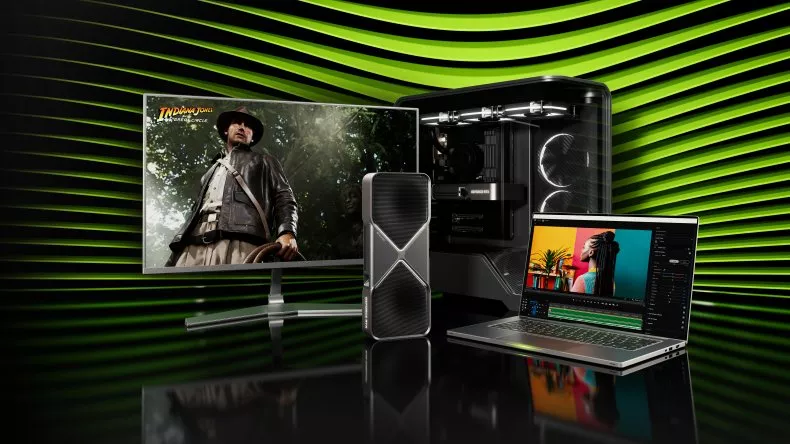


Nvidia has once again set the gaming and graphics community abuzz with the announcement of its GeForce RTX 50 Series, touted to bring unparalleled performance and groundbreaking features. Building on the success of its RTX 40 Series, the RTX 50 lineup is expected to redefine what’s possible in gaming, AI workloads, and content creation. Here’s a detailed breakdown of everything we know so far about these next-generation GPUs, including their pricing, specifications, and release timeline.
Key Features and Specifications
1. Architecture: Blackwell
The RTX 50 Series is powered by Nvidia’s latest Blackwell architecture, replacing the Ada Lovelace architecture found in the RTX 40 Series. Blackwell promises higher efficiency, increased core counts, and a substantial leap in ray tracing and AI capabilities.
2. Performance Enhancements
- Ray Tracing 3.0: The RTX 50 Series introduces the third generation of ray tracing technology, delivering ultra-realistic lighting and shadows at higher frame rates.
- DLSS 4.0: Nvidia’s updated Deep Learning Super Sampling (DLSS) technology offers even better upscaling, allowing gamers to achieve smoother gameplay with minimal performance loss.
- Shader Execution Reordering (SER): Further optimized to reduce latency and enhance multi-threaded processing for better gaming experiences.
3. Core Specs
- CUDA Core Count: Up to 25,000 cores in the flagship RTX 5090, compared to 16,384 cores in the RTX 4090.
- Memory: Up to 48GB GDDR7 VRAM, a significant improvement over the GDDR6X memory of the previous generation.
- Power Efficiency: Enhanced power efficiency with reduced thermal output, potentially lowering the PSU requirements despite increased performance.
Models and Pricing
The RTX 50 Series will likely include several models catering to different performance needs and budgets:
- RTX 5090: Flagship model designed for ultra-high-performance gaming and professional tasks.
- Price: Estimated at $2,000.
- RTX 5080: High-end gaming card with slightly reduced specs compared to the 5090.
- Price: Around $1,200.
- RTX 5070 Ti: Mid-range powerhouse offering great value for enthusiasts.
- Price: Approximately $700.
- RTX 5060: Entry-level option for budget-conscious gamers.
- Price: Expected at $400–$500.
These are preliminary estimates, with Nvidia yet to confirm the official pricing.
Release Date
Nvidia has hinted at a potential Q3 2025 release window for the RTX 50 Series. The launch will likely coincide with a major tech event such as Computex or CES, as has been Nvidia’s tradition in unveiling its flagship products.
What to Expect
1. Gaming Performance
Early leaks suggest that the RTX 5090 could deliver up to a 70% performance boost over the RTX 4090, making it an unparalleled option for 4K and 8K gaming. With enhanced AI-driven rendering technologies like DLSS 4.0, the cards are expected to handle the most demanding titles with ease.
2. AI and Content Creation
The RTX 50 Series isn’t just for gamers. Content creators can expect faster rendering times, enhanced AI tools, and improved multi-application workflows, making it an excellent choice for video editing, 3D modeling, and AI research.
3. Competition
Nvidia’s closest competitor, AMD, is also preparing its next-generation GPUs based on RDNA 4 architecture. While AMD is likely to focus on price-to-performance value, Nvidia’s RTX 50 Series aims to solidify its dominance in the premium GPU market.
Should You Upgrade?
If you already own an RTX 40 Series card, upgrading might depend on your specific use case. Gamers looking for the absolute best in performance, or professionals needing cutting-edge tools, will find the RTX 50 Series compelling. For those with older cards like the RTX 20 or RTX 30 Series, the leap in performance and features makes this generation a worthy investment.
The Nvidia GeForce RTX 50 Series is shaping up to be a monumental leap in GPU technology, offering groundbreaking advancements in gaming, AI, and professional workloads. As we await more details, this new series promises to push the boundaries of what’s possible in computing.