
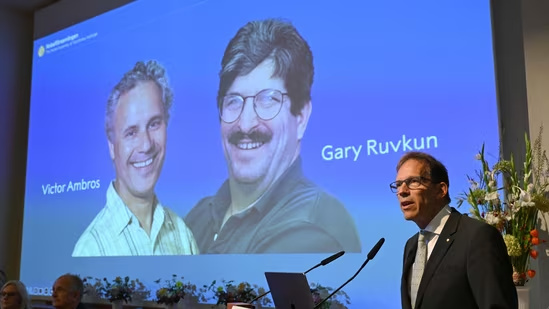


The Nobel Prize in Physiology or Medicine has been awarded to Victor Ambros and Gary Ruvkun, two pioneering American biologists, for their groundbreaking discovery of microRNA (miRNA). This remarkable finding has significantly advanced our understanding of how cells develop, function, and regulate themselves, revolutionizing the field of molecular biology.
A Landmark Discovery in Biology
The duo’s research uncovered that microRNA, a small strand of RNA, plays a crucial role in regulating gene expression by silencing or activating certain genes. This mechanism is essential for cell differentiation, development, and overall function. Ambros and Ruvkun’s work has implications for numerous medical fields, including cancer research, aging, and genetic diseases.
Their breakthrough was first published in 1993 when Ambros and Ruvkun, working independently, discovered the regulatory role of microRNA in the nematode worm C. elegans. Since then, their research has sparked new directions in the study of RNA and gene regulation, contributing to advances in biotechnology and medicine.
Victor Ambros and Gary Ruvkun: Pioneers of RNA Research
Victor Ambros, a professor at the University of Massachusetts Medical School, and Gary Ruvkun, a professor at Harvard Medical School, have worked for decades in the field of genetics and molecular biology. Their collaboration and parallel discoveries helped reveal the previously unknown regulatory layer of RNA, challenging long-held beliefs about how genes control biological processes.
Their discovery of microRNA has opened doors to better understanding of diseases at the genetic level, particularly in fields such as cancer and neurodegenerative diseases, where abnormal gene expression plays a central role.
Nobel Committee’s Statement
In its announcement, the Nobel Committee praised Ambros and Ruvkun for their “transformative contribution to understanding gene regulation.” The committee emphasized that their discovery of microRNA has reshaped how scientists view the genetic machinery of cells and has led to the development of new therapeutic strategies for previously untreatable diseases.
“Ambros and Ruvkun have illuminated a previously hidden dimension of biology,” the Nobel Committee noted. “Their work is not just a major leap in genetics but a foundational breakthrough for modern medicine.”
Impact on Medicine and Future Research
The implications of their work continue to unfold as researchers apply their discovery of microRNA to combat various diseases. The manipulation of miRNA has potential therapeutic applications, particularly in targeted cancer therapies and treatments for other conditions where gene expression is dysregulated.
Furthermore, their research is contributing to advancements in regenerative medicine, where controlling cell development could lead to new ways to repair damaged tissues and organs.
A Nobel Prize Long-Awaited
Ambros and Ruvkun had been considered frontrunners for the Nobel Prize for years, with many in the scientific community acknowledging that their discovery would likely receive this prestigious recognition. In 2006, both researchers, along with David Baulcombe, were awarded the Lasker Award, often seen as a precursor to the Nobel, for their contributions to the field of RNA research.
As Ambros and Ruvkun now join the ranks of Nobel laureates, their discovery of microRNA stands as a testament to the power of curiosity-driven research and its potential to change the future of medicine.