
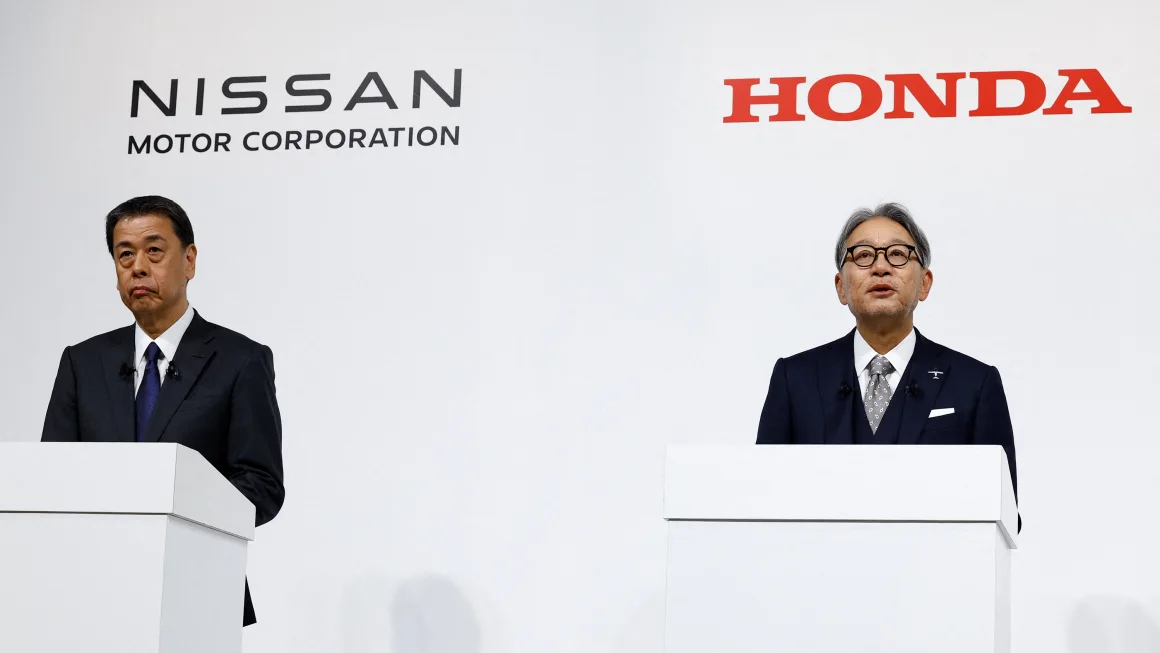


In a groundbreaking move, Japanese automotive giants Nissan and Honda have unveiled plans to merge, creating what would become the world’s third-largest automaker. The proposed merger, announced on December 24, 2024, is set to reshape the global automotive industry, placing the new entity behind only Toyota and Volkswagen in terms of production and sales.
Strategic Vision Behind the Merger
The merger aims to leverage the strengths of both companies in response to intensifying competition in the automotive sector. With a focus on electric vehicles (EVs), autonomous driving technology, and global market expansion, the union seeks to solidify their positions in the rapidly evolving automotive landscape.
Makoto Uchida, CEO of Nissan, emphasized the partnership’s transformative potential, stating, “This merger represents a historic opportunity for two iconic companies to come together and redefine the future of mobility.” Honda CEO Toshihiro Mibe echoed this sentiment, highlighting the synergy between Honda’s engineering expertise and Nissan’s innovative technologies as key drivers for the collaboration.
A Shift in Industry Dynamics
The combined entity will bring together a formidable lineup of brands, platforms, and technologies. With a combined annual production capacity of over 11 million vehicles, the new automaker will rival global competitors while achieving significant economies of scale.
The merger will also enhance both companies’ ability to invest in next-generation technologies. Nissan’s leadership in battery technology and Honda’s advancements in hydrogen fuel cells are expected to complement each other, positioning the new company as a leader in the EV and sustainable mobility markets.
Industry analysts view the merger as a strategic response to increased consolidation among automakers and rising costs of research and development. “This move allows both companies to pool resources and stay competitive in an era defined by electrification and automation,” noted auto industry expert Akira Tanaka.
Challenges Ahead
Despite the potential benefits, the merger is not without its challenges. Both Nissan and Honda will need to address differences in corporate culture, operational structures, and management styles. Additionally, the merger will require regulatory approval in key markets, including the United States, Europe, and Asia, where competition laws may pose hurdles.
Analysts also point out the risks associated with integrating two distinct brands and their existing product portfolios. Maintaining brand identity and customer loyalty for both Nissan and Honda will be critical as the companies navigate the transition.
What’s Next?
The merger is expected to be finalized by mid-2025, pending approval from shareholders and regulatory authorities. Once completed, the newly formed automaker plans to unveil its strategic roadmap, which is anticipated to focus on developing a unified EV platform, expanding autonomous driving capabilities, and exploring new global markets.
The announcement marks a significant moment for the automotive industry as traditional manufacturers adapt to unprecedented changes brought by technological advancements and environmental challenges.