
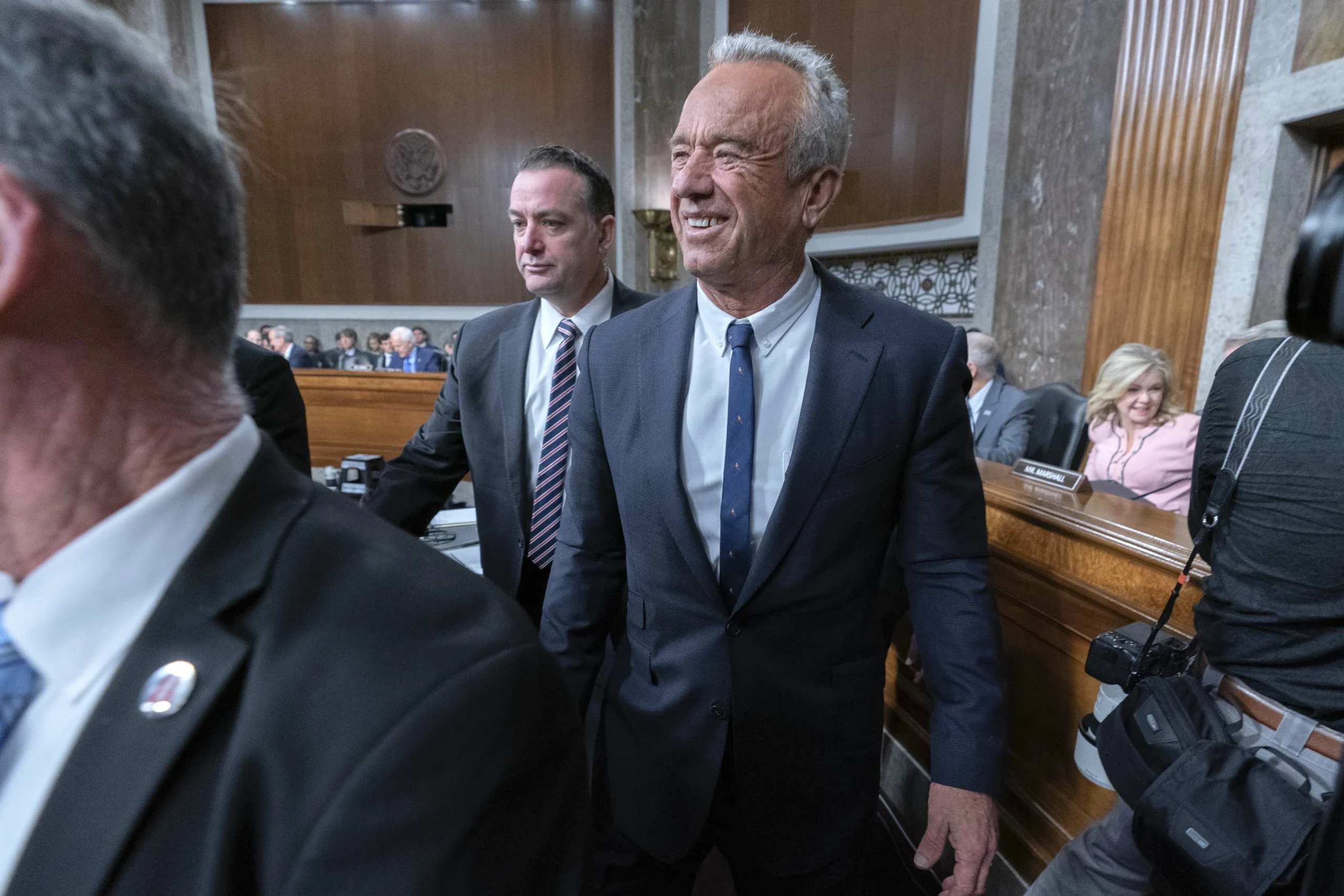


Robert F. Kennedy Jr., President Donald Trump’s nominee to lead the top U.S. health agency, faced sharp scrutiny from lawmakers on Thursday, including from Republican Senator Bill Cassidy, who voiced concerns over Kennedy’s history of vaccine skepticism.
During a Senate Health Committee hearing, Cassidy, a physician from Louisiana, directly challenged Kennedy on his past statements that have cast doubt on vaccine efficacy and safety. “Your past of undermining confidence in vaccines with unfounded or misleading arguments concerns me,” Cassidy said. “I have constituents who partly credit you for their decision to not vaccinate their child.”
Cassidy further emphasized that scientific data has consistently supported vaccine effectiveness, countering Kennedy’s history of controversial claims. “You’ve cast doubt on some of these vaccines… but the data, and I could quote some of it, has been there for a long time,” Cassidy asserted.
Kennedy’s appearance before the Senate Health Committee followed an intense grilling by Senate Democrats on the Finance Committee a day earlier. Lawmakers confronted him on his vaccine stance and shifting views on abortion rights, revisiting past statements that have drawn widespread criticism.
Democrats Press Kennedy on Vaccine and Abortion Stances
During the Finance Committee hearing, Democrats referenced Kennedy’s past remarks, including his claim that “no vaccine is safe and effective”, a statement widely refuted by medical experts. Senators also pointed to his promotion of conspiracy theories, including his assertion—made without evidence—that COVID-19 was designed to disproportionately affect Caucasians and Black people. Another claim under scrutiny was Kennedy’s suggestion that Lyme disease was likely a military bioweapon.
In response, Kennedy defended his record, arguing that he has been a vocal advocate for “transparency in public health policies”. He also attempted to shift focus to broader public health concerns, including chronic disease rates and government accountability in health regulation.
Despite his defense, Kennedy’s remarks did little to quell opposition from both sides of the aisle. His nomination has drawn fierce resistance from public health experts and advocacy groups, who warn that his history of spreading misinformation could undermine trust in the nation’s health policies.
Opposition Groups Intensify Efforts Against Kennedy
Kennedy’s nomination has sparked a surge in opposition efforts, with health organizations and advocacy groups urging senators to reject his appointment. Critics argue that his track record of promoting vaccine skepticism and conspiracy theories disqualifies him from overseeing the nation’s health policies.
“Kennedy’s views are not only scientifically unsound, but they also pose a danger to public health,” said Dr. Peter Hotez, a vaccine expert and pediatrician who has frequently clashed with Kennedy over vaccine misinformation.
Despite mounting opposition, Trump has stood by his nominee, praising Kennedy as a “fighter” who will challenge the “entrenched bureaucracy” in Washington. However, with Cassidy’s concerns now publicly aired, Kennedy’s confirmation faces growing uncertainty.
The Senate is expected to vote on his nomination in the coming weeks.