
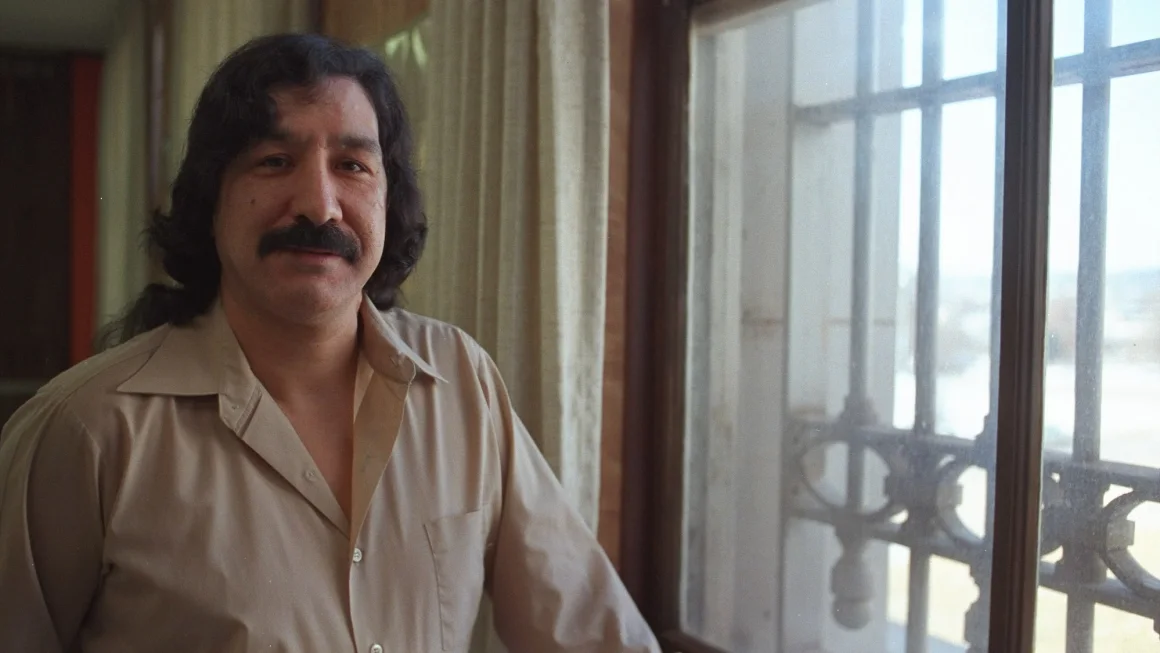


In a significant act before leaving office, former President Joe Biden commuted the life sentence of Leonard Peltier, an Indigenous activist convicted of killing two FBI agents in 1975. At 80 years old, Peltier will now serve the remainder of his sentence at home, ending nearly five decades of incarceration that many have described as politically charged.
The Case That Divided Opinions
Peltier’s conviction stemmed from a June 26, 1975, shootout on the Pine Ridge Reservation in South Dakota, where FBI agents Jack Coler and Ronald Williams were killed while pursuing a robbery suspect. The FBI stated the agents were injured during the gunfight and later shot in the head.
In 1977, Peltier was convicted of first-degree murder and sentenced to two consecutive life terms. Throughout his imprisonment, Peltier maintained his innocence, claiming he fired shots during the incident but did not kill the agents. Speaking in a 1999 interview, he said, “I didn’t kill those agents. I didn’t see who killed those agents, and if I did know, I’m not telling. But I don’t know. That’s the point.”
A Leader in the American Indian Movement
During the 1970s, Peltier was a prominent figure in the American Indian Movement (AIM), a group advocating for Native American rights. AIM’s occupation of Wounded Knee on the Pine Ridge Reservation led to a 71-day standoff with federal agents, creating lasting tensions between Indigenous activists and the U.S. government.
Peltier’s supporters, including Indigenous rights groups, have long viewed him as a political prisoner. Organizations like the NDN Collective described him as “America’s longest-serving Indigenous political prisoner,” citing his health issues and age as reasons for his release.
A New Chapter for Peltier
“It’s finally over – I’m going home,” Peltier said in a statement shared by the NDN Collective. “I want to show the world I’m a good person with a good heart. I want to help the people, just like my grandmother taught me.”
Peltier’s attorneys highlighted his failing health and nonviolent record during his nearly 50 years in prison in their appeals for clemency. Last year, his parole request was denied, with opposition from groups like the FBI Agents Association, which had previously praised the decision to keep him incarcerated.
Legacy and Controversy
The commutation of Peltier’s sentence has reignited debates over his conviction. Advocates argue his trial was marred by misconduct and racism, while law enforcement groups maintain that justice was served