


With Daniel Penny acquitted of criminal charges in the death of Jordan Neely, public attention now turns to a civil lawsuit filed last week by Neely’s estate and his father, Andre Zachery. The case accuses Penny of negligently and recklessly causing Neely’s death and offers another avenue for accountability following the controversial verdict.
Penny, a former Marine, was found not guilty on December 9, 2024, of manslaughter charges stemming from an incident this past spring. The confrontation occurred on an uptown F train when Neely, a 30-year-old former Michael Jackson impersonator who had schizophrenia, began shouting threats at passengers. Witnesses testified that Penny placed Neely in a chokehold for approximately six minutes, after which Neely was pronounced dead.
During the trial, prosecutors argued that Penny’s prolonged chokehold went “way too far,” directly causing Neely’s death. Penny’s defense contended that his actions were an effort to protect himself and others on the train, asserting that his restraint may not have been the primary cause of Neely’s death.
Now, the civil case provides a new platform for Neely’s family and supporters to pursue justice. The lawsuit seeks monetary damages and holds Penny liable under a lower burden of proof than required in criminal court.
Civil trials differ significantly from criminal trials. In a criminal case, prosecutors must convince all 12 jurors of the defendant’s guilt beyond a reasonable doubt. In a civil case, however, liability is determined by a preponderance of evidence—a standard that only requires five out of six jurors to agree.
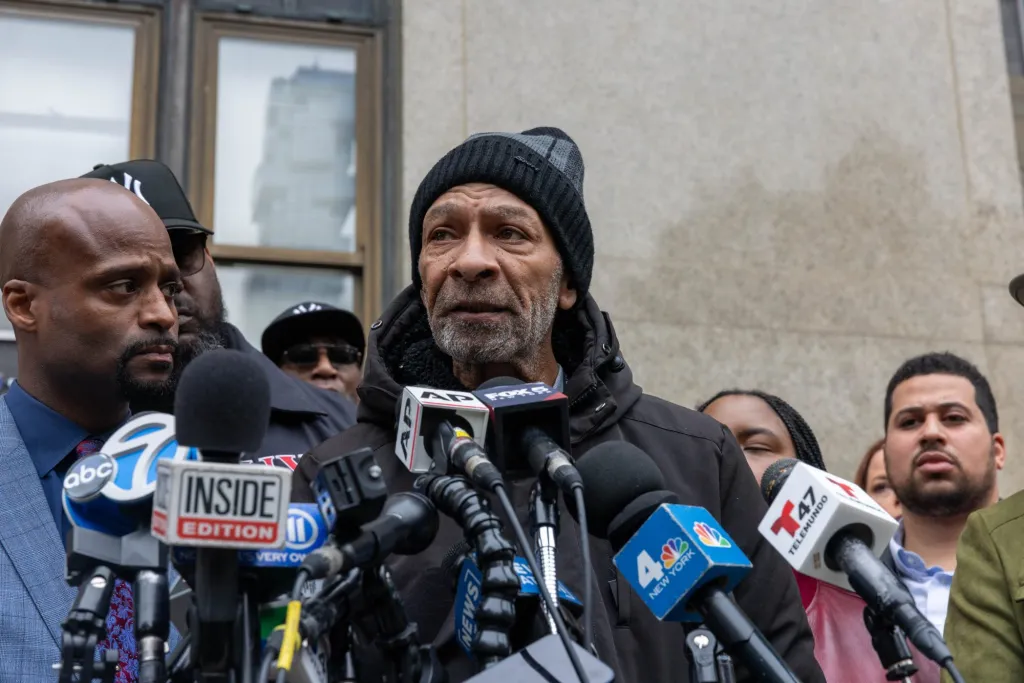
“This really, really hurts,” said Zachery outside the courthouse after Penny’s acquittal. “What are we going to do, people?”
Legal experts suggest the civil case could mirror the infamous O.J. Simpson trials of the 1990s. While Simpson was acquitted in his criminal trial, he was found liable in a civil case and ordered to pay $34 million to the family of Ron Goldman, one of the individuals he was accused of killing.
Fredrick Brewington, a civil rights lawyer, explained that the civil proceedings would involve a similar set of evidence as the criminal trial, including medical records and eyewitness testimony. However, Brewington emphasized the lighter burden of proof. “It’s a prosecution for a monetary award, not for jail time,” he said.
Rodger Citron, a law professor at Touro Law Center, added that the civil case could bring a sense of resolution to those disappointed by the criminal trial’s outcome. “Here is another case, another forum in which a different jury applying a different standard of proof may find civil liability against this defendant,” he said.
Neely’s death has reignited debates around mental health, public safety, and the limits of self-defense. As the civil case unfolds, it will likely serve as a focal point for these ongoing discussions, while offering Neely’s family a chance to seek accountability in another venue.