
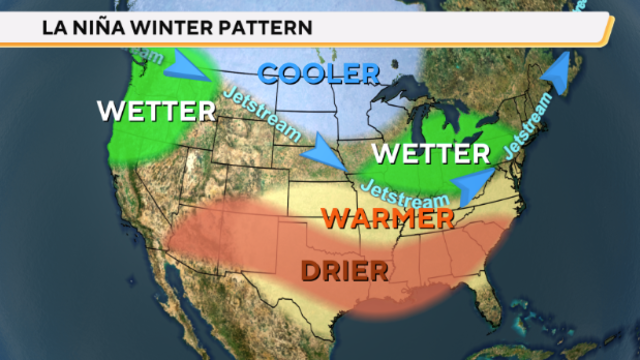


NOAA has released its 2024 La Niña winter weather forecast, predicting a significant divide in weather conditions across the United States. According to the National Oceanic and Atmospheric Administration’s (NOAA) annual winter outlook, the southern U.S. will likely experience warmer and drier conditions, while the northern regions can expect a wetter and colder winter.
La Niña, a climate pattern characterized by cooler-than-normal sea surface temperatures in the Pacific Ocean, typically drives these weather variations. The forecast highlights that states across the South, including Texas, Florida, and the Gulf Coast, may face warmer temperatures and less precipitation. This pattern could exacerbate drought conditions in parts of the Southwest but could bring drought relief to areas such as the Ohio River Valley and Great Lakes regions, where increased precipitation is expected.
In contrast, the northern states, including the Pacific Northwest, the Upper Midwest, and New England, are predicted to see more snow and rain, thanks to the wetter and colder conditions La Niña often brings. This could lead to an active winter season, with potential for heavier snowfall in some regions.
Potential Impacts Across the U.S.
The La Niña pattern is also expected to influence storm tracks, shifting them toward the northern U.S., potentially bringing more frequent and severe winter storms to those areas. Meanwhile, in the South, the forecasted warmer temperatures could result in less snow and more rain during the winter months.
NOAA’s forecast emphasizes that while La Niña strongly influences the overall pattern, local weather conditions can still vary significantly, and additional factors, such as Arctic air outbreaks, could further shape winter weather.
What to Expect in Your Area
With NOAA’s winter outlook now public, residents across the U.S. are advised to prepare for a potentially volatile season, particularly in the northern regions, where wetter conditions may cause disruptions. Meanwhile, those in the South should brace for drier-than-normal conditions, which could lead to an extended drought in already affected areas.
As La Niña develops, meteorologists and local authorities will continue to monitor its effects, providing more detailed regional forecasts as the season progresses.