
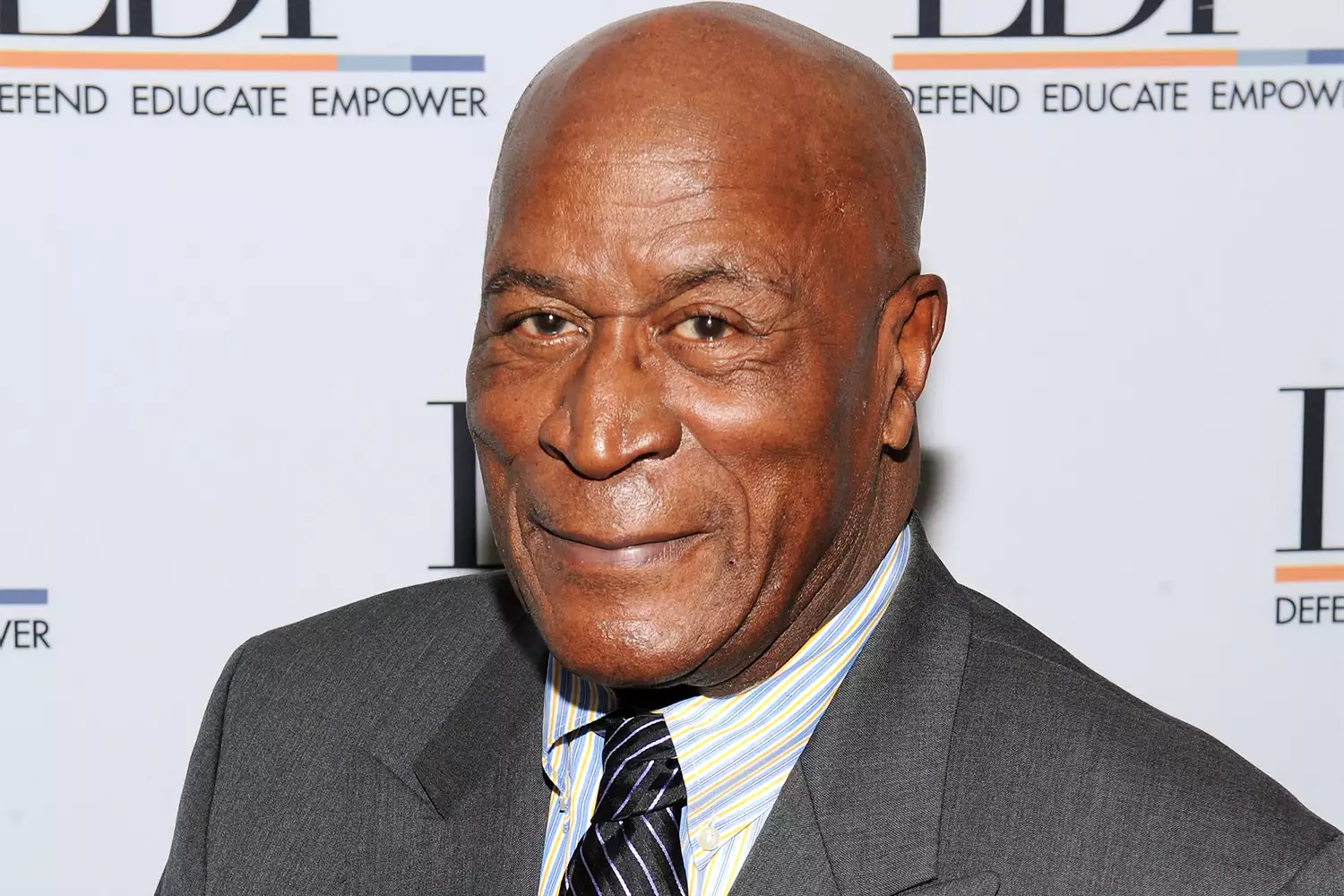


John Amos, the esteemed actor known for his iconic roles as the strong family patriarch in the sitcom Good Times and as the resilient Kunta Kinte in the miniseries Roots, has died at the age of 84. His publicist, Belinda Foster, confirmed the news of his passing on Tuesday. Although no specific details regarding his death have been released, it was noted that he died of natural causes
Amos, born on December 27, 1939, in Newark, New Jersey, first pursued a brief stint in the NFL before turning to acting in the early 1970s. His first significant role was on The Mary Tyler Moore Show, where he played the character Gordy Howard for three years. But it was his portrayal of James Evans Sr., the stern yet caring father in Good Times, that cemented his place as a significant figure in American television.
Good Times, which aired from 1974 to 1979, was one of the first American sitcoms to depict a Black family in a positive light. Amos’s role as the hardworking, no-nonsense father resonated with audiences, and his partnership with Esther Rolle (playing his wife, Florida Evans) is considered one of the most authentic portrayals of a Black family in TV history. Despite its success, Amos left the show after three seasons due to creative differences, believing that some storylines were inauthentic to the realities of Black American life.
In 1977, Amos took on another groundbreaking role as the adult Kunta Kinte in the seminal miniseries Roots, based on Alex Haley’s novel. His performance earned him an Emmy nomination and helped solidify Roots as a landmark in American television history. The series received a record 37 Emmy nominations and won nine awards, but Amos candidly noted that the success of Roots did not translate into greater opportunities for many Black actors involved in the project.
After Roots, Amos continued to work steadily, appearing in popular films and series such as Coming to America, The West Wing, and The Fresh Prince of Bel-Air. He also made guest appearances on The West Wing and All in the Family. Despite facing ups and downs in his career, Amos remained a respected figure in Hollywood for his talent and advocacy for authentic portrayals of African American experiences.
Beyond acting, Amos was also a strong voice for civil rights and often spoke out against racial inequities in the entertainment industry. His legacy is not just limited to his on-screen roles but extends to his efforts to push for more inclusive and realistic storytelling in media.
John Amos is survived by his two children. His daughter Shannon Amos and son K.C. Amos were recently involved in a high-profile family dispute, which was resolved earlier this year. Amos will be remembered not only for his pivotal contributions to television and film but also for the trail he blazed for future generations of Black actors in Hollywood.