
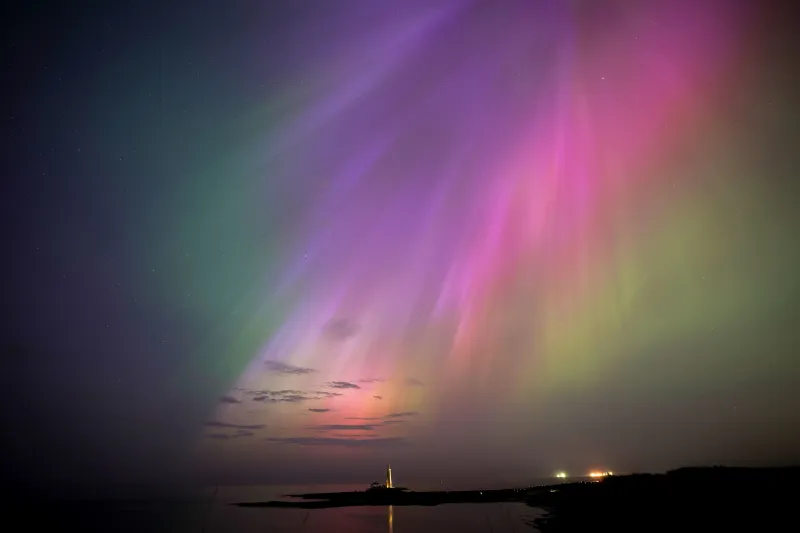


November 27, 2024 — A geomagnetic storm watch has been issued just in time for the Thanksgiving and Black Friday weekend, offering a rare chance to witness the aurora borealis or northern lights in several northern regions across the United States. The expected geomagnetic activity, triggered by solar winds, is forecast to cause vivid displays of the northern lights, making for a spectacular celestial event this holiday season.
Geomagnetic Storm Expected to Spark Aurora Borealis Displays
The National Oceanic and Atmospheric Administration (NOAA) issued a geomagnetic storm watch following heightened solar activity. This storm, which is caused by solar particles colliding with Earth’s magnetic field, will likely intensify on Thursday, November 28, and continue through Black Friday. The resulting auroras, which are usually visible in high-latitude regions, could potentially be seen further south than usual.
While the aurora borealis is typically confined to areas like Alaska, Canada, and Scandinavia, this storm may allow for rare sightings in places such as the northern United States, including regions like Michigan, Minnesota, and Montana, as well as parts of the Northeast and Great Lakes areas.
Best Viewing Times and Locations
Experts recommend watching for the northern lights after dark, especially on the nights of Thanksgiving and Black Friday. While the storm’s intensity will vary, observers in northern regions should look for the lights during peak hours, which are typically between 10:00 PM and 2:00 AM local time.
If you’re in a location with clear skies and away from city lights, you’ll have the best chance of spotting the auroras. The Northern Lights are known for their signature green and purple hues, but stronger geomagnetic storms can produce more vivid colors, including red, pink, and even blue.
Winter Sky Events: Meteor Showers and Northern Lights
Along with the northern lights, winter nights will also bring a meteoric spectacle to the skies. A meteor shower, known as the Geminid meteor shower, is expected to peak in the coming weeks, offering a celestial one-two punch for stargazers.
The combination of the geomagnetic storm and meteor showers will make this holiday weekend a rare opportunity for both aurora hunters and astronomy enthusiasts to enjoy the wonders of the winter night sky.
What Causes the Northern Lights?
The aurora borealis is caused when charged particles from the Sun interact with Earth’s magnetic field. These particles, carried by solar winds, are funneled toward the poles by the Earth’s magnetic field, where they collide with the gases in Earth’s atmosphere. This results in the glowing lights of the auroras. The more intense the geomagnetic storm, the further south the northern lights can travel.
A Chance to Witness Nature’s Spectacle
This geomagnetic storm represents a rare opportunity for many people to witness the stunning display of the northern lights from locations that don’t usually experience them. With the holiday timing, it offers the perfect backdrop for a holiday weekend of stargazing and nature appreciation.
For those planning to take advantage of this celestial event, experts recommend staying updated on the geomagnetic storm forecast, as the storm’s intensity can fluctuate, and cloud cover can impact visibility. However, if the conditions align, the skies could light up with one of nature’s most beautiful displays.
As the storm unfolds over the weekend, enthusiasts and casual observers alike will be eagerly watching the skies, hoping to catch a glimpse of the elusive and captivating aurora borealis.