
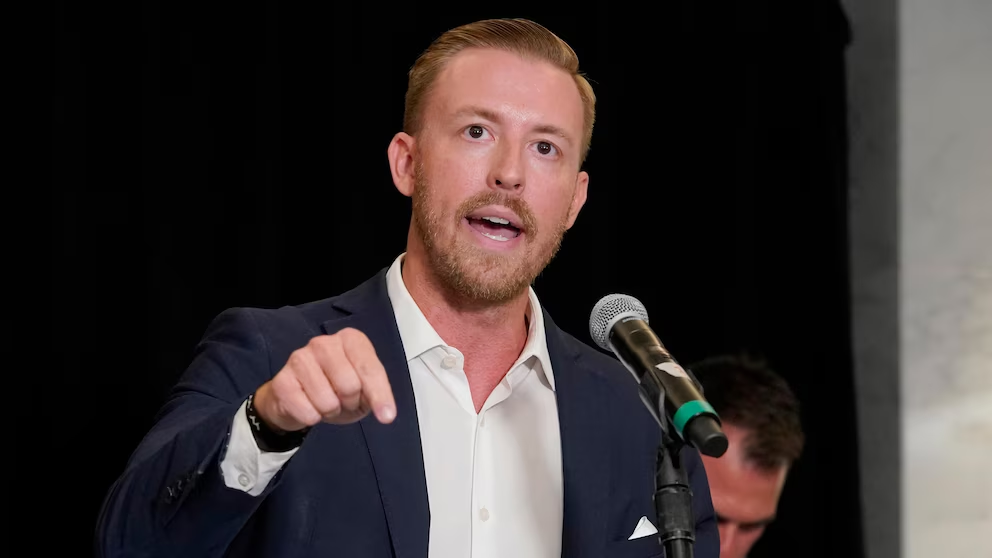


November 16, 2024 — Oklahoma State Superintendent Ryan Walters has sparked controversy after mandating schools to show students a video of him praying for former President Donald Trump and announcing the creation of a new religious education department within the state’s school system. The directive has drawn criticism from educators, parents, and state officials, including the Oklahoma Attorney General’s office.
The Controversial Mandate
Walters, a vocal advocate for introducing religious elements into public education, issued the order requiring schools to broadcast a video of his prayer for Trump. The video also included an announcement about the establishment of a religious education department, which Walters claimed would focus on “restoring faith-based values” in Oklahoma’s schools.
In the video, Walters is seen urging students to embrace religious principles as a foundation for their education, framing his message as part of a broader effort to address moral and academic challenges in the state.
Attorney General’s Office Pushes Back
The Oklahoma Attorney General’s office responded swiftly, asserting that Walters lacks the authority to enforce such a mandate. A spokesperson for the AG’s office stated:
“State law does not grant the superintendent the power to impose religious practices or messages in public schools. This directive risks violating the constitutional principle of separation of church and state.”
Legal experts warn that the mandate could expose Oklahoma schools to lawsuits for breaching the First Amendment, which prohibits government entities from endorsing or imposing religious practices.
Criticism from Educators and Parents
Teachers and school administrators have expressed concern over the implications of Walters’ directive. Many argued that forcing students to watch the video infringes on their rights and disrupts the neutrality expected in public education.
A group of parents released a joint statement condemning the order:
“Our children’s education should focus on academics, not political or religious indoctrination. Superintendent Walters’ actions are an overreach and an affront to the diversity of beliefs in our community.”
Walters Defends His Actions
Despite the criticism, Walters doubled down on his decision, framing it as a response to what he described as “widespread moral decay” in public education. In a recent statement, he said:
“Faith has always been a cornerstone of American values. By establishing a religious education department, we are ensuring that our students grow up with a sense of purpose and morality.”
Walters has consistently positioned himself as a staunch supporter of conservative values in education, previously advocating for policies such as banning critical race theory and promoting curriculum centered on “patriotic education.”
Potential Legal and Political Fallout
This latest move has added to the ongoing polarization surrounding Walters’ tenure as Oklahoma’s schools superintendent. Civil rights organizations, including the ACLU, are considering legal action to challenge the directive. Meanwhile, state lawmakers are debating whether Walters’ actions warrant legislative intervention.
The controversy comes amid broader national discussions on the role of religion in public education, with similar debates unfolding in other conservative-led states.
Next Steps
As schools grapple with whether to comply with Walters’ mandate, the Attorney General’s office is reportedly preparing formal guidance for districts. Educators and advocacy groups are urging the state legislature to clarify the limits of the superintendent’s authority to prevent further conflicts.
The unfolding situation highlights the tension between religious advocacy and constitutional principles in American public education. Walters’ push for religious integration in schools is likely to remain a focal point of political and legal battles in Oklahoma.