
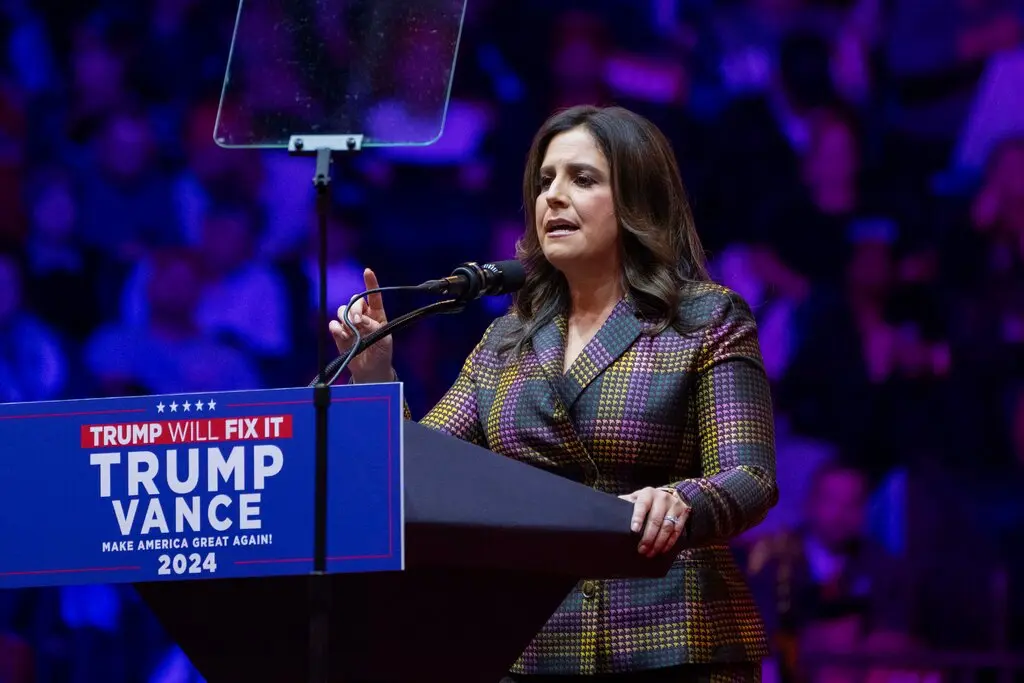


In a move signaling a strong start to his upcoming administration, President-elect Donald Trump has nominated Republican Representative Elise Stefanik from New York for the prestigious role of U.S. Ambassador to the United Nations. This marks one of the first major cabinet-level appointments for Trump as he begins to assemble his team ahead of taking office.
Stefanik, who has represented New York’s 21st Congressional District since 2015, is a rising star within the Republican Party. Known for her leadership on national security and foreign policy issues, she has garnered significant attention for her work in Congress, including her tenure as the chair of the House Republican Conference. Her appointment to the United Nations would make her the youngest person ever to serve as U.N. Ambassador, continuing her reputation for breaking barriers in the political world.
Trump’s decision to offer Stefanik this position comes as part of his broader effort to shape his foreign policy strategy for the next four years. The U.N. Ambassador plays a crucial role in representing U.S. interests at the global stage, advocating for American policies on the United Nations Security Council, and working with international leaders to promote peace and security.
Stefanik’s appointment is seen by many as a strategic one, given her experience and positions on key issues such as defense and national security. As a member of the House Armed Services Committee, she has worked on various defense-related bills and has shown strong support for military readiness. Her reputation as a staunch advocate for American interests aligns with Trump’s “America First” foreign policy.
The announcement has already sparked a range of reactions across political circles. Supporters of Stefanik’s nomination highlight her leadership qualities, experience in Washington, and strong conservative values, suggesting she would be well-positioned to represent U.S. interests on the world stage. On the other hand, critics have raised concerns about her experience in foreign diplomacy, with some questioning whether her background in domestic policy is sufficient for such a significant international role.
As U.N. Ambassador, Stefanik would be tasked with navigating complex global challenges, from addressing climate change to dealing with tensions in the Middle East and ensuring U.S. influence in international organizations. How she handles these issues, particularly in light of Trump’s sometimes contentious relationship with the United Nations, will be a key point of scrutiny throughout her tenure.
This early cabinet appointment reflects Trump’s broader goal of appointing individuals who align with his vision for the country and who will push forward his policies. As Stefanik prepares for this potential new chapter, the political world will be watching closely to see how her selection impacts the administration’s foreign policy agenda.