


Chancellor Scholz Navigates Uncertainty After Government Collapse
Germany’s government, long regarded as one of the most stable in Europe, has collapsed in a dramatic turn of events. Chancellor Olaf Scholz’s coalition government fell apart after a series of high-profile clashes between key members. The most notable development came when Scholz dismissed his Finance Minister, a move that many analysts see as the catalyst for the unraveling of the ruling coalition. This political upheaval has left Germany facing an uncertain future, with calls for an early federal election now on the table.
Chancellor Scholz’s Next Steps: Leading with a Minority Government
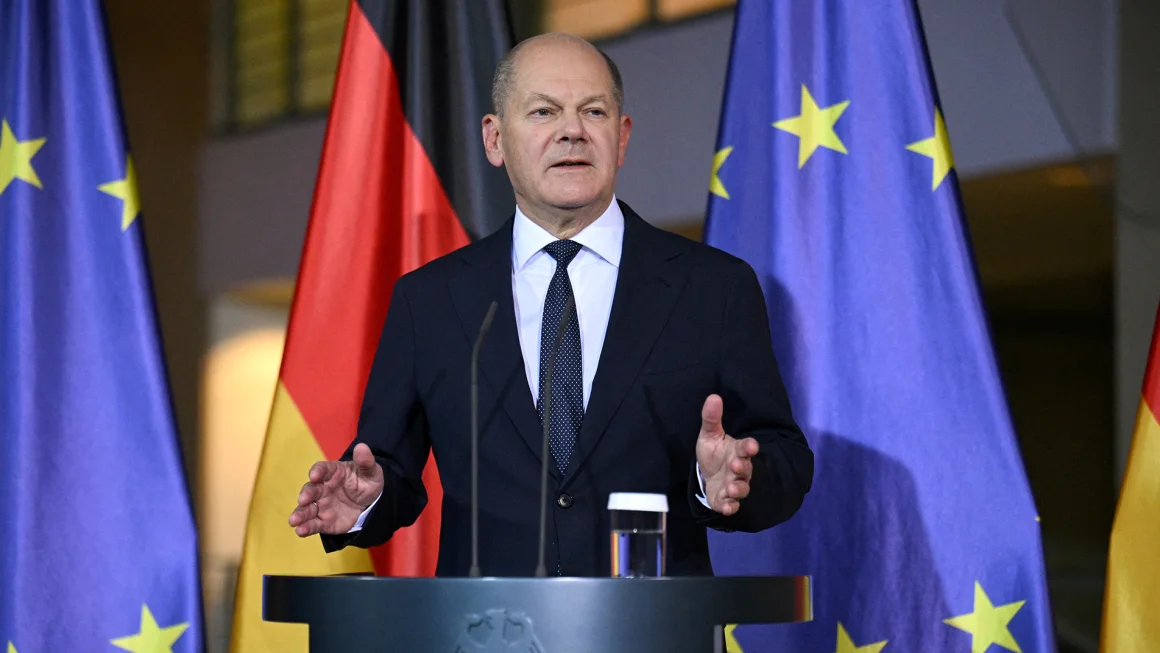
Following the collapse of his coalition, Scholz addressed the nation, announcing that he would attempt to lead the government with a minority coalition. While this would allow him to remain in power, the political challenges of running a minority government in Germany’s complex parliamentary system are significant. Scholz has emphasized the importance of stability but acknowledged that his government’s future would depend on reaching agreements with other parties in the Bundestag.
“I will do everything I can to ensure the continuation of governance,” Scholz said in a speech to the press. “However, it is clear that the road ahead will require compromise and negotiations.”
Firing of Finance Minister Triggers Coalition Breakdown
The immediate trigger for the collapse of Germany’s ruling coalition was the dismissal of Finance Minister Christian Lindner, a key figure in Scholz’s administration. Lindner, who leads the Free Democratic Party (FDP), had clashed with other coalition members, particularly over economic policy, leading to growing tensions. His ousting effectively fractured the government, with the FDP withdrawing its support for Scholz’s leadership.
Lindner’s removal followed a series of disagreements over Germany’s economic direction, particularly related to the national budget and fiscal policies. His party had pushed for stricter fiscal policies, while Scholz and his allies in the Social Democrats (SPD) favored more stimulus spending to stimulate post-pandemic recovery.
A New Election on the Horizon?
With the government now in turmoil, there is growing speculation that Germany could face an early federal election. Scholz has suggested a possible timeline for elections, but the situation remains fluid, with talks ongoing about potential coalitions and the timing of any vote. If an early election were to take place, it would be a significant test for the country’s political system, with the outcome likely to shape Germany’s direction in the years to come.
The collapse of Germany’s government also raises questions about the stability of the broader European Union, as Germany has long been a cornerstone of EU politics and economics. With the country now facing a period of political instability, European leaders are closely watching the situation, concerned about the potential for a ripple effect across the region.
What’s Next for Germany’s Political Landscape?
The immediate future for Germany is marked by uncertainty. Scholz’s SPD, which has traditionally been the dominant force in German politics, will need to secure support from other parties in the Bundestag to continue functioning effectively. The FDP, now isolated from the government, may seek to align itself with opposition parties to challenge Scholz’s leadership. Meanwhile, the Green Party, which has been a key ally in the coalition, will have to navigate the shifting political landscape to maintain its influence.
As the dust settles from the dramatic collapse, Germany’s citizens will likely face a period of uncertainty, with no clear path forward yet emerging. While Scholz remains in office for now, the political future of Germany remains uncertain, with the possibility of an early election looming large. In a country known for its stability, this sudden crisis represents a defining moment in its post-pandemic recovery and broader European leadership.