
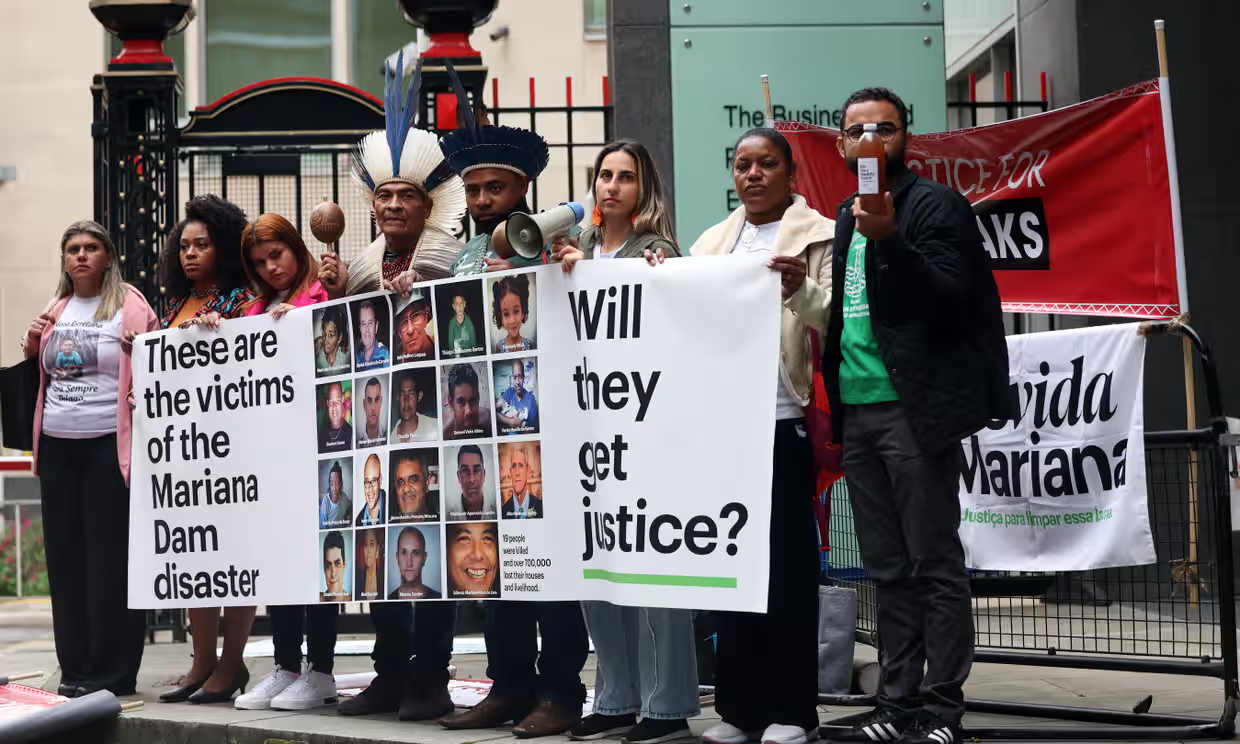


The English High Court has opened hearings in the largest group lawsuit in the country’s history, targeting mining giant BHP over the catastrophic collapse of a dam in Brazil. The lawsuit stems from the 2015 disaster at the Fundão dam, which killed 19 people, devastated nearby communities, and caused significant environmental damage in the Minas Gerais region.
Claimants allege that BHP is “doggedly trying to avoid” taking responsibility for the incident, arguing that the company should be held accountable for the failure of the dam owned by its joint venture, Samarco, with Brazilian mining company Vale. The collapse released millions of cubic meters of mining waste, leading to one of the worst environmental disasters in Brazilian history.
The case involves over 700,000 Brazilian claimants, making it the largest group claim ever heard in an English court. The claimants, which include individuals, businesses, and indigenous groups, are seeking compensation for the widespread damage caused by the dam collapse, including the loss of homes, livelihoods, and ecological harm to the Rio Doce river basin.
During the initial hearings, lawyers representing the claimants argued that BHP, as one of the joint venture partners, should be held accountable for its role in the disaster. They emphasized the company’s influence over the operation of the dam and its duty to ensure safety standards were met. The claimants’ legal team accused BHP of attempting to evade responsibility and minimize the financial impact of the damages by challenging the jurisdiction of the English courts.
BHP has countered these allegations, asserting that the claims should be addressed through the Brazilian legal system, where some lawsuits have already been filed. The mining firm argues that multiple compensation agreements have been reached in Brazil and that duplicating claims in English courts is unnecessary. BHP has emphasized its commitment to supporting ongoing remediation efforts in the affected areas through its joint venture with Vale.
However, the claimants’ legal team argues that pursuing justice in the UK offers a more transparent and efficient process, potentially leading to faster resolution and greater accountability for BHP. They contend that the English court’s involvement is critical to ensuring that the company faces appropriate consequences for its role in the dam’s collapse.
The 2015 disaster unleashed a wave of mud and toxic waste that buried villages and contaminated rivers, affecting the livelihoods of thousands of people and causing irreversible environmental damage. Despite ongoing recovery efforts in Brazil, many survivors continue to face hardship and have yet to receive adequate compensation, according to advocacy groups.
The lawsuit has drawn significant international attention, with observers noting its potential impact on global standards for corporate accountability in environmental disasters. Should the claimants succeed, the case could set a precedent for holding multinational corporations accountable for actions that take place in foreign countries but cause widespread harm.
BHP, one of the world’s largest mining companies, has maintained that it is committed to addressing the aftermath of the disaster. The company points to the work of the Renova Foundation, an entity established by BHP and Vale to coordinate environmental and social recovery efforts in the affected areas. However, critics argue that progress has been slow and insufficient, with many affected communities still struggling to rebuild their lives.
As the hearings unfold in the English High Court, the case will delve into questions of corporate responsibility and the scope of legal accountability across borders. The outcome could have significant implications for how global mining operations are managed and how corporations are held to account for their environmental impact.
The stakes are high for both BHP and the thousands of Brazilian claimants seeking justice. The English court’s decision could influence future claims against multinational corporations and their ability to be held liable for overseas activities that result in large-scale harm.