
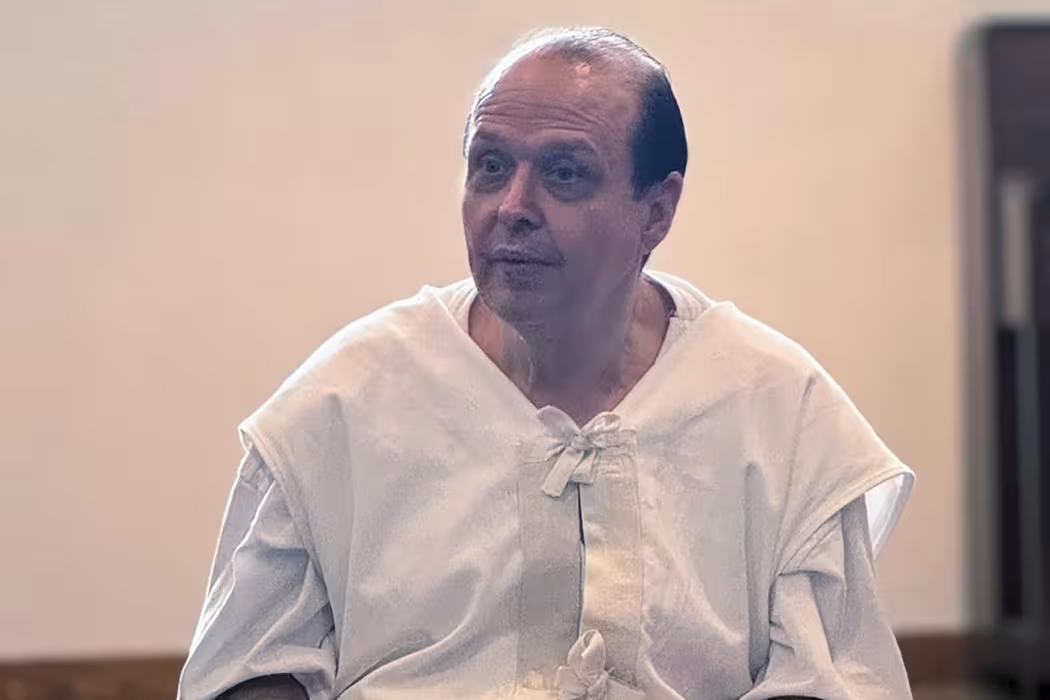


In a dramatic turn of events, the Texas Supreme Court has issued a last-minute stay of execution for Robert Roberson, who was set to be executed for the death of his 2-year-old daughter in a controversial shaken baby syndrome case. Roberson had been on death row for nearly two decades, convicted of killing his child in 2002. His case has since garnered national attention, with medical experts and advocates questioning the validity of shaken baby syndrome as the cause of death.
Intervention in the Final Hours
Roberson’s execution was scheduled for Thursday night, but an 11th-hour intervention by a bipartisan group of Texas lawmakers helped prompt the court’s decision to stay the execution. The intervention came after growing concerns over whether Roberson received a fair trial, with many pointing to new medical research that challenges shaken baby syndrome as a definitive diagnosis.
Texas Representative Joe Moody, a leading voice in the effort to halt the execution, called the stay a critical step toward justice. “We cannot proceed with this execution when there are so many doubts about the science used to convict Mr. Roberson,” Moody said.
The Shaken Baby Syndrome Controversy
The conviction of Roberson hinged on the now-disputed diagnosis of shaken baby syndrome, which was widely accepted in the early 2000s as a cause of death in infants who presented with specific symptoms, including brain swelling, retinal hemorrhages, and subdural bleeding. However, over the years, medical experts have raised concerns about the reliability of the diagnosis, citing other possible causes for similar symptoms, such as infections, accidents, or genetic disorders.
Advocates for Roberson argue that the original trial did not fully consider these alternative explanations, and new evidence suggests that the child’s death may not have been the result of abuse. The Texas Supreme Court’s stay will allow for further review of the medical evidence, giving Roberson a potential lifeline as the courts reassess his case.
A Bipartisan Effort to Stop the Execution
The effort to halt Roberson’s execution drew support from both sides of the political aisle. Lawmakers and criminal justice reform advocates argued that the scientific understanding of shaken baby syndrome has evolved significantly since Roberson’s trial and that relying on outdated medical testimony could lead to a wrongful execution.
Texas Senator John Whitmire, a Democrat, joined forces with Republican lawmakers in calling for a stay, citing concerns over the fairness of the trial and the accuracy of the medical evidence. “This isn’t about being soft on crime—it’s about ensuring that we don’t execute an innocent man,” Whitmire said.
The Path Forward
With the stay in place, Roberson’s legal team will have the opportunity to present new evidence and challenge the original shaken baby syndrome diagnosis. The case highlights the growing controversy surrounding the use of certain forensic science techniques in capital punishment cases and underscores the importance of ensuring that medical testimony is accurate and up-to-date.
As Texas continues to grapple with its death penalty practices, the Robert Roberson case will likely serve as a flashpoint in the ongoing debate over the fairness of capital punishment and the role of evolving science in the criminal justice system.