
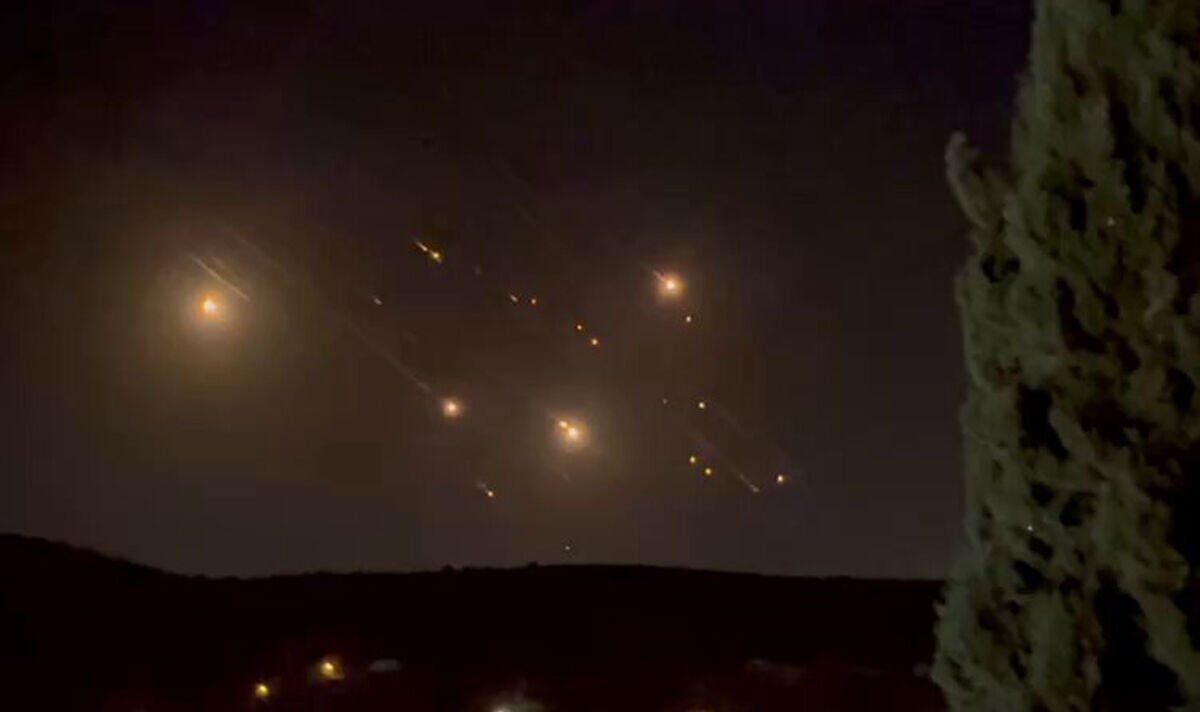


Iran launched a major missile attack on Israel, firing nearly 200 ballistic missiles in retaliation for Israeli airstrikes that killed top Hezbollah leaders in Lebanon. The strike, which took place after Israel began limited ground raids in Lebanon, marks the most significant escalation of regional warfare in years.
Israel’s Iron Dome, a defense system designed to intercept rockets, faced overwhelming pressure from the barrage. While many missiles were intercepted, reports indicate some slipped through, causing damage in parts of central and northern Israel.
The missile launches triggered widespread air raid sirens in cities including Tel Aviv and Jerusalem, urging residents to seek immediate shelter. Israel’s government advised its citizens to remain in safe rooms and avoid unnecessary travel until further notice. The Israel Defense Forces (IDF) reported that most projectiles targeted strategic areas and military installations, though some civilian locations were also affected.
U.S. President Joe Biden reaffirmed support for Israel, stating that the United States is “prepared to help defend Israel against Iranian attacks and protect American personnel in the region.” The Biden administration has positioned naval and air assets closer to the region to respond if the conflict escalates further. The U.S. military has been ordered to shoot down any incoming Iranian projectiles that pose a threat to American forces.
Iron Dome Under Pressure
The Iron Dome, which has a high success rate in intercepting short and medium-range rockets, struggled against the intensity of Iran’s attack. The defense system faced challenges in coordinating interceptions when large numbers of missiles were launched simultaneously, highlighting potential vulnerabilities if the situation worsens. The IDF stated that the Iron Dome, along with the David’s Sling and Arrow defense systems, successfully intercepted the majority of rockets, but a few landed, causing casualties and infrastructure damage in northern Israeli towns.
Regional Tensions and Potential Consequences
The situation has raised fears of a broader war in the region, as Iran’s response to Israel’s operations in Lebanon could extend to other parts of the Middle East. Hezbollah, Iran’s main proxy force in Lebanon, has vowed to continue resisting Israeli incursions, and Iranian leaders have warned that they may further escalate attacks if Israel continues its military campaign.
Analysts are concerned that the conflict could disrupt global energy supplies if it expands, potentially affecting oil prices and creating further instability in the region. As of now, diplomatic channels remain active, with Western powers urging restraint from both sides to prevent the situation from spiraling into a full-scale war