
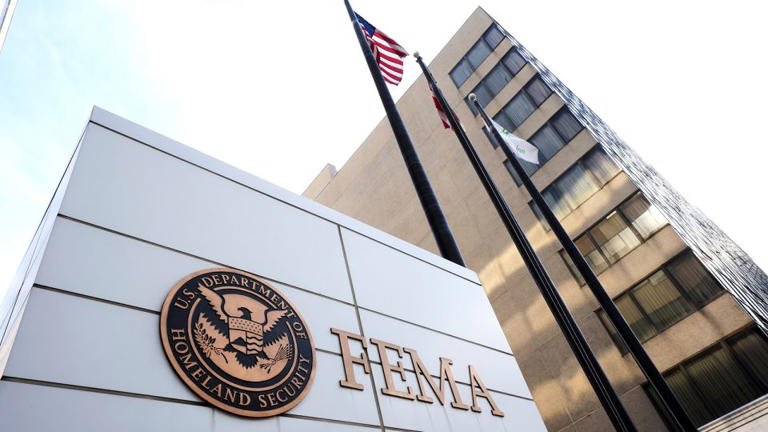


As the 2025 Atlantic hurricane season begins, the Federal Emergency Management Agency (FEMA) is facing intense scrutiny following a controversial statement from its newly appointed director, David Richardson. During an internal briefing held on the second day of hurricane season, Richardson reportedly stated he was “unaware” that hurricane season had already started—stunning FEMA staff and raising serious concerns about the agency’s readiness.
Sources inside FEMA, who spoke on condition of anonymity, described the moment as “baffling” and “deeply troubling.” One senior official stated, “When the head of the agency doesn’t know one of the most critical dates on our calendar, it undermines confidence across the board.”
Richardson’s comments came just as meteorologists and emergency officials across the country were sounding the alarm about what is predicted to be an unusually intense storm season. According to NOAA, the 2025 hurricane season is expected to bring 17 to 25 named storms, including up to 13 hurricanes, with several forecasted to be major.
Adding fuel to the controversy, Richardson confirmed during the same meeting that there would be no changes to FEMA’s disaster response plan this year. Critics say that in an era of escalating climate disasters, relying on previous years’ strategies is not only risky but negligent.
“There’s no adaptation. No innovation. Just the same old plan,” said an emergency planning consultant who works with multiple Gulf Coast states. “That’s unacceptable given how rapidly conditions are evolving.”
Even more troubling are recent budget cuts to FEMA, which experts say have already diminished the agency’s capacity to respond quickly and effectively to natural disasters. Funding reductions have impacted staffing, training, and the pre-positioning of emergency supplies—factors that could prove critical in the event of a major hurricane.
“Cuts to FEMA come at the worst possible time,” said Dr. Renee Wallace, a disaster management scholar at Georgetown University. “We’re entering a hyperactive storm season with an agency that appears unprepared both in leadership and logistics.”
Richardson, who assumed the director role earlier this year, previously worked in logistics and government operations but lacks direct experience in disaster response or emergency management. His appointment raised eyebrows at the time, and recent developments have only intensified public skepticism.
The FEMA director has yet to issue a full public explanation or apology for his comment, though a brief statement released by the agency claimed he is “fully engaged in hurricane season preparedness” and is “committed to ensuring a coordinated national response.” Still, that assurance has done little to quiet calls for greater accountability.
Public response has been swift and severe, with hashtags like #FEMACrisis, #RichardsonResign, and #DisasterInWaiting trending on social media. Petitions demanding congressional oversight of FEMA’s 2025 planning have already gathered tens of thousands of signatures.
Some lawmakers are reportedly considering a formal hearing to investigate FEMA’s current capabilities and leadership readiness. “The American people deserve confidence in the federal response during natural disasters,” said Rep. Linda Chavez (D-CA). “We will be seeking answers.”
As the hurricane season intensifies and climate change continues to increase the frequency of extreme weather events, many are questioning whether FEMA, under its current leadership, is equipped to handle what lies ahead.
The next storm may be weeks—or days—away. But for now, FEMA is facing a storm of its own.