
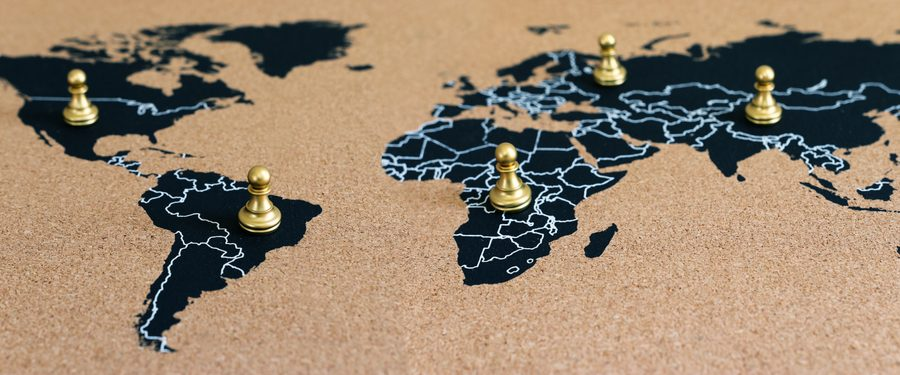


WASHINGTON/BEIJING/MOSCOW — A chilling narrative of global instability has gone viral in 2025, with analysts, policymakers, and social media users warning that escalating tensions in Ukraine, the Middle East, and U.S.-China trade disputes could spiral into a third world war. The alignment of China, North Korea, and Iran with Russia, coupled with questions about U.S. leadership under President Donald Trump, has fueled widespread fear and speculation. From X posts to expert analyses, the specter of a global conflict is dominating conversations, reflecting a world on edge as geopolitical flashpoints multiply Rising Global Tensions.
A Perfect Storm of Crises
The roots of these concerns lie in a confluence of crises. In Ukraine, Russia’s ongoing war has intensified, with European leaders issuing an ultimatum to Vladimir Putin for a 30-day ceasefire by May 12, threatening severe sanctions and increased military aid to Kyiv if unmet European Ultimatum to Putin. Putin’s counterproposal for talks in Istanbul, met with skepticism, has done little to ease fears of escalation, especially as Russian forces target Ukrainian-held Kursk Putin’s Istanbul Proposal.
In the Middle East, U.S.-Iran nuclear talks in Muscat teeter on the brink, with Israel warning of strikes if diplomacy fails, raising the risk of a regional war U.S.-Iran Nuclear Talks. Concurrently, India and Pakistan’s fragile ceasefire in Kashmir, marred by reported violations, underscores the volatility of nuclear-armed rivalries India-Pakistan Ceasefire. Meanwhile, U.S.-China trade talks in Geneva, triggered by Trump’s tariff hikes, have heightened economic tensions, with fears of a broader decoupling that could destabilize global markets U.S.-China Tariff Talks.
These flashpoints are amplified by strategic alignments. China, North Korea, and Iran have deepened ties with Russia, forming what some call an “axis of resistance” against Western influence. China’s Xi Jinping attended Putin’s Victory Day parade on May 9, signaling solidarity Xi at Victory Day. North Korea’s Kim Jong Un has pledged military support to Moscow, while Iran’s nuclear ambitions loom large North Korea-Russia Ties. This bloc’s cohesion contrasts with perceived fractures in Western unity, as some allies question Trump’s commitment to NATO and traditional partnerships Trump’s NATO Stance.
The Viral Narrative of World War
The fear of a global conflict has exploded online, particularly on X, where hashtags like #WorldWar3 and #GlobalInstability are trending. A viral post from a U.S.-based analyst read, “Ukraine, Iran, China, North Korea—pick your poison. We’re one misstep from catastrophe. Wake up, world.” Another user shared a map highlighting conflict zones, captioning it, “This is what WW3 looks like before it starts. History repeating?.” These posts, amassing millions of views, blend legitimate concern with alarmist speculation, driving the narrative’s momentum.
Experts are fueling the discourse. A report from the Council on Foreign Relations warned that the “interconnected nature of 2025’s crises increases the risk of a cascading conflict” CFR Global Risk Report. Former NATO commander James Stavridis noted that the Russia-China-Iran axis, combined with cyber and economic warfare, creates a “new kind of global threat” Stavridis on Global Threats. Meanwhile, a Brookings Institution analysis highlighted the danger of miscalculation, citing Ukraine’s Kursk incursion and U.S.-China naval posturing in the South China Sea as potential triggers Brookings Miscalculation Risks.
U.S. Leadership Under Scrutiny
Trump’s foreign policy, marked by “America First” rhetoric and unconventional diplomacy, is a lightning rod in this debate. His role in brokering the India-Pakistan ceasefire and pushing U.S.-Iran talks has earned praise, but critics argue his erratic style—such as pausing aid to Ukraine and threatening NATO allies—undermines global stability Trump’s Foreign Policy. European leaders, wary of Trump’s threats to exit NATO, are bolstering their own defenses, with Germany and France accelerating joint military projects EU Defense Push.
In Asia, allies like Japan and South Korea question U.S. reliability, especially as China flexes its naval might. A Japanese diplomat told Reuters, “Trump’s unpredictability forces us to hedge our bets” Japan’s Concerns. Meanwhile, Trump’s Middle East tour to secure Gulf investments is seen as prioritizing economic deals over strategic coherence, with some X users mocking it as “selling peace for oil” Trump Middle East Tour.
The Role of Alliances and Adversaries
The Russia-China-Iran-North Korea alignment is a central concern. China’s economic support for Russia, including dual-use tech exports, has sustained Moscow’s war machine despite Western sanctions China-Russia Economic Ties. North Korea’s reported troop deployments to Russia’s Far East, though unconfirmed, have alarmed NATO NK Troops in Russia. Iran’s near-weapons-grade uranium stockpile, coupled with its backing of proxies in Yemen and Lebanon, adds another layer of risk Iran Nuclear Threat.
Conversely, the U.S.-led coalition faces challenges. While the Quad (U.S., India, Japan, Australia) aims to counter China, India’s neutral stance on Ukraine and reliance on Russian arms complicate unity Quad Dynamics. The AUKUS pact strengthens U.S.-UK-Australia ties, but its focus on Pacific submarines does little for Europe’s immediate needs AUKUS Limitations.
Economic and Cyber Dimensions
Beyond military risks, economic and cyber threats loom large. The U.S.-China tariff war threatens global supply chains, with Goldman Sachs estimating a potential 2% drop in global GDP if tensions escalate Economic Impact of Tariffs. Cyberattacks, attributed to Russia and China, have targeted Western infrastructure, from U.S. power grids to European hospitals, raising fears of hybrid warfare Cyberattack Surge.
Social media amplifies these concerns. A viral video of a simulated U.S.-China naval clash in the Taiwan Strait, shared with the caption “This could be 2026. Are we ready?,” garnered millions of views, blending entertainment with dread.
Voices of Caution and Hope
Not all experts agree a world war is imminent. Political scientist John Mearsheimer argues that while risks are high, mutual nuclear deterrence and economic interdependence make a global conflict unlikely Mearsheimer on Deterrence. Others, like UN Secretary-General Antonio Guterres, call for urgent diplomacy, citing the India-Pakistan ceasefire as proof that de-escalation is possible UN Call for Diplomacy.
Grassroots voices on X reflect a mix of fear and defiance. A Ukrainian user posted, “If WW3 comes, we’re already fighting it here. Stand with us.” A U.S. user countered, “Diplomacy, not doomsday. Trump’s deals can cool this down” Pro-Diplomacy Post.
The Path Forward
The world stands at a crossroads. Diplomatic efforts—like U.S.-Iran talks, Ukraine ceasefire negotiations, and U.S.-China trade discussions—offer hope but face steep hurdles. Strengthening alliances, enhancing cyber defenses, and countering misinformation are critical to averting catastrophe. For now, the viral fear of a world war serves as both a warning and a call to action, urging leaders and citizens alike to prioritize peace in a fractured world Global Peace Efforts.