



Boom Supersonic has taken a significant step toward reviving commercial supersonic travel, successfully conducting its first faster-than-sound flight on Tuesday morning. The company’s XB-1 demonstrator jet reached speeds of Mach 1.122 during a test flight over the Mojave Desert in California, marking a historic milestone in private aviation.
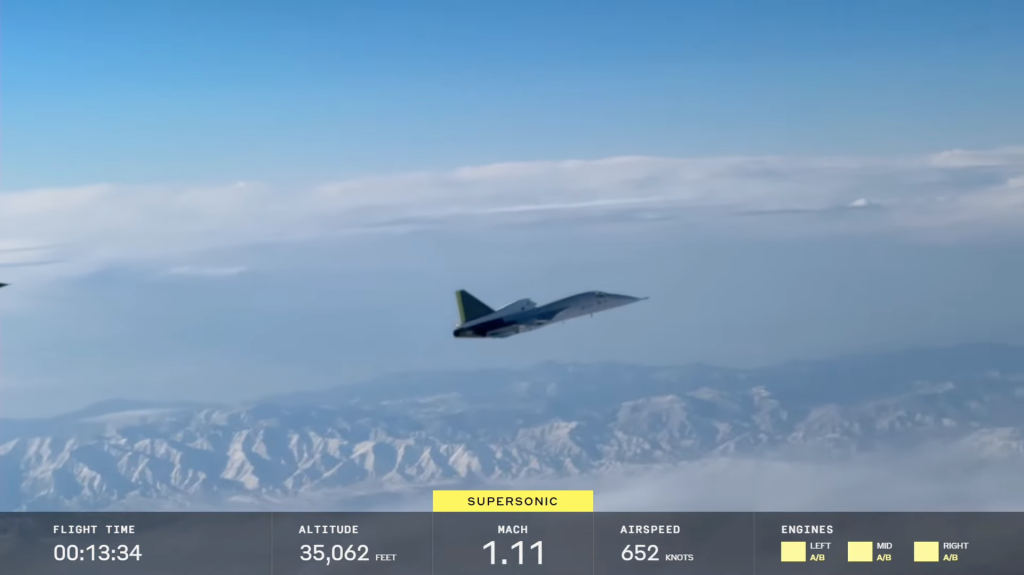
A Groundbreaking Achievement
The successful supersonic flight, which took place shortly after 8 a.m., represents a major milestone not only for Boom but for the aviation industry as a whole. It is the first time a private company has developed a supersonic jet without government backing, setting Boom apart from past efforts led by state-sponsored programs.
“A small band of talented and dedicated engineers has accomplished what previously took governments and billions of dollars,” said Boom’s founder and CEO, Blake Scholl. “Our ultimate goal is to bring the benefits of supersonic flight to everyone.”
The XB-1, roughly the size of a small fighter jet, serves as a testbed for key technologies and aerodynamics that Boom hopes will translate into its full-scale commercial aircraft, Overture.
The Challenge of Commercial Viability
While the supersonic flight is a remarkable achievement, Boom still faces significant hurdles before commercial operations become a reality. The Overture, designed to carry 60 to 80 passengers, must prove to be fuel-efficient, cost-effective, and quiet enough for regulatory approval.
One major challenge is the sonic boom, which currently prohibits supersonic travel over populated land areas. This means that Overture’s primary market would be transatlantic routes, where it could cut travel times between cities like New York and London in half. However, long-haul routes across the Pacific would require refueling stops, reducing the time-saving advantage.
A Long Road Ahead
Despite its success with the XB-1, Boom’s journey toward bringing back supersonic commercial travel is far from over. The company must still navigate regulatory approvals, technological refinements, and economic feasibility to turn its vision into reality.
Still, Tuesday’s milestone brings the industry closer to the return of faster-than-sound passenger travel, something not seen since the retirement of the Concorde in 2003. If Boom overcomes the challenges ahead, the dream of supersonic travel for a new generation could soon become a reality.