
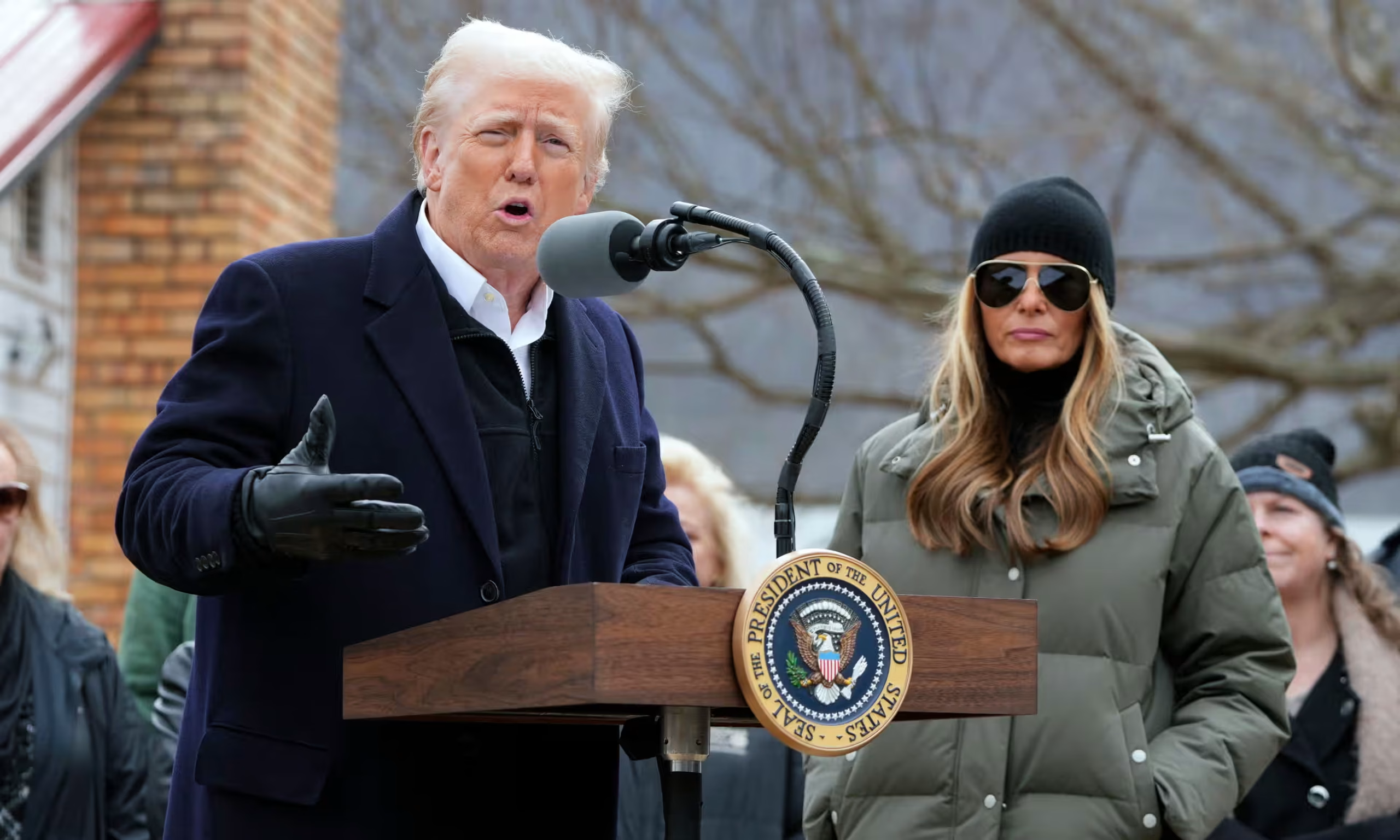


During a tour of hurricane-stricken areas in North Carolina, President Donald Trump announced his consideration of an executive order to reform or potentially dismantle the Federal Emergency Management Agency (FEMA). Speaking in Asheville on Friday, Trump criticized FEMA as “not good” and “a disaster,” raising doubts about the agency’s effectiveness in responding to natural disasters.
“I think we’re going to recommend that FEMA go away,” Trump told reporters while surveying hurricane-damaged areas in Buncombe County, which was devastated by Hurricane Helene four months ago. The storm caused the deaths of 42 people and inflicted over $50 billion in damage in the region.
Push for State-Led Disaster Response
Trump proposed shifting disaster management responsibilities directly to state governors, bypassing FEMA. He argued that states should have greater control over federal disaster funds rather than relying on a centralized federal agency.
“Governors know their states better, and funding should go directly to them,” Trump stated, hinting at a fundamental restructuring of disaster response operations in the U.S.
FEMA currently operates with a budget in the tens of billions of dollars and employs over 20,000 personnel. Any move to shutter or significantly reform the agency would require congressional approval, making Trump’s proposal a challenging endeavor.
Mixed Reactions
The suggestion of eliminating FEMA has sparked immediate debate. Critics argue that the agency plays a vital role in coordinating disaster responses on a national scale, while proponents of Trump’s stance claim state governments could address emergencies more efficiently with direct funding.
Local officials in North Carolina have voiced concerns about the implications of such a drastic policy shift. Many have praised FEMA’s role in recovery efforts following Hurricane Helene, which left thousands of homes destroyed and families displaced.
Tour of Hurricane-Damaged Areas
During his visit to Buncombe County, Trump met with families impacted by Hurricane Helene and received a briefing on ongoing recovery efforts. His remarks on FEMA’s inefficiencies stood in stark contrast to the stories of resilience shared by local residents and officials.
One resident, whose home was severely damaged by the hurricane, expressed gratitude for FEMA’s assistance in providing temporary housing and resources. “Without FEMA, I don’t know how we would’ve managed in those first few weeks,” they said.
Expanding the Disaster Tour
Trump’s visit to North Carolina is part of a broader tour of disaster-stricken areas across the United States. Following his stop in Asheville, the president is scheduled to travel to Los Angeles, where he will survey wildfire-ravaged regions in Pacific Palisades. Southern California continues to battle active fires, compounding the region’s challenges.
As Trump pushes for potential reforms to federal disaster management, his remarks have reignited discussions about the balance of power between federal and state governments in responding to national emergencies.