
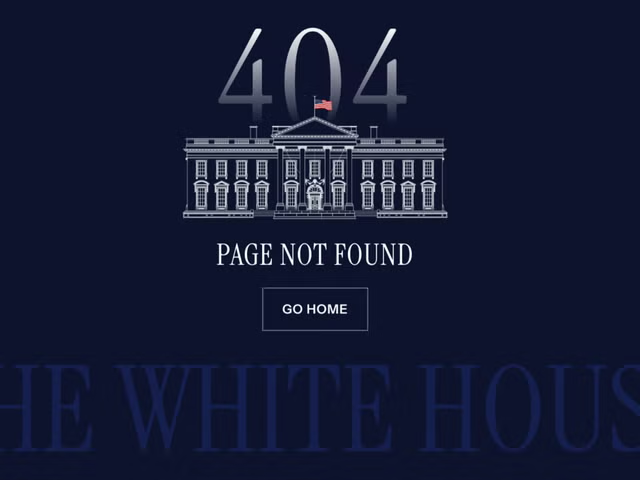


Within hours of Donald Trump assuming office, notable changes were made to the official White House website, sparking public outcry. Pages detailing reproductive rights and the Spanish-language version of the site were removed, leaving critics questioning the administration’s stance on inclusivity and accessibility.
The removal of these pages, which had been prominent during the Obama administration, eliminated vital resources for American citizens, particularly marginalized communities. The reproductive rights section previously contained information on healthcare access, contraceptive options, and protections for women under federal law. Its sudden disappearance has raised concerns among advocates about the future of policies aimed at supporting women’s health.
Similarly, the Spanish-language version of the White House website, a feature introduced to enhance accessibility for the U.S.’s growing Hispanic population, was also taken offline. The move has been interpreted by many as a step backward in addressing the needs of Spanish-speaking communities, which represent a significant portion of the U.S. population.
A Shift in Policy
The removal of these pages aligns with Trump’s campaign rhetoric and policy priorities. During his campaign, Trump often emphasized a conservative approach to reproductive rights, including opposition to Roe v. Wade, the landmark Supreme Court decision that legalized abortion nationwide. Advocacy groups have expressed concern that the removal signals an intent to curtail access to abortion and other reproductive health services.
On immigration and cultural inclusivity, Trump’s policies often focused on stricter immigration enforcement and a reduction in federal accommodations for non-English speakers. The disappearance of the Spanish-language site reflects this broader stance, despite the fact that over 41 million people in the U.S. speak Spanish at home.
Public and Expert Reactions
The changes to the White House website were met with immediate criticism. Advocacy organizations, including Planned Parenthood, denounced the removal of reproductive health information as an attack on women’s rights. “This is not just a website change. It’s a signal of what’s to come,” said a spokesperson from the organization.
Similarly, leaders from Hispanic advocacy groups condemned the elimination of the Spanish-language pages. Janet Murguía, president of UnidosUS, remarked, “This decision sends a clear message that millions of Spanish-speaking Americans are not a priority for this administration.”
Broader Implications
The removal of these resources raises concerns about transparency and accessibility during Trump’s presidency. Critics argue that the absence of clear, easily available information on key topics undermines efforts to support vulnerable populations. Others see it as a broader indication of the administration’s priorities, particularly regarding women’s rights and minority communities.
Supporters of Trump’s actions claim the changes are part of a broader effort to streamline government communication and align the White House’s messaging with the administration’s policy goals. However, the lack of immediate plans to restore these pages or provide equivalent resources has left many questioning the commitment to inclusivity.
Moving Forward
As Trump’s presidency begins, these early changes hint at potential shifts in policy affecting women and minority groups. Advocacy organizations and policymakers are gearing up for what they anticipate will be a prolonged effort to protect reproductive rights and promote inclusivity in federal resources.