
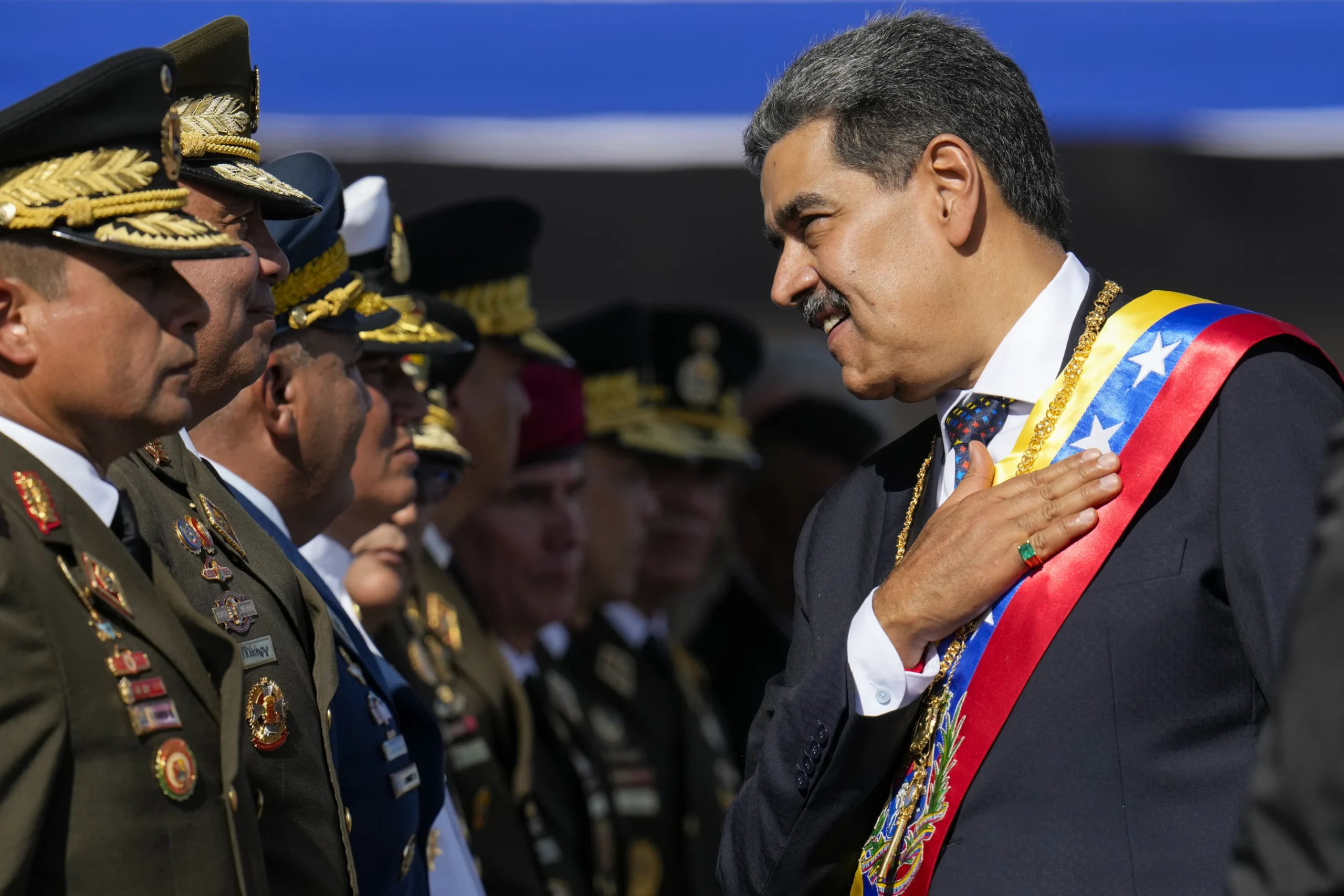


Venezuelan President Nicolás Maduro was sworn in for a new term, extending his contentious rule despite widespread protests and international condemnation. The ceremony, held in the country’s legislative palace, took place under tight security as critics and demonstrators voiced opposition to what they call an illegitimate presidency following last year’s disputed election.
Maduro, addressing supporters and officials during his fiery inaugural speech, deflected accusations of electoral fraud and accused foreign powers, particularly the United States, of orchestrating efforts to undermine his government. “Venezuela will not bow to imperialism,” he declared, drawing cheers from his loyalists while opposition groups criticized his rhetoric as a distraction from the country’s mounting crises.
The heavily guarded venue underscored Maduro’s reliance on security forces, which have been central to maintaining his grip on power since the controversial election. Crowds of supporters, many wearing pro-Maduro T-shirts, filled nearby streets and a plaza, waving flags and chanting slogans in solidarity.
Opposition and International Response
Meanwhile, protests erupted across Caracas and other major cities, with demonstrators decrying Maduro’s administration for plunging the oil-rich nation into economic despair. Once Latin America’s wealthiest country, Venezuela now grapples with hyperinflation, severe shortages of basic goods, and a mass exodus of citizens seeking refuge abroad.
Opposition leaders, including Juan Guaidó, have called for renewed efforts to challenge Maduro’s legitimacy. “Today marks a dark chapter in our history,” Guaidó stated, urging Venezuelans and the international community to hold Maduro accountable.
The United States, along with the European Union and several Latin American nations, denounced Maduro’s inauguration. U.S. officials reiterated their refusal to recognize the election results, citing evidence of voter suppression and irregularities. “Maduro’s presidency is a sham,” stated Secretary of State Antony Blinken, calling for increased sanctions and diplomatic pressure on the Venezuelan regime.
Maduro’s Challenges Ahead
Maduro faces mounting challenges as he begins his term, including dwindling public support, fractured alliances within the government, and the continued collapse of Venezuela’s economy. Despite his defiance, analysts suggest his grip on power could weaken if international sanctions intensify and internal dissent grows.
In his speech, Maduro vowed to pursue what he called a “new phase of socialism” and promised reforms aimed at stabilizing the economy. Critics, however, remain skeptical of his ability to deliver meaningful change, given the deep-seated corruption and mismanagement that have characterized his administration.
As tensions rise, the international community watches closely, with some nations exploring ways to mediate Venezuela’s crisis while others push for tougher measures against Maduro and his allies. For millions of Venezuelans, however, the immediate focus remains survival in a country where basic necessities are increasingly out of reach.