
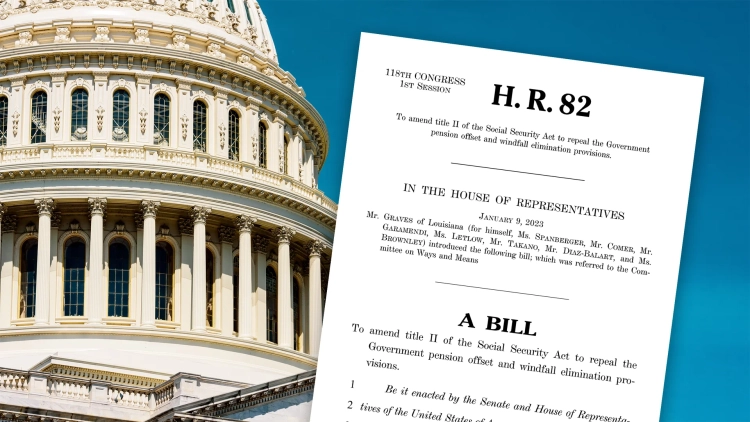


Washington, D.C. — In a significant step toward fairness for millions of public sector retirees, Congress has passed HR 82, the Social Security Fairness Act, which will eliminate the Windfall Elimination Provision (WEP) and provide full Social Security benefits to individuals who have been affected by the provision. The bill has been met with both support and criticism as lawmakers consider its long-term financial implications.
What Does HR 82 Do?
The Social Security Fairness Act, also known as HR 82, aims to repeal the Windfall Elimination Provision (WEP), which has long reduced Social Security benefits for public sector retirees who have also worked in jobs covered by Social Security. This provision disproportionately affected public service employees, including teachers, firefighters, and police officers, who spent a significant portion of their careers in jobs not covered by Social Security.
By passing HR 82, Congress has taken a major step toward ensuring that public sector retirees will now receive the full benefits they are entitled to under Social Security, without the reduction imposed by WEP.
Senate Vote and Support
The bill received widespread bipartisan support, with Senate leaders backing the legislation. On the final vote, the Senate approved the bill, signaling a significant win for advocates of public sector workers.
“Today is a victory for fairness,” said Senator Dick Durbin (D-IL), a key proponent of the bill. “Millions of hardworking Americans who dedicated their lives to public service will now see the full Social Security benefits they deserve.”
However, the bill’s passage also faced resistance, particularly from fiscal conservatives, who expressed concerns about the $196 billion price tag associated with the legislation. Opponents argue that the increased costs could accelerate the insolvency of the Social Security trust fund, which is already facing long-term financial challenges.
Impact on Retirees
The passage of HR 82 is expected to positively impact millions of retirees who have been receiving reduced Social Security benefits due to the WEP. According to estimates, approximately 2 million retirees will benefit from the legislation, including those who have spent part of their careers working in both public sector jobs and private sector jobs that contribute to Social Security.
For these retirees, HR 82 will provide full Social Security benefits, ensuring they receive the financial support they’ve earned over their lifetime of work.
Criticism and Financial Concerns
While the bill has been hailed as a major victory for retirees, it has also drawn sharp criticism from some lawmakers and policy experts who warn about its long-term fiscal impact. Critics argue that the $196 billion cost of the bill could put additional strain on the already fragile Social Security trust fund.
The Windfall Elimination Provision has been in place for decades, and many believe it was necessary to ensure fairness between public and private sector workers. However, advocates for the Social Security Fairness Act argue that the provision unfairly penalized public sector retirees who worked hard and contributed to the system in other ways.
Next Steps
Now that HR 82 has passed in the Senate, the bill is expected to be signed into law by President Biden. The legislation is set to go into effect over the coming years, gradually increasing benefits for eligible retirees.
Supporters of the bill are optimistic that it will help ensure that public service employees receive the full benefits they deserve. However, the debate over the long-term financial impact of the bill is likely to continue, with both sides closely monitoring its effects on the future of Social Security.
As HR 82 moves closer to becoming law, public sector retirees across the nation are celebrating the victory, while fiscal experts will continue to assess the broader implications of the Social Security Fairness Act.